Enjoying a week in Provence

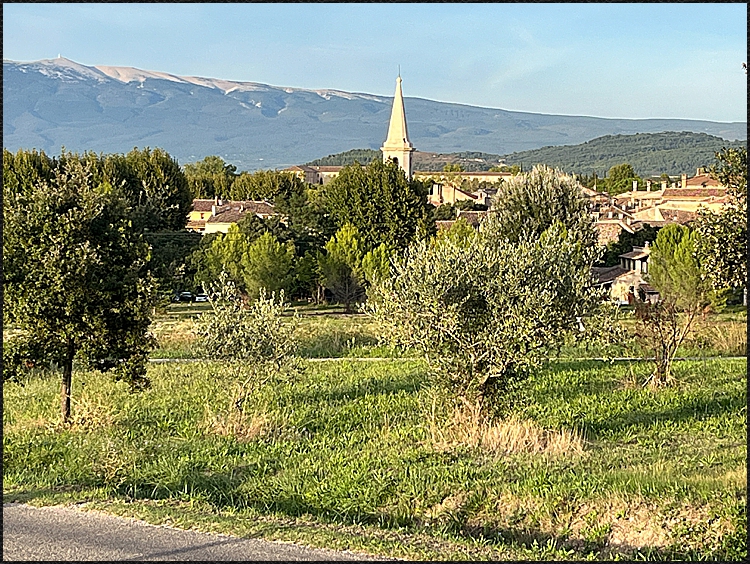
View of St Didier with Mont Ventoux in the background.

Staying near St Didier – at 305 Chemin des Tourrasses

Travelling to Provence:– Paris to Avignon by the TGV takes around two hours forty minutes. We were greeted by a beautiful blue sky and a temperature of 30 degrees as we piled off the train. It wasn’t long before we’d picked up the hire car and were heading towards the gîte which was just outside the village of St Didier in the Vaucluse Department.

The Gîte: – Gilles and his wife, Celine, made us feel very welcome, explained a few things about the gîte and then left us to sort ourselves out. They didn’t have to tell us much about the area or St. Didier as we’ve been to Provence many times and we also knew the village. We were so impressed with the view of Mont Ventoux from the gîte also pleased with the quiet location and the delightful swimming pool. We knew we had chosen a good spot for our week in Provence.

The location of our gîte … with a fantastic view of Mont Ventoux and a superb pool.

Mont Ventoux is the only mountain in Provence and dominates the Vaucluse landscape from miles around. It has gentle slopes, a ‘bald’ summit revealing white rock and is a UNESCO Biosphere reserve due to its diverse flora & fauna. It’s also famous from the Tour de France with three classic ascents and attracts ameteur cyclists, hikers and nature lovers alike. We drove up there several years ago and obviously chose the wrong day. The mist was very thick at the summit so the breathtaking, panoramic views were lost on us and the wind was so strong that we didn’t linger too long outside the car. It wasn’t a day for spotting chamois, stags, roe deer, wild boars or anything else. We must try again.

Our week.

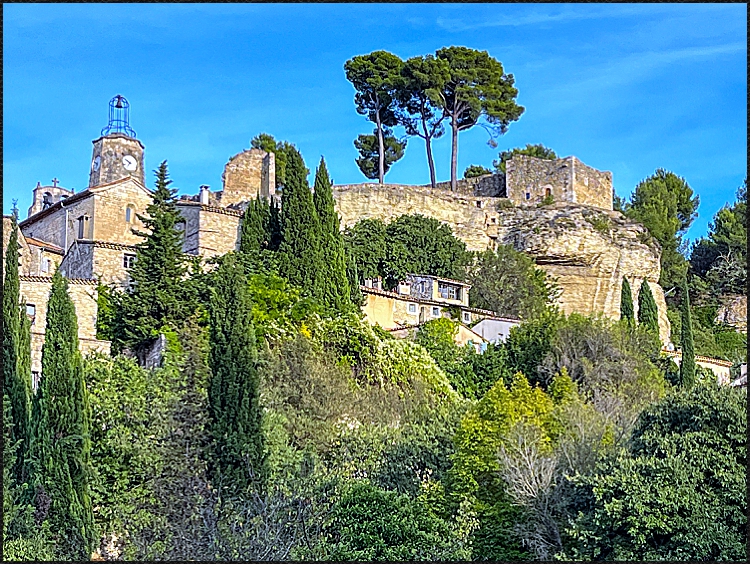
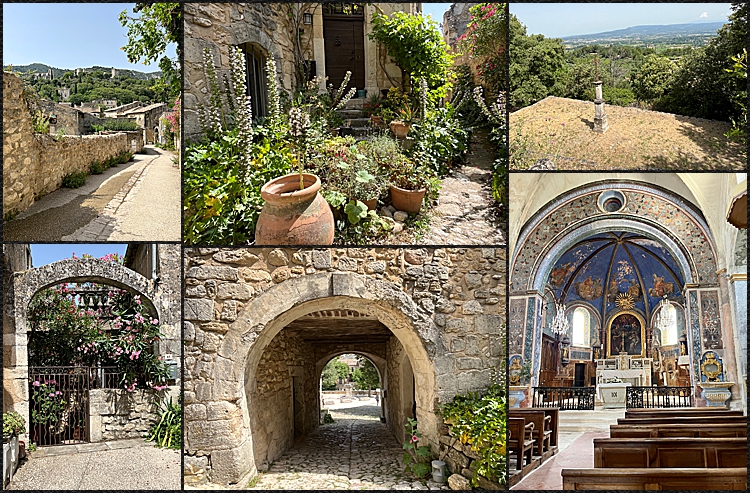
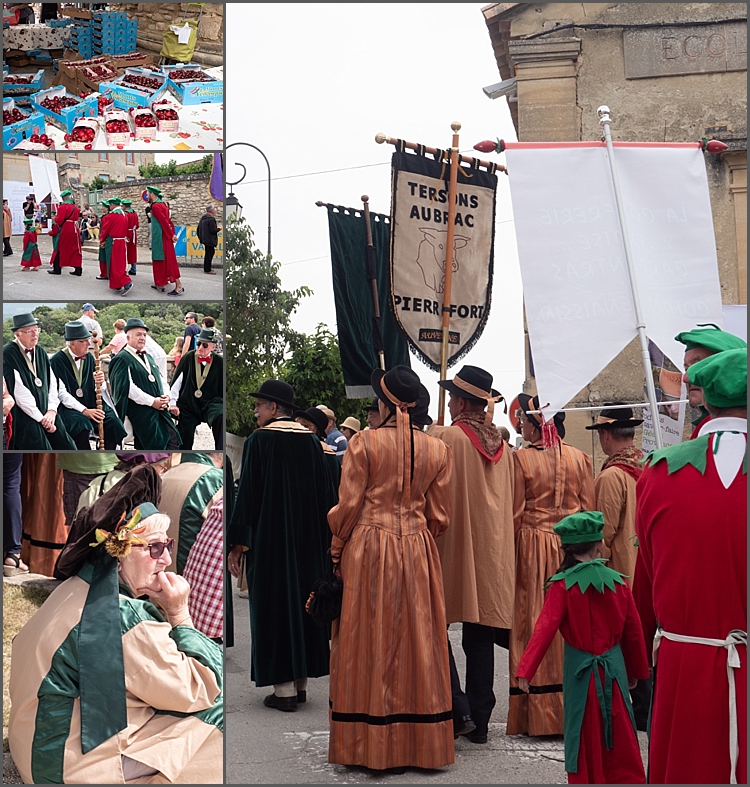
A Provençal village: – As I’ve already mentioned, we know the area well however there are places we always want to go back to as we can never get enough of the villages in Provence. One such village is Venasque, famous for its cherries. They hold a cherry fesival in June where not only do many of the 110 growers sell mountains of cherries from their stall, they also dress in regional costume and on a certain day the whole town turns out to celebrate and venerate the humble cherry. We went once and because this is a famous festival and people come from miles around we had to park at the bottom of the cliff and walk up. The website describes Venasque as a medieval town, perched on a steep cliff …a very accurate description.

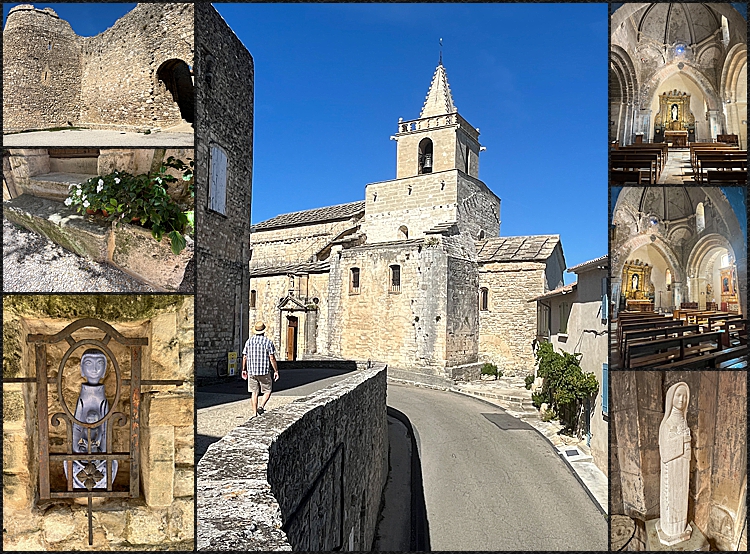
The village of Venasque.

At other times Venasque is a quiet place to visit. You walk through the arch of the ramparts with its Roman towers and walk over to the Esplanade where there’s a fabulous view. From there we walk along the narrow paths to the Romanesque church of Notre Dame which (to me) has a special atmosphere and in there is one of my favourite statues. There’s also a Baptistery with the entrance around the back of the church which is apparently one of the oldest religious sites in France. The villagers obviously take pride in their village; there are flowers everywhere and interesting statues to spot as you walk along and in the little courtyard gardens too. We used to sit by the fountain and have a drink but this time we were told we would have to order a meal. We were a bit surprised as there was hardly anyone around however we walked across the road to Le Petit Chose and enjoyed a glass of wine and the view from the terrace there.

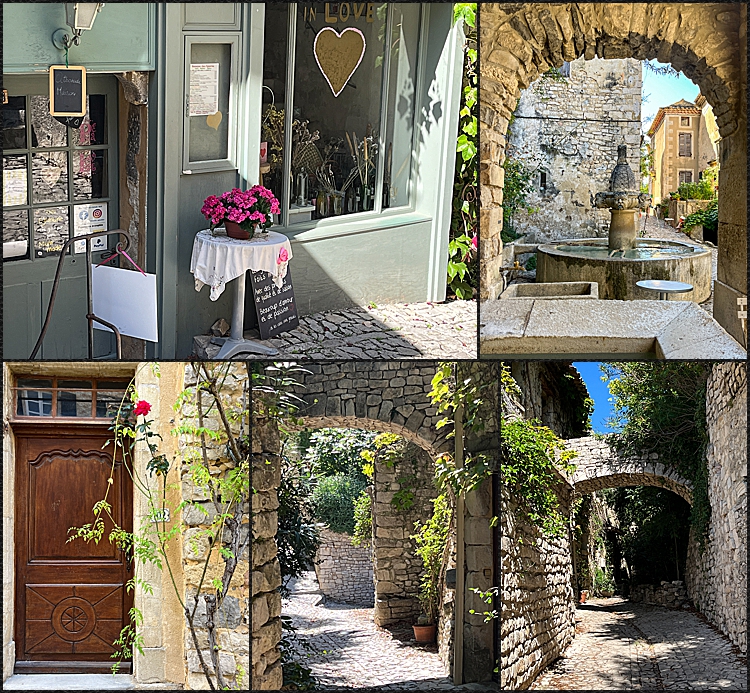
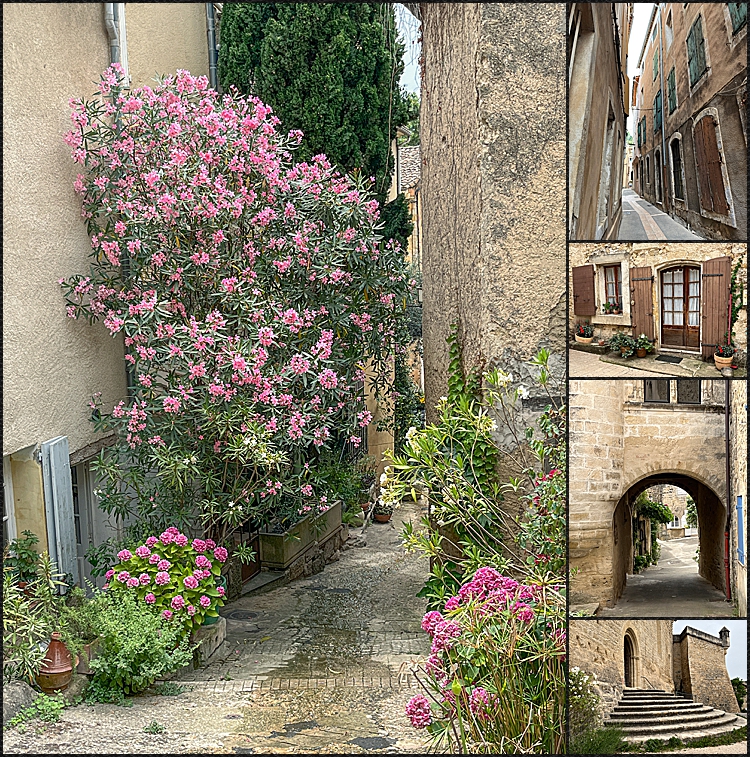
The village of Séguret

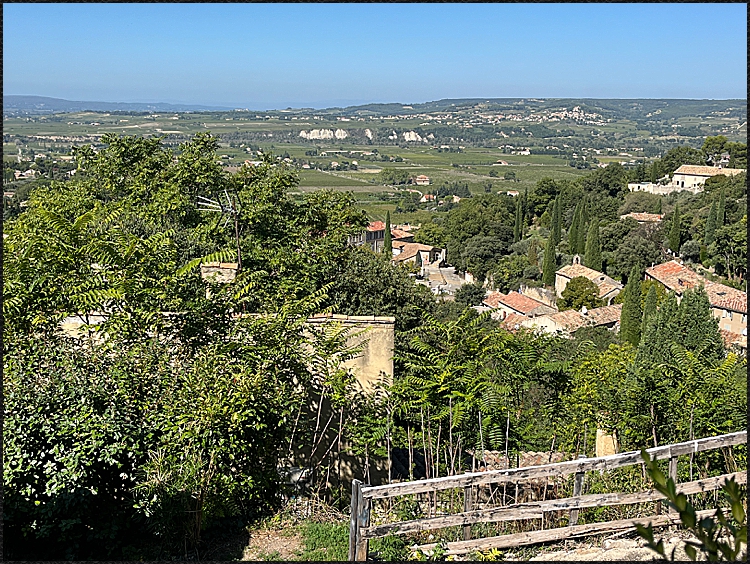
Séguret is another village which we often visit. It’s ranked as one of the ‘Most Beautiful Villages in France’ although I’m sure there are many on that list. Like Venasque it’s generally very quiet later in the year although in the ‘High Season’ it does get crowded. There are no cars driving through the narrow, cobbled streets of this medieval village which definitely adds to its charm. There are several artist’s workshops and galleries as well as artisan jeweller’s shops to wander into and a couple of tourist shops but that’s it, however the Séguret wine cellar is worth a visit. We parked at the bottom of the village where there was plenty of spaces and walked up through the Reynier Gate and along the Rue des Poternes lined with well-maintained medieval Provencal houses. We stopped a couple of times, firstly to look around a gallery where a sculptor was working on one of her pieces and then to go inside a jewellery shop. I was tempted to buy one of the beautiful pieces but the prices were a little too high for my pocket. We walked up and along to the path that takes you up to the ruined castle but one look at the state of the path was enough for us to to give the castle ruins a miss. We did enjoy the panoramic view though from the top road.

View from the top road at Séguret.

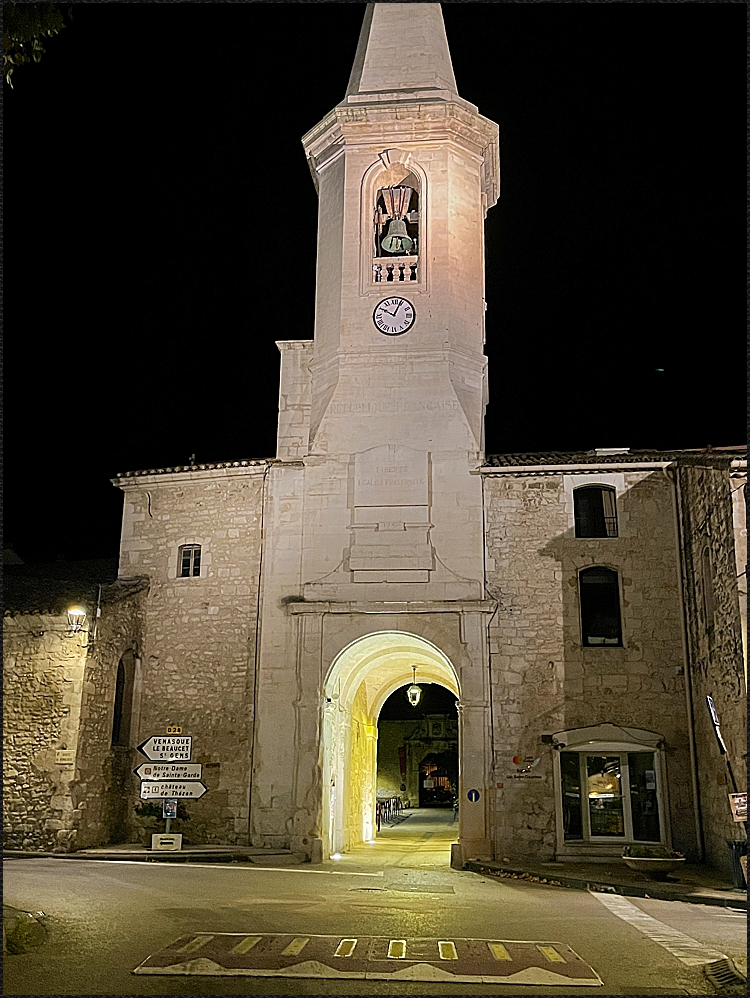
We were very happy with the location of our gîte which was only a kilometre outside the village of St Didier. There is a superb avenue in the town lined with ancient plane trees. Here are lots of restaurants, a well-supported local bar which serves good food too; a couple of grocery shops and at one end of the street there is a splendid stone archway with a clock tower you can see from miles around. Through the arch is the Chateau de Thézan which is now open again to the public. Unfortunately we missed the weekly market as we had to leave that morning but by all accounts the town is buzzing then.

Another attraction which draws people to St Didier is the artisan shop, Silvain This is a company famous for the manufacture of nougat. If you are a lover of nougat, this is the place to be. The shop has an excellent display of all their products and this is a wide range of delightful things to tempt you. This in our opinion and that of many others is the best home-made nougat produced anywhere. We haven’t done the workshop visit but that is also highly rcommmended. You are guaranteed to walk out the shop having bought more than you intended!

The archway through to the Château de Thézon

The town of Carpentras:

When we were in Provence a couple of years ago we tried to book a visit to the synagogue in Carpentras but the guided tour was fully booked. This year we phoned and managed to get on the tour …more about that shortly.

Carpentras is famous for its black truffle market which is held between mid November – mid February. Restauranteurs, traders and brokers come to buy the famous ‘black diamond’, the market is recognised as the place in Europe as it sets the market price for this famous black truffle. The town is also famous for its strawberries when in May the Strawberry Festival takes place. And the third claim to fame is a factory which produces Berlingots de Carpentras, nougats, Provencal biscuits, lollipops and pralines. I have to confess we didn’t buy any truffles, strawberries or visit the Confierie du Mont Ventoux, but there’s always another year …

The Synagogue of Carpentras is the oldest synagogue still in operation in France. A large Jewish community had settled in the town at that time and was placed under the security of the Pope following the persecutions carried out by the ‘Kingdom’ of France against the Israelite people. Restored in the eighteenth century, the synagogue was updated with baroque elements, including a monumental stairway that contrasts with its modest façade. Notable features include the ritual baths (mikveh), two bakeries dating back to its origins, and a dedicated room for Jerusalem within the prayer space. These elements make the synagogue a profound reflection of the Jewish community’s enduring cultural and spiritual heritage.

I can’t remember what we paid for the tour but it wasn’t much. It would have been much more interesting for us if there was some English thrown in as we walked around but unfortunately although the guide spoke good English, because everyone else in the group was French apart from two people and us, she told the history of the synagogue almsot entirely in French. We found it very challenging and after the first hour we did switch off. I asked at the end if they had a leaflet in English that we could take away, but they didn’t.

I’m glad we went as it is an interesting building and we did pick up some history. With hindsight maybe we should have asked the guide to explain a few things in English but we didn’t.

Carpentras Synagogue.

The town of L’Isle-sur-la-Sorgue:

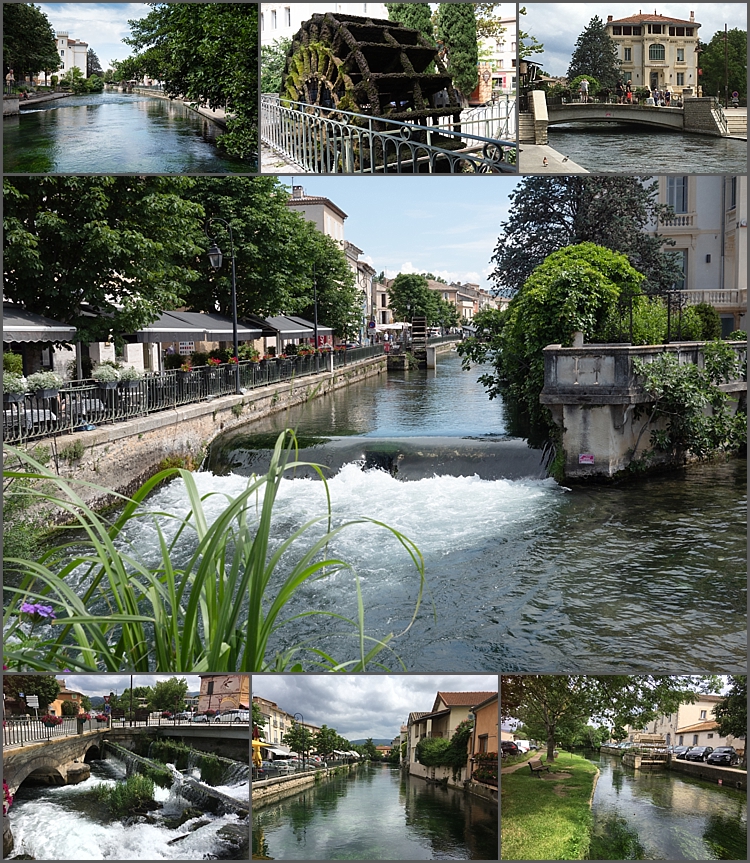
Towards the end of our holiday we arranged to meet a friend in the nearby town of L’Isle sur la Sorgue. The town is famous for the many canals that weave through the centre, some with waterwheels and little bridges going across. The town is known as ‘Little Venice’ and you can see why. The clear waters of the Sorgue with the ferns gently swaying with the current is wonderful to watch and memerising when you look down from one of the many bridges. We always walk up to the end of the main street to see how much water is flowing into ‘Le Basin’. Along that street are many cafes with tables set out along the frontage and alongside the river. It’s a popular tourist area and is always busy. If you visit the town on a Sunday however it is packed with people who have come, not just to go to the market but also to browse the many stalls selling bric-a-brac. In the height of the summer it’s difficult to park and hard to see anything at all for the crowds. There may be bargains to be had in this ‘flea market’ but for anyone looking for an antique you do have lots of choice as there are nearly 300 antique dealers in the town!

One of the working waterwheels over the river in L’Isle-sur-la-Sorgue.

Our friend’s choice of ice cream parlour was spot-on. The ice creams at Ravi are delicious. We sat outside along the terrace by the river and had a great catch-up. As we were leaving she told us about an old church and another building open in the town as part of the Heritage Week and suggested we take the opportunity to visit them. She remembered holding her 18th birthday in the church, so has fond memories of it (must have been quite some location for a special birthday as it had quite a Gothic feel about it!). The second building was La Tour d’Argent which dates back to the 12th century where we could climb to the top and get a good view of the main square in the town.

View from the top of the church. Picture on the r.h.s. is of the calm still waters that run through the town of L’Isle-sur-la-Sorgue.

The church is now de-commissioned and has a rather dodgy floor and was being used as an exhibition space for the week displaying ‘wacky’ artwork and sculptures. La Tour d’Argent also had some unusual creative artwork and had just for this week opened the stairs to the roof. The uneven stone steps spiralling up to the top were a little tricky to negotiate but it was well worth it. It was a different way to see the impressive Collegiate Church of Notre-Dame-des-Anges. which is the main church in the town and quite some monument.

By the end of our holiday we had done a few walks in the area near to the gîte; we also explored the wonderful Provençal countryside in the car, visited towns and villages, drank lots of very reasonably priced wine and had some excellent meals. We made full use of the pool at the gîte and were very pleased with everything there including the quiet location. A week in Provence isn’t long enough to explore this area unless you have been lots of times before. We will be going back before long as it is one of our favourite places and it doesn’t matter how many times we go ,there’s always lots to do and see and soak up that unique Provençal ‘feel’. I hope this Blog has given you a flavour of the area and perhaps it’s tempted you to visit and explore for yourself?
Exploring Montmartre and Notre Dame: A Paris Adventure

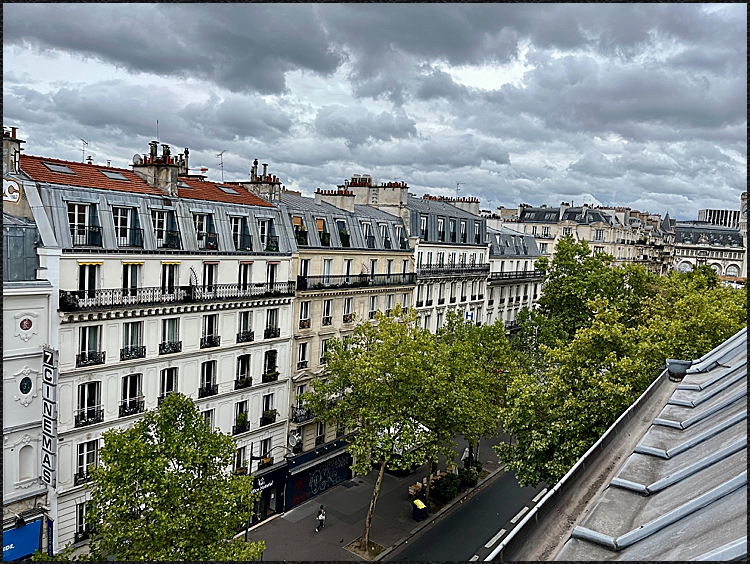
Looking down the Rue de Lyon.

Paris

It’s our wedding anniversary in September and what better place to celebrate but Paris? This city at any time of the year is superb but September is particularly magical. The trees are beginning to turn, the nights are still warm enough to sit out until the early evening with the sun snaking between those high Parisienne buildings bathing the streets in a warm amber glow.

We’d travelled by train from the Cotswolds where we live, to London and then caught the Eurostar where after less then three hours we had arrived at the Gare de Nord. It was just a short journey with suitcases on a very busy RER but after a couple of stops we’d arrived at the Gare de L’Est. Our hotel, 9Hotel Bastille-Lyon was a short trundle away and thankfully it had a lift as we were right on the top floor. Before long we’d wandered up the street to grab a beer at the L’Europeen It’s a typical Parisien Brasserie with an art deco interior and waiters in traditional ‘uniform’ looking immaculate in their white shirts, black waistcoats and trousers wrapped round with long white ‘aprons’. That evening we had an excellent meal at a small family-run restaurant, Les Affranchis which was only a short walk from our hotel.

Montmartre:

Sacré-Cœur Basilica

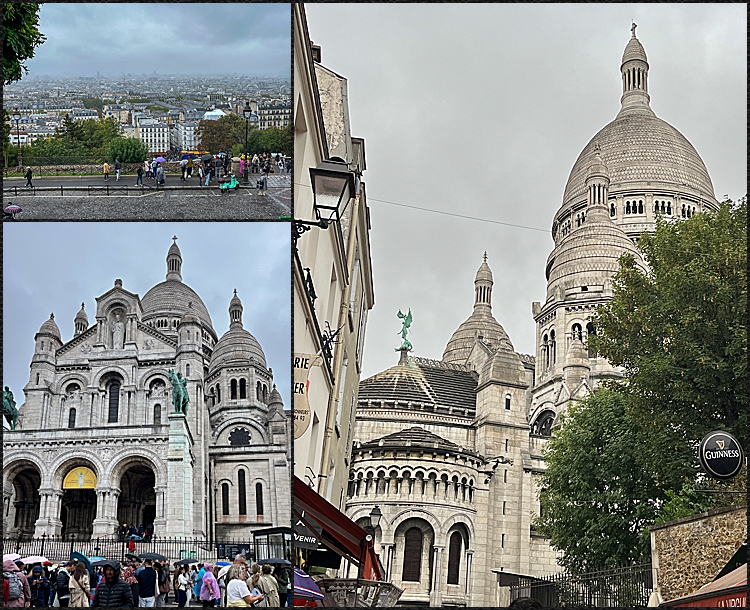
It’s Sunday and we’d woken up to cloudy skies and the ‘promise’ of rain. Our attempt to get tickets to Notre Dame had failed again so we decided to head up to Montmartre. It’s a steep walk up to the top and if it’s a clear day you’re rewarded with a great view – a panorama of Paris. No luck that day, it was hard to spot anything in the gloom. The queue to get into Sacre Cœur was long but we had an interesting chat with a lady who lived in Paris and then an American couple joined in so by the time the five of us had covered several topics focussing on world problems we were going into the Basilica. It’s free to go in and is open from 6.30-22.30. It’s well worth a visit and on a clear day if you want to get an even better view of the city, you can climb up to the Dome. (There is a charge).

Out and about in Montmartre.

After lunch at a cafe where we shared that classic ‘Croque Monsieur’, the rain had stopped which meant we could have a good walk round the area. The artists in Place du Tertre which is only a few streets away from the Basilica were quite busy. It’s fascinating to watch as they sketch portraits of their sitters – such talent. I wonder how much they charge? With that thought we wandered on to Au Lapin Agile where I wanted to take a picture. This famous bar which has a cabaret is famous worldwide and has been entertaining their customers since opening in 1860. These days there’s a flexible arrival time, check the website for opening times as it’s not open every evening. No credit cards accepted and the entrance price including a drink as at September 2025 is 40€.

No visit to Montmartre would be complete without saying ‘hello’ to Dalida. (Picture of this celebrated singer is top, middle above). Dalida, sometimes called “the queen of French chanson,” had a remarkably eclectic career. She was an international phenomenon, recording in at least seven languages and performing on stages around the world. Dalida will forever be associated with Montmartre, where she had a house at 118 Rue d’Orchampt in the 18th arrondissement. After her death in 1987 a square was named after her which has a bronze bust of the singer whose bosom has been rubbed to a glow by years of fondling from her fans. Her grave in Montmartre cemetry is also worth a visit.

This area of Paris is full of character and charm and feels very much like a village. We didn’t see any sun that day but that certainly didn’t dampen our spirits – there’s always a great amosphere in Montmartre.

Later that afternoon we went by Metro to Musée Malliol in the Rue de Grenelle to an exhibition of 350 photographs taken by the celebrated Fench photojournalist, Robert Doisneau – what a treat! Ordering tickets hadn’t been a problem and we were glad we did as there was a queue outside of people hoping to get in by just turning up. All of them were turned away … It was an excellent retrospective of Doisneau’s work in this excellent exhibition space. The Malliol Museum is currently closed preparing for their next exhibition.

Sadly our anniversary meal that evening was disappointing especially as we had eaten there on several occasions in the past, still the wine was good.

Notre Dame de Paris:

Top l.h.s: The Seine looking towards Pont Neuf. Remaining pictures: The frontage of Notre Dame and entering the Nave.

Perseverance paid off! After trying several times to book tickets on-line to go into Notre Dame …we made it! I should say it was down to my husband who got up extra early that morning to go onto the web site, seems it’s the only way to do it unless you want to queue for hours.

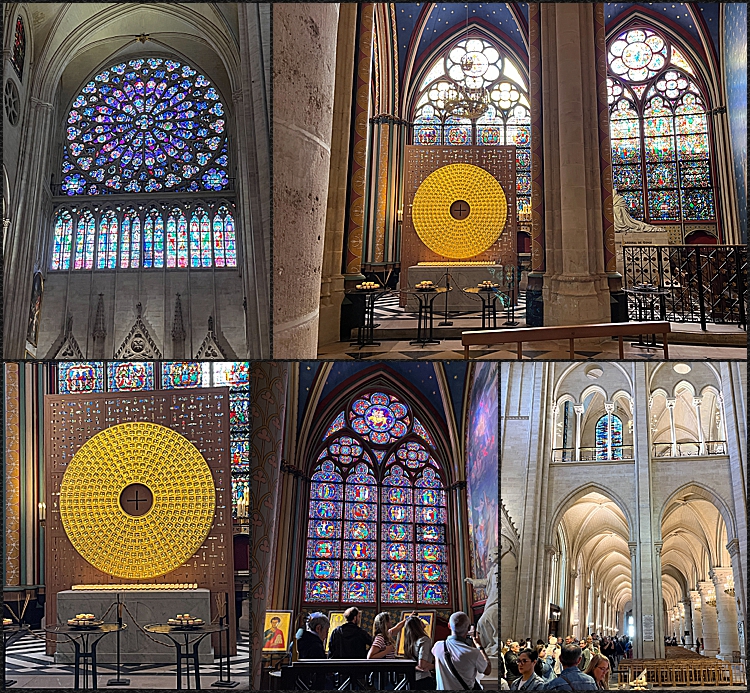
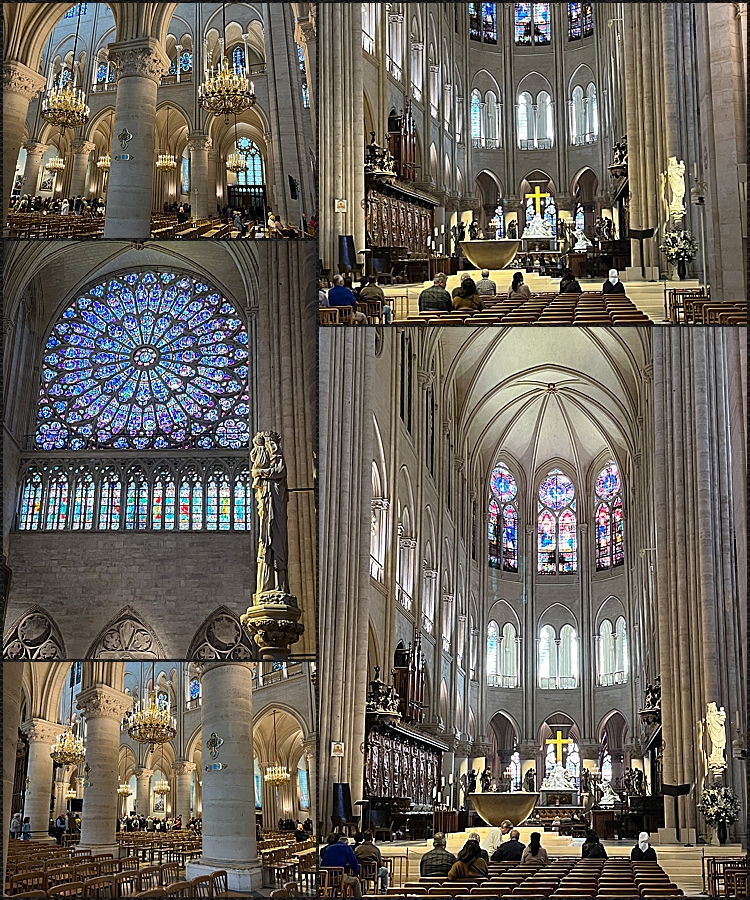
The wonders of the Cathedral. Blending in new artworks with (original?) stained glass windows.

I’m so pleased we managed to go. What a wonderful place! It’s free admission, respectful silence is requested and it is very busy but my goodness it was worth it. Just wandering around this amazing building which has been a place of worship for 860 years is really quite moving. It’s history, which is fascinating is detailed on the Notre Dame de Paris website but I think it’s worth mentioning here that the fire of April 15th 2019 which destroyed the mediaeval framework and the spire was seen as a national disaster. Millions were raised for the restoration and now today, since re-opening on December 4th 2024 this Cathedral stands as a testament to the skills of all the crafts people who worked on this huge project. I hope that in time there will be an exhibition showcasing some of these artisans, general builders and the like who have achieved this restoration in record time.

The wonders achieved by the restoration of this famous Paris landmark.

We came away having thoroughly enjoyed our visit but also aware that we had a train to catch at midday, the TGV from the Gare de L’Est to take us down to Avignon for the next part of our trip. Provence here we come!

Walking back to the metro:- Sainte Chapelle on the left, Palais de Justice de Paris top right and the Conciergerie bottom right.

Travelling from Switzerland to Provence.

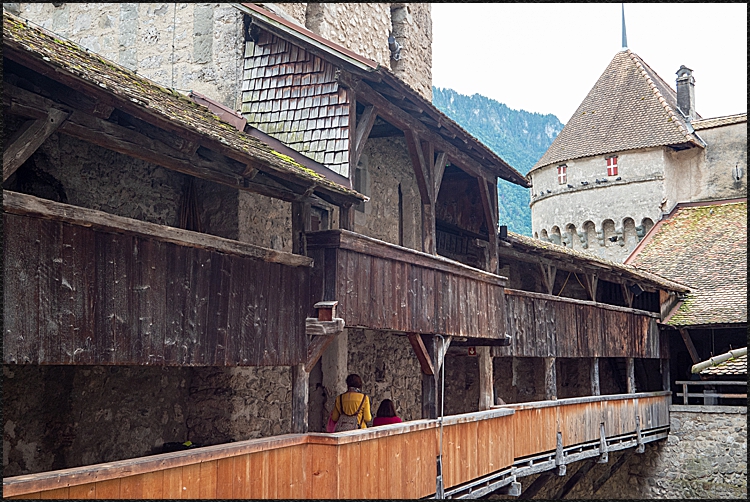
Chateau Chillon bordering Lake Geneva.

It’s never easy leaving the beautiful scenery of Switzerland but as we were heading for our favourite area of France, it wasn’t too much of a wrench.

Our first stop was Montreux in the heart of the ‘Swiss Riviera’ on the shores of Lake Geneva. Already the weather was improving as we walked a little way around the lake in the welcome sunshine. It wasn’t long before we spotted what we were looking for …the statue celebrating a rock legend, Freddie Mercury. Not surprisingly there were a number of people wanting to have a picture with the great man, I wasn’t going to miss the opportunity either.

Freddie Mercury by the shores of Lake Geneva.

I’m sure Freddie would have approved of both the statue and the location and the dedication on the plinth. What a great tribute.

Grabbing a quick lunch and raising a glass to the man himself we then drove to another famous landmark, Le Chateau Chillon. The word ‘Chillon’ means rocky platform and that’s exactly what this castle sits on, its part and parcel of the rock itself. It’s surrounded by a natural moat and can be accessed from all sides but visitors these days take the easy route along the bridge.

The underground crofts of the castle plus stained glass and the decorated roof of the chapel.

There is evidence everywhere that the castle was hewn out of the rock. The stony floor and vaulted Gothic ceilings are superb but the rooms underground hold a dark history. As well as storing wine and beer barrels, much of the space was used to house prisoners. ‘Offenders’ were chained to the stone pillars and fed meagre rations. The most famous prisoner, was Bonivard, a priest who converted from Catholicism and became a Protestant. Centuries later, the poet Byron was so inspired by the story that he wrote the now famous poem, ‘The Prisoner of Chillon’.

It’s an extensive fortress and has many rooms; the cellars and dungeons being the most interesting. Chateau Chinon has lots of architectural details; paintings, murals and furniture and because of its shape there are several courtyards and interconnecting walkways. If you’re in the area this castle is well worth a visit, not just for its historical significance but for it’s location right on stunning Lake Geneva. After we came out we walked in the garden, bought an ice cream from the shop and sat on the castle wall enjoying the view.

One of the covered walkways.

It’s just twenty minutes to the French border following around the lake. Our hotel that night was excellent and the staff were great. Happy to recommend Hotel le Leman at Saint Gingolph and the lakeside resturant, Restaurant du Port À Meillerie where we ate that evening.

The sun setting over Lac Leman and the view from our balcony.

Wow what a superb breakfast! Ready to face the day we set off in the direction of the medieval city of Annecy. It took us a while to get to the lake which was annoying as we had quite a drive ahead of us from there. Thankfully we managed to find an underground car park just by the historic centre although we didn’t have lot of time to explore or see the old gates which are preserved in what was a fortified town. After stretching our legs walking along the lakeside we turned towards the old town and of course I had to take a picture of the iconic ‘Palais de l’Ile’. It’s built on a rocky island and looks a little like a boat marooned on the river. This town is as you would expect very touristy so after grabbing a baguette for lunch we got on our way again. It was easier to find the road out to the motorway than it had been coming in.

Lake Annecy and Le Palais de I’lle.

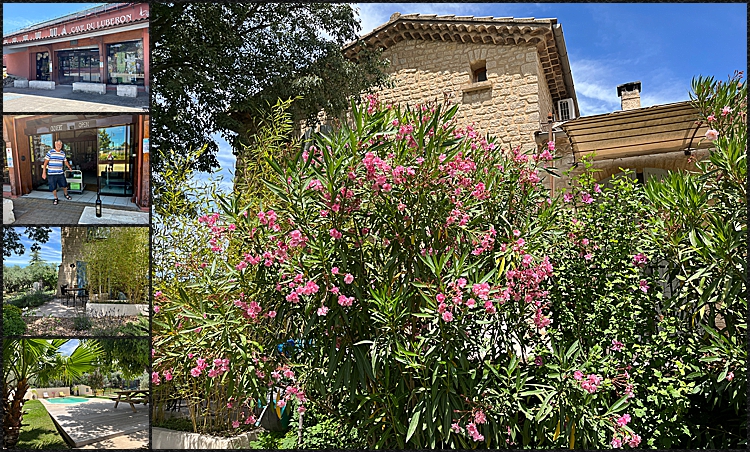
And now we were heading to Provence and our gîte for the week in the village of Lagnes. We’d stayed in this charming Provencal village the year before and it had suited us so well that we decided to go back again. Aurelie and Fabien, the owners are very welcoming and the rooms in the gîte are quite spacious. Although it’s part of the house, the accommodation is self-contained with a private patio leading off from the bedroom. Another reason that we like this gîte is we can use the pool at any time and bbq when we like and there’s no problem with parking.

Lagnes is very unspoilt and has many narrow paths and covered walkways between the old houses. The XIIIth century chateau which is perched on the rock overlooks the village. We walked up there one evening as you get a magnificent panoramic view from the top. The bakery is a short walk from the gîte as is the pub but nearer still is the excellent pizza place. Just one meal there is not enough, le Monde à Sa Porte does great pizzas. We went twice and had a thoroughly good meal on both occasions.

The gite at Lagnes, also the Cave du Luberon which we visit (note the trolley). It’s a necessary part of the holiday.

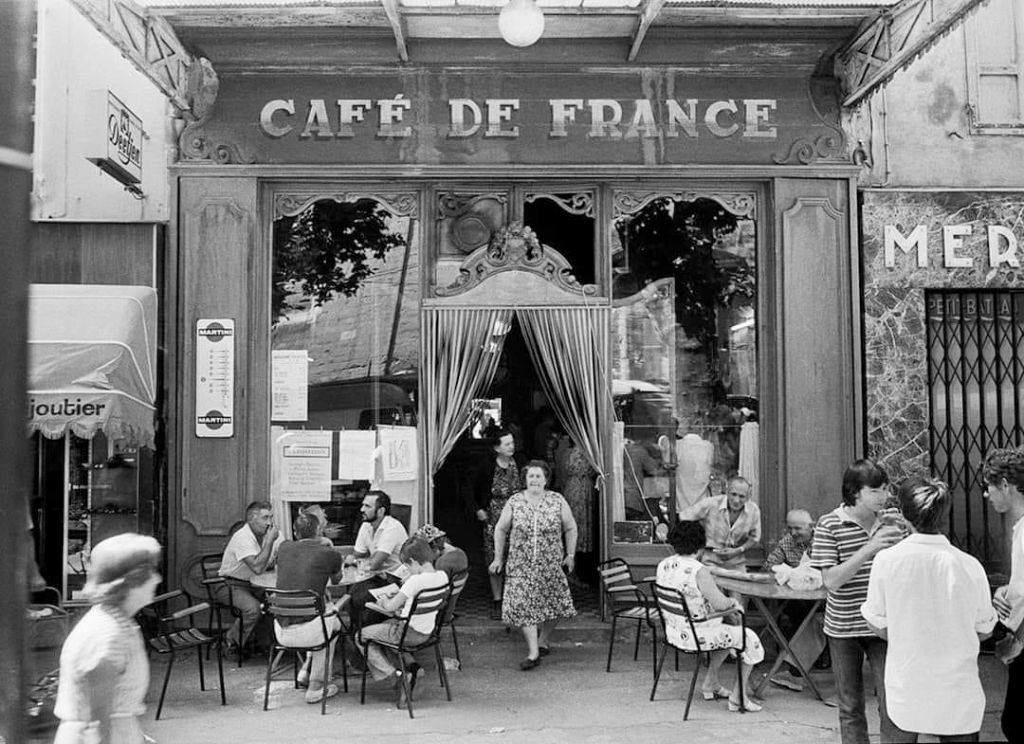
I can’t speak highly enough of Provence and particularly the south east of the region. It’s our favourite part of France and because we’ve been going there for many years we know the area pretty well. We always go into L’Isle-sur-la-Sorgue which is the nearest main town to where we stay but avoid Sundays when the Brocante (Bric & Brac) market is on. It’s impossible to park that day and where once it was somewhere you could pick up a reasonably priced antique and wander easily around the stalls, it’s not like that anymore. We like to go into the town mid-week on a Thursday to the locals’ market and sit in the square outside the Cafe de France with a beer and watch the world go by. I’ve copied this picture from their website. Not sure how long ago it was taken but the cafe itself has been going since 1903. Incidentally, this is not me in the picture!

The famous Café de France in the centre of L’Isle-sur-la-Sorgue.

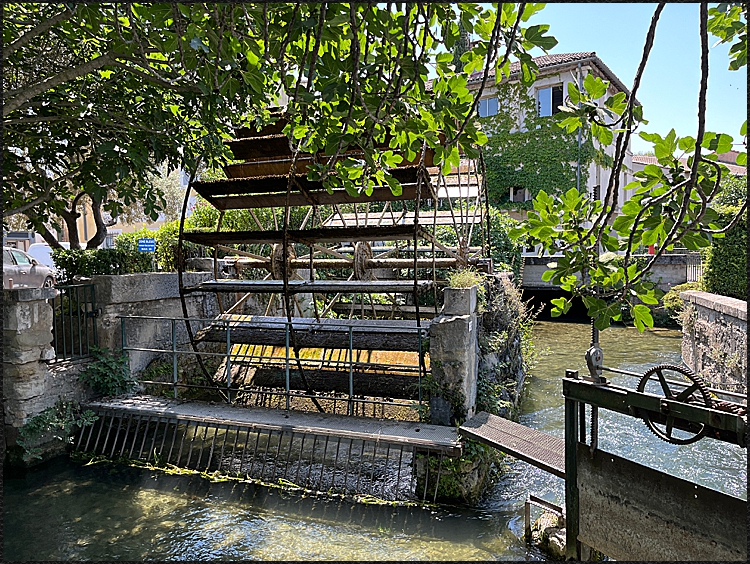
We have the TV chef Keith Floyd to thank for introducing us to this part of France and to L’Isle (as the locals call it). We watched a programme, probably thirty-five years ago now, where the chef had set up his grill on a bridge and was cooking, glass of wine in hand of course. He was waxing lyrical about the town and when the camera swung round you could see why. This ‘Island city’ is very picturesque with its canals of clear, blue water, little bridges, flowers spilling over the tops of the railings and giant waterwheels turning in the Sorgue river. Fortunately although the town is much busier than it used to be it still has lots of charm and we always enjoy walking around and popping into some of the more bohemian, independent shops.

Thursday market in L’Isle-sur-la-Sorgue followed by a beer.
One of the waterwheels along the canal in L’Isle-sur-la-Sorgue.

Whilst we’re in Provence we travel around enjoying the countryside, the villages and soaking up the history and the atmosphere. It’s only recently that we’ve discovered the village of Oppéde-le-Vieux. This medieval village is off the main tourist route and is quite remote. You can park a little way outside and pay a small amount or there’s free parking in Oppéde village and enjoy the 30-minute walk to the old village. There’s a well laid out botanic garden at the start to the village which is full of plants and shrubs including ‘garrigue’, which enjoys this dry, Mediterranean climate. Further along the path towards the village is the graveyard which we had a wander round before arriving at the cobblestoned ‘Place de la Croix’, the centre of the village. We were tempted to get a drink at one of the two cafes in the square but decided to wait as we wanted to head up to the Chapel. It’s quite a climb but worth it.

The medieval village of Oppéde le Vieux.

At the start of WWII there were around ten people living there. After the war, the interesting ruins attracted artists and students studying architecture and gradually a community grew. Thanks to them the houses, churches and castle ruins were protected and today the village is well preserved. I imagine it’s a heritage site since grants have been procured enabling the ruined castle to be saved from further decay.

The beauty of this village is that it is remote and is more or less unchanged from medieval times. There’s a tea shop in the Place de la Croix where you can sit in the small courtyard and enjoy one of the owner’s refreshing drinks. Perfect to revive you after a steep climb up to the church and a scramble over cobbles on the way down. It’s worth having a look in the boutique shop there where I always find something to buy.

During our week this time we went to several places and rather than a blow-by-blow account I’ll finish this Blog by mentioning a few towns and villages and add a couple more pictures.

The small Provencal villages of Cucuron & Ansouis

We’d spent a pleasant morning wandering around Apt which is the main town of the Luberon. It has a distinct Arabic feel to part of it with several spice stalls and Moroccan carpets on sale in the Saturday morning market. We found a good wine shop where we bought a couple of bottles of wine to take to our friends who live near L’Isle-sur-la-Sorgue. It was important to buy ‘good’ wine from a vintner rather than a supermarket for this special lunch. On the way back from Apt we meandered over the Luberon Hills and explored the medieval villages of Cucuron & Ansouis. In the latter, we came across a cafe and had a very reasonably-priced lunch sat under a large Plane tree. The castle is well preserved but then it is privately owned. There’s also a beautiful little church in the village with a wonderful set of steps in the shape of a fan.

Le Verger des Papes restaurant at Châteauneuf du Pape

I want to mention the village of Châteauneuf du Pape which is, like many settlements in the area, perched on top of a hill surrounded by fields of grapevines, (you have probably heard of this famous, full, red-bodies wine). At its summit is the ruined castle which was built in the 14th century by the popes as a summer residence. There’s not much left of the castle so it’s easy to walk round. The adjacent car park is free too. It was quite a drive there but we like the restaurant which is just a few steps down from the car park. The food at Le Verger des Papes is excellent but not cheap. Sitting in the garden you look across the Rhone valley to Avignon which on a clear day you can see the famous Palais des Papes.

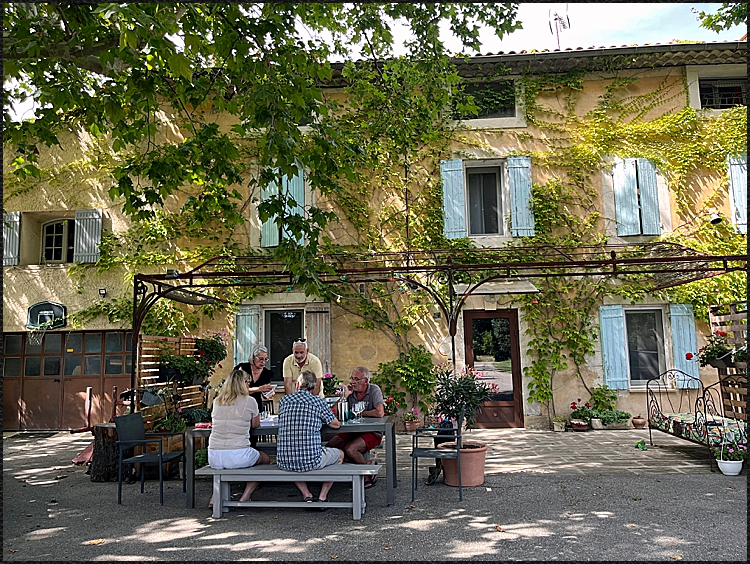
A typical Provencal Mas (Farmhouse). We are enjoying the company of friends over an unhurried lunch in typical French style.

Just a couple more places to mention which we always make time to visit. Venasque is one, famous for its cherries also the lovely little chapel there and wonderful views from the ramparts and St Didier, where you must head for the nougaterie shop run by familie Silvain. Oh and I almost forgot Lacoste which is one of our favourite villages. There are so many worth visiting.

I hope my tale of our week in Provence has inspired you to travel that way and explore the countryside and the villages and the markets and all the thing that make this such a wonderful area. Thank you for reading this rather lengthy account. I could have written more …

A quick visit to France

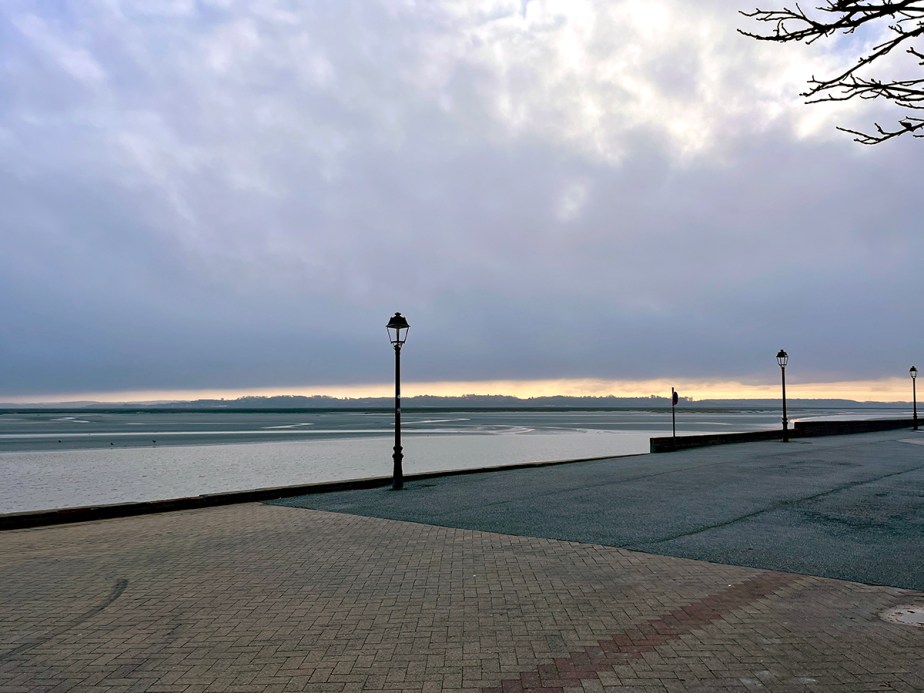
sun setting over the sea at Le Touquet, Northern France.
Setting sun over the sea at Le Touquet

It was just a co-incidence that we’d chosen to stay overnight at Montreuil-sur-Mer after stocking up on life’s essentials at the Hypermarket at Cite d’Europe.

Montreuil was a source of inspiration for Victor Hugo who wrote the novel ‘Les Miserables’. It’s recently been televised by the BBC and so several of our friends were asking whether this was the reason we’d chosen to stay there … it wasn’t. We thought that instead of going straight home after our mammoth shop it would be a nice idea to stay somewhere not too far away from Calais. Montreuil is only an hour down the motorway and it turned out to be a very good choice.

On the way there we came off the motorway at Le Touquet as I wanted to take a picture of the sun setting over the sea. I’m glad we did because as you can see from the shot above, it was a beautiful sight.

Having arrived at our hotel we got a bit of a shock as we tried the door to the old building which was locked and then realised the place was empty apart from a cement mixer! Major refurbishments are going on so we were relieved when a workman directed us next door to the open part of the hotel. We’d definitely recommend Les Hauts de Montreuil. We were given a nice warm welcome, the bedroom was huge and the meal in the evening was excellent and if that wasn’t enough the choice at breakfast was amazing – everything you could imagine include home-made creme- caramel!

Hotel Les Hauts de Montreuil-sur-mer. France
Hotel Les Hauts de Montreuil

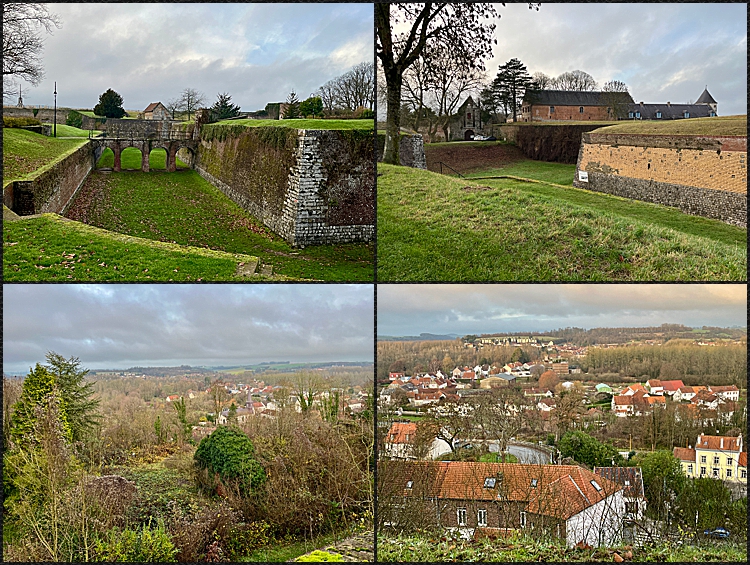
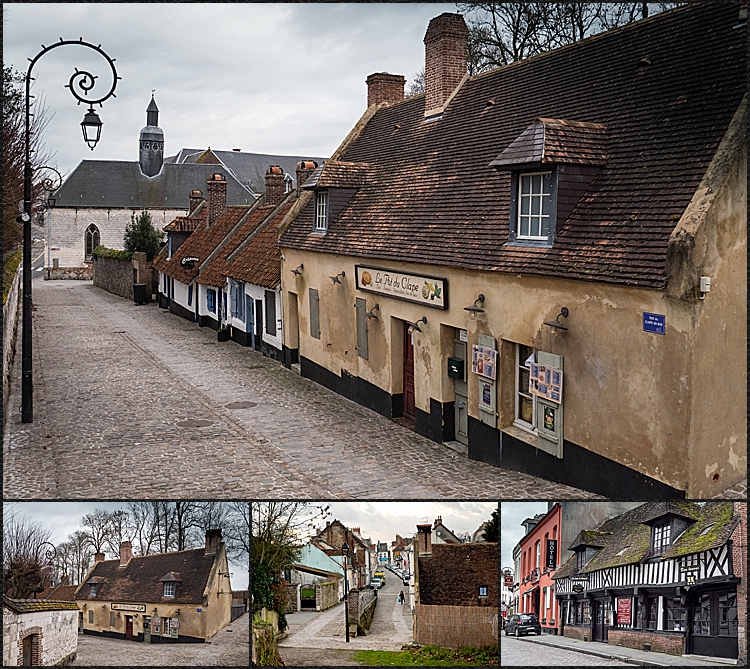
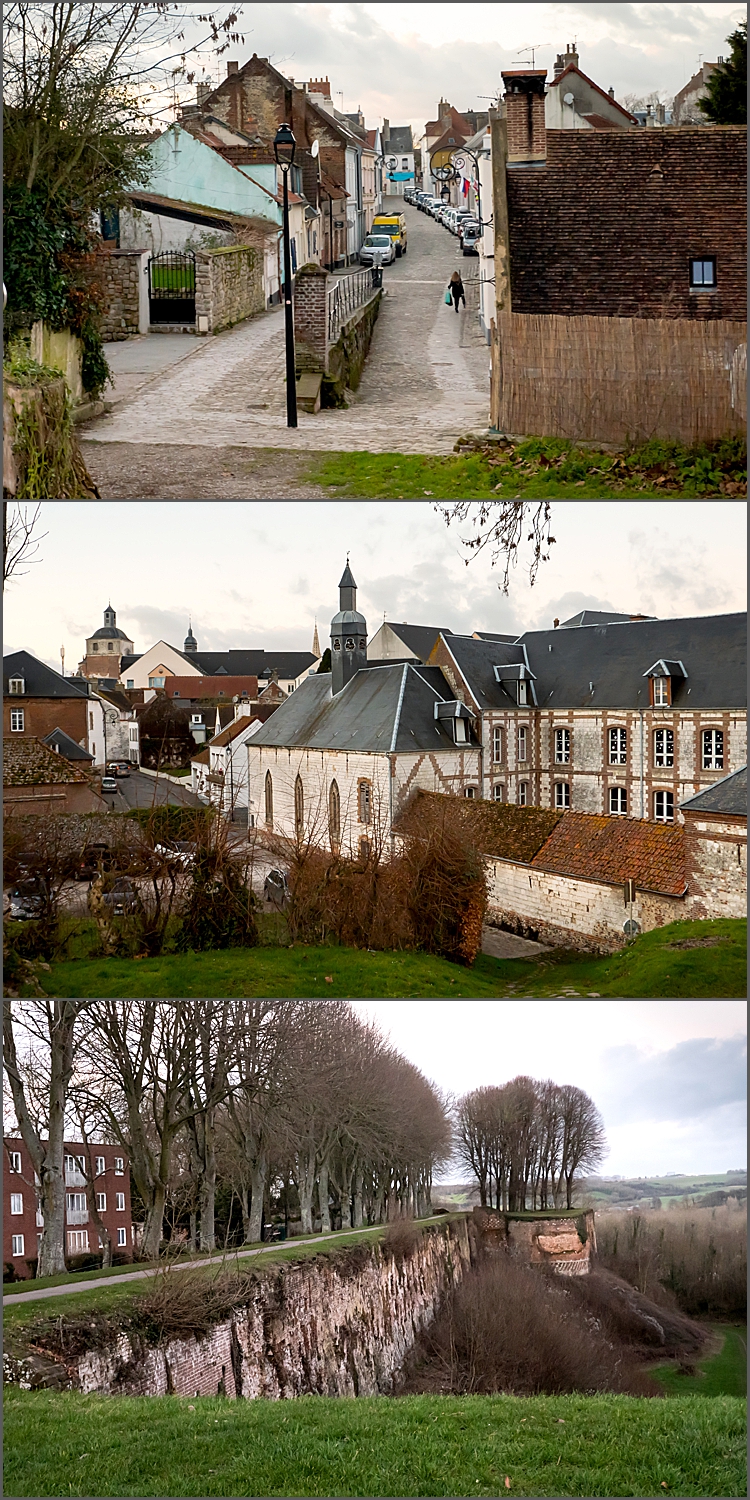
It was late afternoon when we arrived so we just had time before it got dark to wander up to the ramparts. Apparently there’s 3km of them so Montreuil was pretty much a fortress and still is. The street, Clape-en-Bas with it’s old houses built of mud is very picturesque but as the light wasn’t good I waited until the next day to photograph it.

Streets in Montreuil-sur-mer, Pas-de-Calais region
Streets in Montreuil-sur-mer (near the ramparts)

The following day was bitterly cold and very grey with a promise of snow later. Nevertheless we had a good walk round the town. I took a few pictures of Rue Clape-en-Bas and then we walked up to ‘The Citadel’ which was built on the site of a former royal castle. Just shows how important a place Montreuil was. Every summer the town puts on a ‘Son et lumiere’ show in the Citadel celebrating Victor Hugo’s ‘Les Miserables’

The Citadel in Montreuil-sur-mer
The Citadel, an ancient monument and two views of the Ramparts.

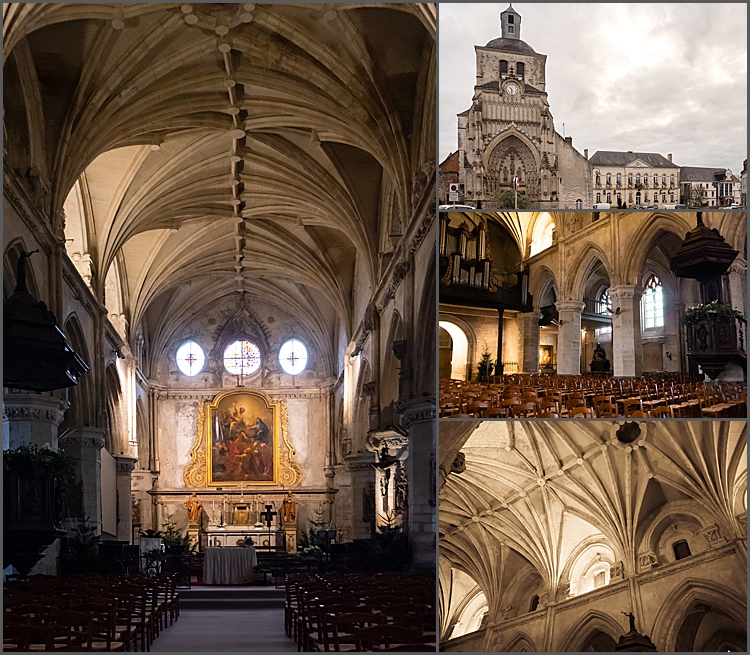
After walking round a section of the ramparts we ended our walk round by popping into the main church. I thought it was a rather austere building on the outside although the carvings around the door are interesting. The church dominates one of the town’s large squares (lots of free parking!) and dates back to the 13th century when it was a monastery. The fan-vaulted ceiling is impressive as is the altar, the stained glass windows and the medieval tombs. Definitely worth a visit.

Church of Saint-Saulve, Montreuil, France
Church Saint-Saulve, Montreuil

This really had been a short trip to France but we’d packed quite a bit in and had a full boot of wine to show for it and a few other goodies too …and we beat the snow that fell on Montreuil that evening.

Beautiful sunset for our night by Lake Geneva.

Although we were sad to leave Provence we were so excited about staying in Switzerland for a few days. On the way however we’d booked into an inexpensive little hotel right on the shore of Lake Geneva in a village called Meillerie.

Quai de Meillerie
Meillerie by Lake Geneva

Is there anywhere by this beautiful lake that isn’t amazing? The views are stunning and the scenery …breathtaking. Meillerie is on the French side of the lake just a spit away from the Swiss border. It isn’t posh like Evian and the hotel, Les Terrasses certainly wasn’t expensive. The bathroom was smaller than our double-wardrobe at home but it had everything squeezed in there so no complaints and the breakfast was very good. The room even had a  little balcony looking over the lake.

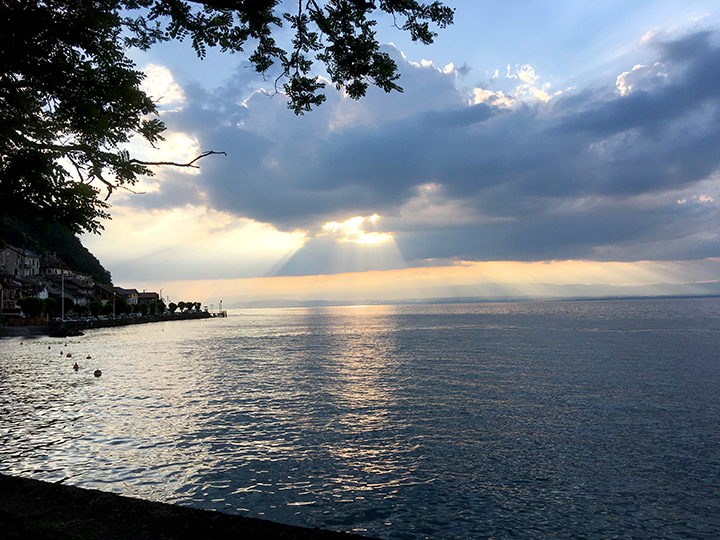
Beginning of a sunset over Lake Geneva by Meillerie
The start of the sunset

We’d already booked a table at the lakeside restaurant just down the road as it had very good reviews and deservedly so. We had also stopped there just for drinks two years earlier when we were travelling from Switzerland to Provence. Le Restaurant du Port  is a really busy place and is only open between May & the end of September. This is the place to get perfect fish …of course.

Beginning of the sunset over Lake Geneva by Meillerie with swan
And then to complete my picture a swan arrived.

By luck we’d been given a table right by the side of the lake and even more exciting was the sunset that evening. I cursed that I hadn’t got my camera with me but my mobile has done a pretty good job. What I couldn’t understand was why  I was the only one bobbing up and down taking pictures?!

Maybe the reason was that sunsets over the lake happen quite a lot and I guess most of the people at the restaurant were locals although definitely not all.

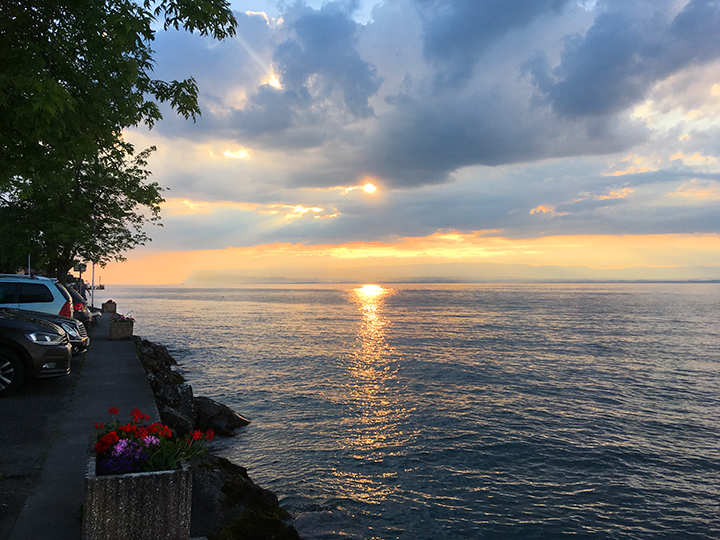
Sunset over Lake Geneva by Meillerie quay
Spectacular sky but the sunset effect is disappearing!

My man is quite understanding about me taking pictures; he’s used to it so he didn’t mind me jumping up and down to take yet another one. He knew I wouldn’t ignore a sunset as good as this and anyway the meal hadn’t arrived yet and he was tucking into the wine, so that was okay!

Sunset over Lake Geneva by Meillerie
Sunset is looking good again!

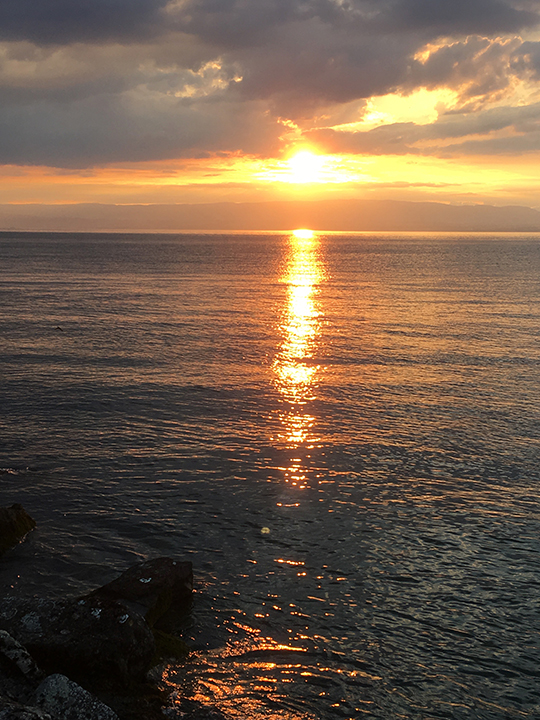
Beautiful sunset over Lake Geneva by Meillerie
Doesn’t need a caption does it?!

Beautiful sunset over Lake Geneva by Meillerie
As sunsets go, this one was breathtaking.

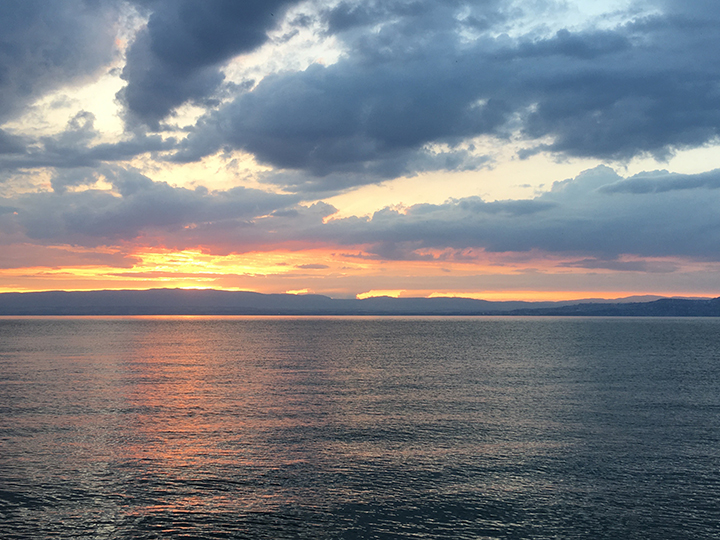
Sunsetting over Lake Geneva by Meillerie
Over all too soon.

What a night! A fantastic meal, a superb setting and an unforgettable sunset oh and the wine was pretty good too!

Switzerland, here we come!

Two weeks in Provence.

I guess we’ve been visiting Provence for almost thirty years. It’s all down to the T.V. chef, Keith Floyd. He was doing a cookery demo in the pretty town of L’isle-sur-la-Sorgue chattering on as he used to do with a glass of wine in one hand whilst stirring a dish in the other. The camera panned round to show the river, one of the many waterwheels and the Provencal town houses …we were hooked. The very next year we were there and the magic has never gone. We love the town although it’s a lot busier than it was all those years ago.

L'Isle-sur-la-Sorgue, Venice of Provence.
L’Isle-sur-la-Sorgue, Venice of Provence.

For the last five years we’ve stayed at Mas de Miejour which is just outside the town of Le Thor not far from L’Isle-sur-la-Sorgue. The little cabin known as Le Cabanon, (small house in Provencal), feels very much like a home from home although where we live is bigger and a few centuries older! Le Cabanon is tucked away in the extensive grounds of the Mas de Miejour

Fred & Emma own the 19th century farmhouse (le Mas)and have several B & B rooms, cottages and the little cabin which is just perfect for us. It’s quiet, even the chickens don’t disturb us and we love their eggs for breakfast. The swimming pool is great and the area good for walking and cycling …very flat!

Mas de Miejour, le Cabanon
Le Cabanon at Mas de Miejour

The first Sunday we were there we decided to go along to the cherry festival in Venasque. The tourist info. on the village says ‘Venasque is perched on a rocky outcrop’, well they’re right about that. We parked at the bottom of the hill having decided we didn’t need to take the bus and by the time we’d walked up to the village we were definitely in need of a beer! The cherries were of course delicious as was the local wine however once the speeches started we went to explore the village. Not surprisingly it’s rated as the 126th ‘most beautiful village in France’.

Cherry festival at Venasque
Annual festival of cherries in Venasque

On Mondays we always go to Cavaillon. No it’s not rated beautiful but we like it because it’s not touristy. The market is very much for the locals and I know my espadrille man will be there and I always need to stock up for the year. Oh and the local butcher sells the best merguez anywhere.

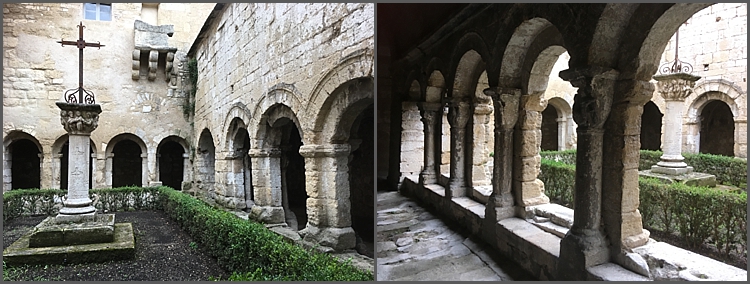
Cavaillon Cathedral, the cloister.
The Cloister in Cavaillon Cathedral.

I can’t remember which day we went to Monteux but as this isn’t meant to be a diary it doesn’t really matter. I was in my element in this town, particularly the old part. The website mentions all kinds of festivals including a spectacular firework display but nothing I could see that mentioned the wonderful murals everywhere, many in the ‘Trompe-l’oeil’ style. The picture on the top right for example shows arches with windows inset but it’s all painted to ‘deceive the eye’. I did of course take loads of pictures but the girl in the red dress painted high up on a building in one of the square’s was my favourite.

Some of the murals in Monteux near Carpentras
The pretty painted village of Monteux near Carpentras

Arles is another of our favourite places. Built in Roman times by the great river Rhone it’s often described as the gateway to the Camargue. It’s a vibrant city famous for the Amphitheatre although there are other examples of Roman architecture which get overlooked. Never mind the Romans, there are some interesting shops here, art galleries, usually a photography exhibition or two and lots of places to eat and drink and watch the world go by. And we found a parking place near the college which was free!

Amphitheatre in Arles & The Rhone
Arles amphitheatre and the wonderful Rhone river.

Walking the back streets of Arles is just as interesting as the main thoroughfares and less crowded too!

Around Arles
Some of my favourite features in Arles.

We couldn’t stay in Provence without visiting the Luberon and especially the town of Lacoste. I think everyone must head for Bonnieux or Menerbes as Lacoste is usually pretty quiet. We always pop into the church and then walk up to Pierre Cardin’s place which is a large 11th century chateau which dominates the village. A feature of the village is the narrow streets and the old stone houses and the stunning view across to Bonnieux and Mont Ventoux. It isn’t me in the picture in the bottom right, I just liked this shot of a very French lady looking out across the valley.

Lacoste village in the Luberon, Provence.
Lacoste in the Luberon. The chateau previously owned by the Marquis de Sade now belongs to M. Pierre Cardin.

Cottage in Lacoste
My favourite corner of Lacoste

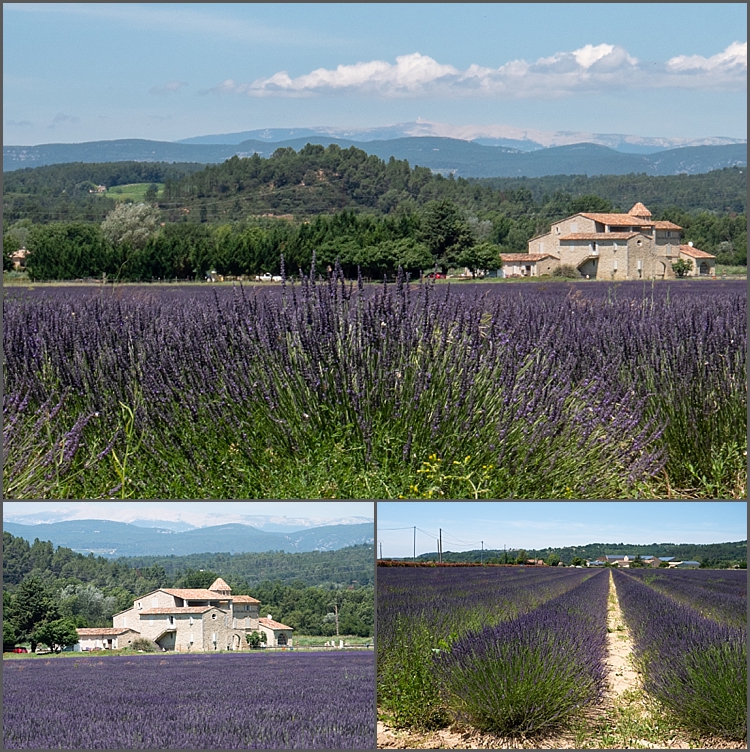
I could hardly finish this Blog without mentioning lavender. The lavender season hadn’t quite started apparently but it looked stunning to me. In the background you can make out the summit of Mont Ventoux. It’s the highest mountain in the region and has gained fame due to the Tour de France cycling race. Yes it is very windy and murky at the top but on a clear day it looks very magical.

Provence June 2018_0012

As usual we were sorry to leave Provence but we had Switzerland to travel to next …