Holiday in Kanchanaburi & Sangkhlaburi, Thailand.

As soon as we land at Bangkok we head out, north-west to the town of Kanchanaburi. It takes about three hours by car. We used to stay in Bangkok and catch the early morning train but quite honestly now as soon as we land we just want to get to our favourite place – https://www.orientalkwai.com we love The Oriental Kwai Resort. It’s peaceful, the gardens are beautiful, the pool is great and the food served at the riverside restaurant is excellent. In the evening there is nothing more relaxing than walking down to the riverside to watch the calm, waters of the River Kwai flow by as the sun sets slowly behind the trees.

Cottage no 10 at ‘Oriental Kwai’ – we’ve arrived!
Inside no 10 with welcoming flowers. The shrine is just by our balcony.
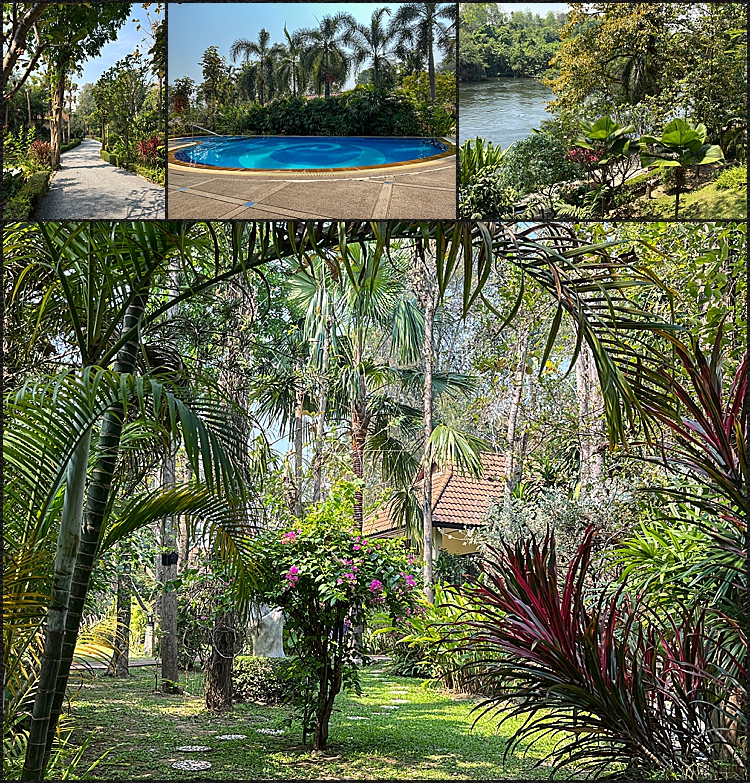
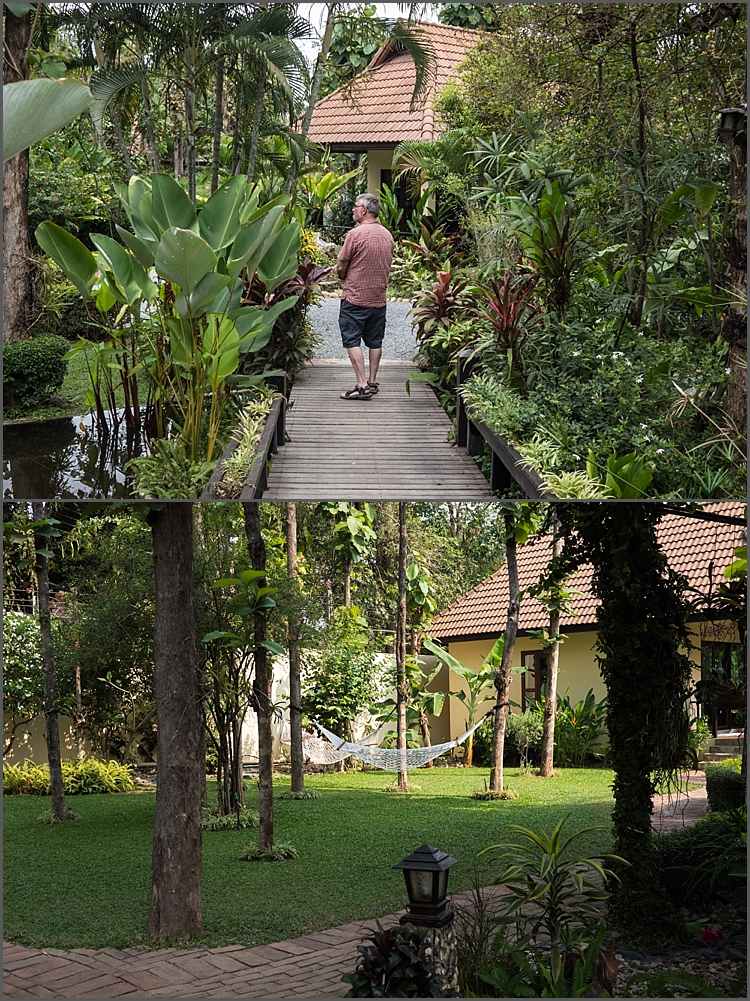
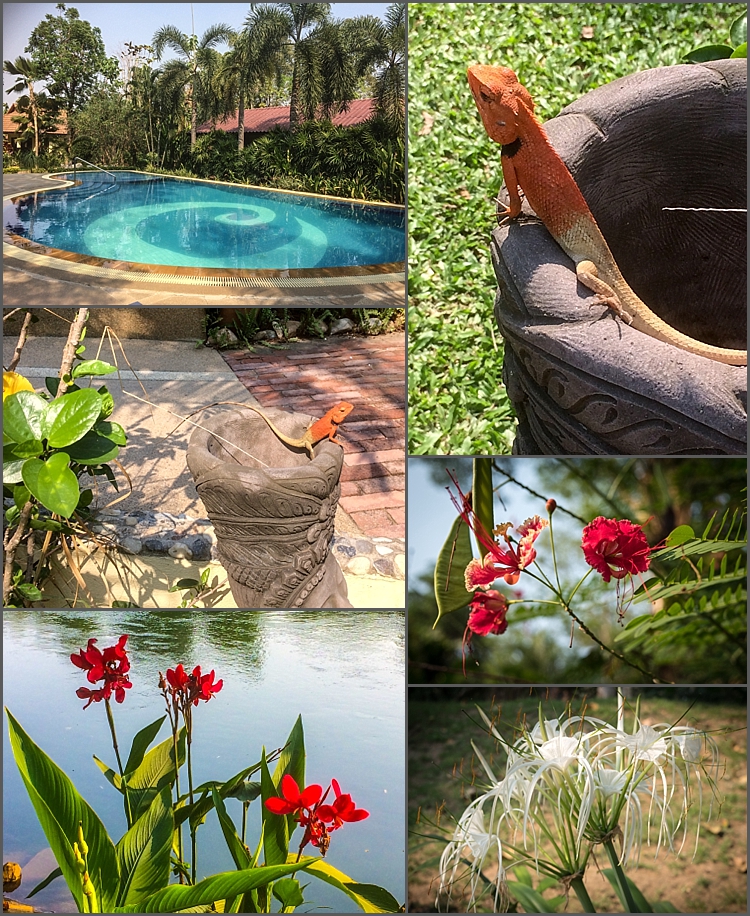
Beautiful, lush tropical gardens. Delightful swimming pool, rhs pic taken from the banks of the River Kwai.

Getting over jet lag didn’t take us long. On our first day I walked into the nearby town of Lat Ya and John cycled. At least my legs didn’t let me down unlike the bike …a flat tyre. Both feeling hot and not yet adjusted to the heat we called into the cafe bar on the way back. We ordered a cold drink, not having a clue what was coming but it was very refreshing.
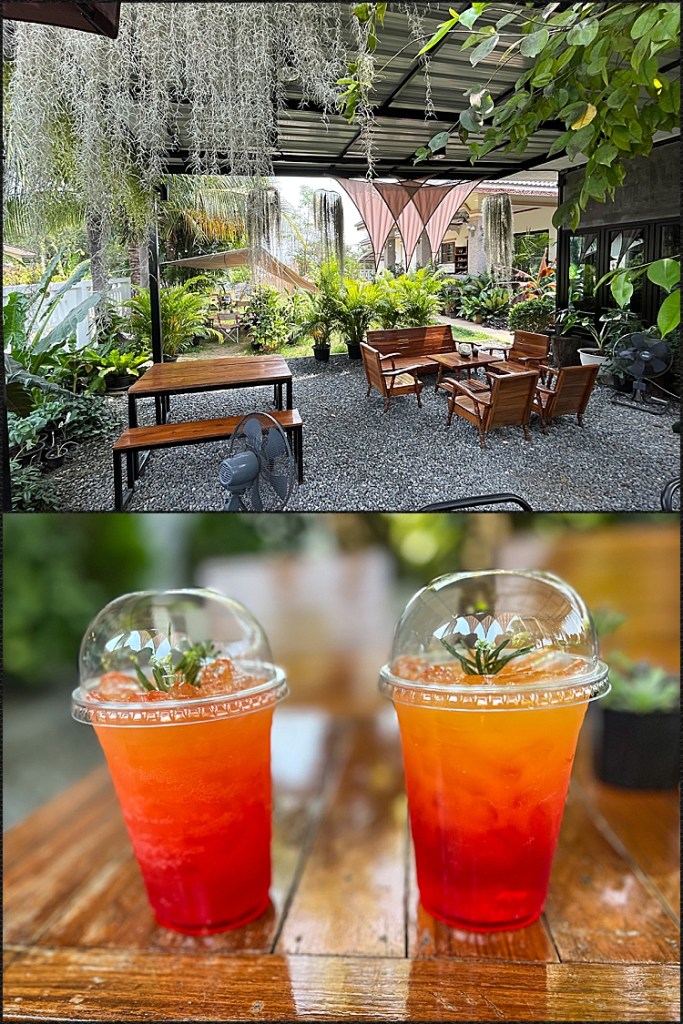
The shady patio area at the Slow Bar cafe and a very refreshing drink.

The owner very kindly, understanding the bike problem stored it away behind the garden gate. When we got back to Oriental Kwai, John told Evelyn, one of the owners that we’d had to leave the bike at the cafe. “No problem”, she said. “No-one around here would steal it”.

An over-energetic morning had left us rather tired so after a splendid lunch washed down with a Singha beer we spent the afternoo by the pool. A little later, as we always do, we walked down to the river to watch the sun go down.
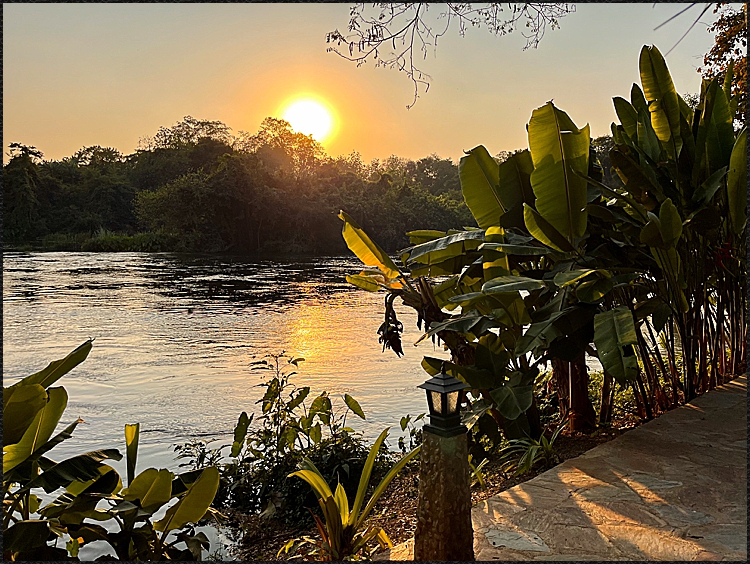
Sunset over the River Kwai.

A boat trip down from Oriental Kwai to Kanachanaburi is well worth it espcially if you can share the cost with another couple. You get a great view of the iconic bridge over the river and arrive in the city avoiding the traffic.

A trip down the river Kwai starting from the hotel.
The popular floating restaurant alongside the iconic bridge over the river Kwai.

We’ve been to the bridge many times but never seen the area so quiet. Maybe we’d got there before the tourist buses or perhaps the tourist trade just hasn’t picked up again yet?
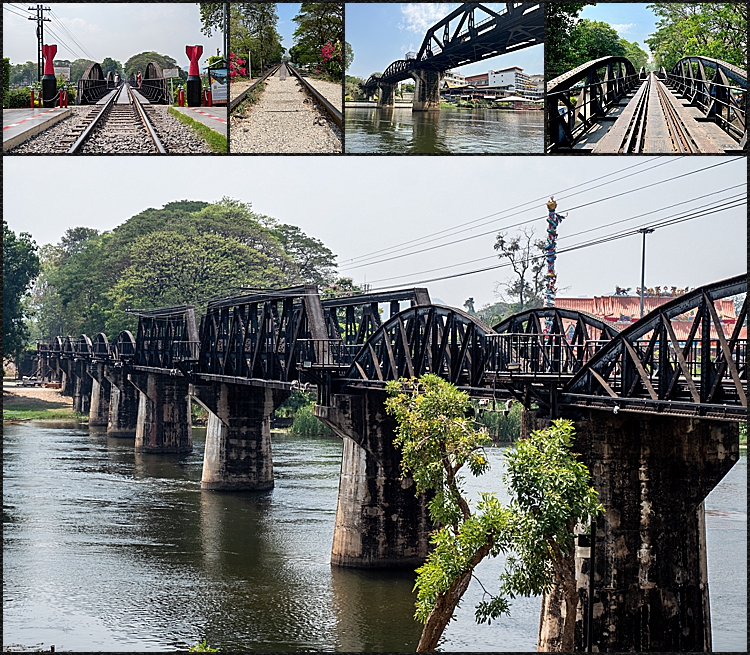
Great to take pictures without the bridge swarming with tourists.

The various stalls were really quiet but I made one trader’s day when I bought three of her bracelets. She waved the banknotes around to signify she was delighted to have made a sale.

The next day we picked up a hire car and John drove to Sangkhlaburi. It’s an easy drive until you get about forty kilometres from the town and then it’s hilly with lots of bends until you arrive down into the town. Goods views of the lake but it’s not easy for the driver to look.

Sangkhlaburi is a small town, surounded by mountains and sits at the end of the Khae Laem Lake. It has an interesting mixture of cultures because of its location near the Burmese border. The people are a mix of Thai, many from the Mon ethnic group who have their own language and customs and Burmese people who have left their country and settled in the town. It’s famous for its handmade wooden bridge which although it looks old, it isn’t. Spanning the river this bridge is the longest wooden bridge in Thailand and was built to link the town with the splendid Wat Wang Wiwekaram temple. It spans the Song Kalia river from the town to the Mon village of Wang Kha. A section of the bridge was washed away a few years ago and was quickly rebuilt. The water level of the lake drops dramatically in the dry season which is a good time to take a boat trip to see the three temples which were submerged when a dam was built across the lake and completely covered the village in the valley.

We chose to go to Sangkhlaburi at this time as we knew there was a festival celebrating young boys becoming novice monks. We were a little late getting there so we missed the boys and their families processing across the bamboo bridge but I got some pictures as the crowds went past us.

The Mon Bridge.
Young novices and their families celebrating this special day.

A little later that day we saw the young boys in their colourful robes; their hair closely cut and clearly getting used to their new attire. Traditionally the young novices serve in the temple for a minimum period of three months. These days some monks serve for as little as 15 days or a week. A family earns great respect and merit when a son becomes a monk.

Enjoying the sights of the river before returning to the temple.

Sangkhlaburi is not yet on the tourist’s radar but it won’t be long before it becomes a popular destination. True it’s a small town and there’s not masses to do but the Thai Buddhist temple, Wang Wiwekaram Temple is spectacular and well worth a visit; the boat trip to the sunken temples is a must and the ride through the forest to the new and huge floating Buddha which just a handful of Thai tourists have discovered makes for an interesting itinerary. We chose basic cafes on both nights where not surprisingly not a word of English was spoken (we didn’t expect it) and the menu was of course written in Thai. We managed to order beer and as we’re happy to eat most things, we were content with a rice dish. The second cafe had no pictures of the dishes but one of the diners came to our rescue having got an App on her phone which translated the menu (very handy). During our two-day stay we found the people very friendly and helpful.

On our second day we drove to a Mon-Karen village near the Myanmar border. It’s wise not to go right to the border and anyway there isn’t much to see. The road turns into a dust track before you get there which was enough to signal we should turn back.

I’ve mentioned the ‘floating’ Buddha which is a new statue built on one of the hillsides just outside of town but there is another important temple Chedi Phutthakhaya which we didn’t visit this time. It’s style is very different to that of the Wang Wiwekaram Temple and to be honest it wouldn’t look out of place on a Disney set. Lots of stalls selling tourist rubbish run alongside the car park. If you are tight for time definitely drive or walk up through the tree-lined path up to the new Buddha. The site is unfinished but even with Buddha covered in scaffolding, ‘he’ is magnificiant and can be seen ‘floating’ above the ground from miles around. It appears the temple has yet to be named. I can imagine when the temple is officially opened the celebration will go on for days. We really liked this area. It’s very peaceful and the way the route has been designed to wind through the trees is lovely. The views from the top are stunning and I particuarly liked the way you could glimpse the golden rooftops of Wat Wang Wiwekaram through the trees. The Wat was our next stop.

Fabulous views from the top.
Walking up to the new Buddha.
The beautiful Wat Wang Wiwekaram temple.
Many of the monks are from the Mon ethnic group.

The temple is open from 1.30am until 12.30pm and I should imagine whatever time you visit there will be groups of people sat everywhere along the marble corridors. When we visited there was an exhibiton of photographs hung all along the vast corridors. Brilliant pictures by various local photographers showing the lives of the local people, great portaits and group shots and Festivals. This little girl has her face decorated in traditional Burmese style with yellow ochre. (I’ve lifted this from Google) …”Traditionally, the women grind the bark of the thanakha tree on a flat circular stone with a bit of water. This creates a milky yellow liquid that dries quickly when applied to the skin. This mixture creates a powdery protective ideal not only for faces but also for the arms.” This little girl was very sweet and loved learning ‘Pat-a-cake’, no language barrier with this game.
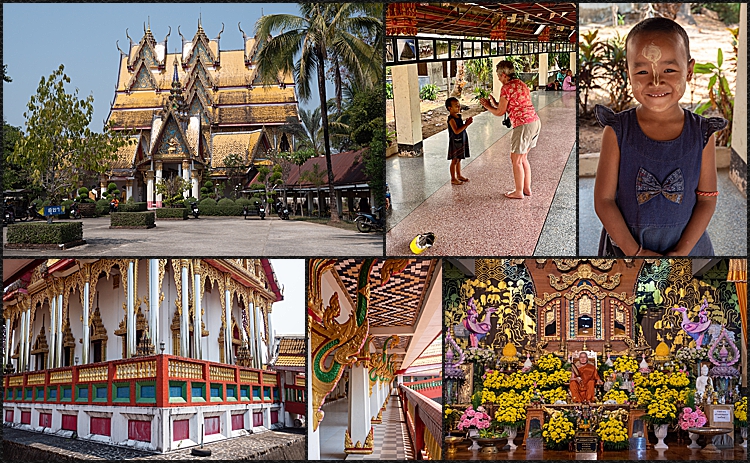
The temple is a sacred place for all nationalities living in Sangkhlaburi,
especially for Mon people.

All this walking round made us very thirsty so we headed down to the Mon village where I bought a T-shirt from one of the many shops lining the main route then we sat and had a cold drink followed by free bananas and tea.

Ready to face the afternoon heat once more we walked to the Thai side by the Mon bridge and came across a local boatman who for 500 baht took us on the lake to see the three sunken temples: the Karen’s Srisuwan Temple, the Mon’s Wat Wang Wiwekaram temple and the Thai Wat Somdet temple.

The only structure from the submerged town that remains today is the Waat Sam Prasob shrine, also known as the Sunken Temple. Built by the Mon and Karen tribes, it was once the heart of the old town before the dam flooded the area in 1984.

Srisuwan Karen’s Temple

As we were there in the dry season we were able to walk around and take a closer look at the inside. I was in my element taking pictures and would have stayed longer but our boatman had two more temples to show us.
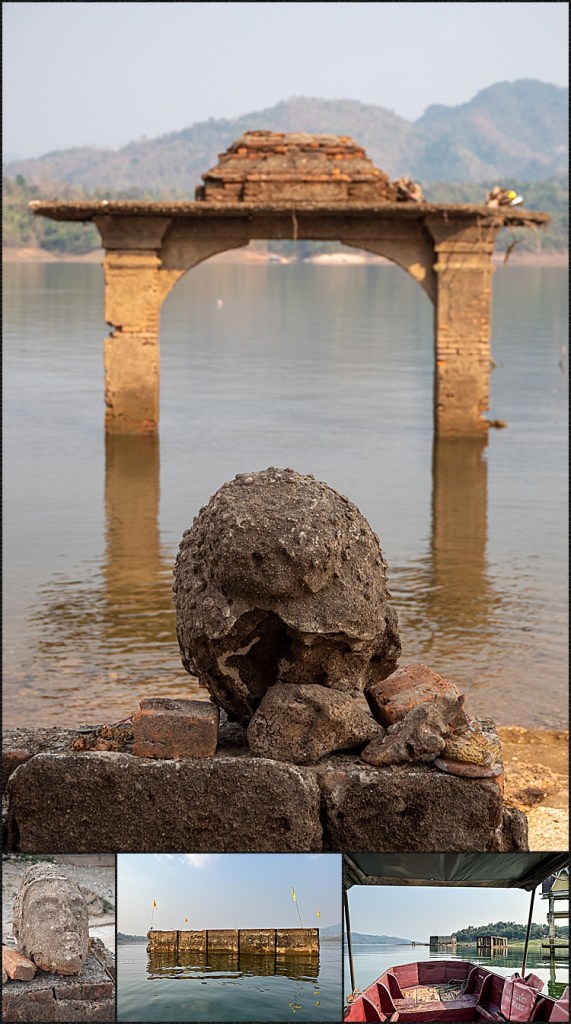
The middle picture is of the second temple -Srisuwan Karen’s temple, which we saw from all sides. (Not terribly interesting).

He then took us across the lake to the old Wat Somdet Temple. We moored and then walked up past a small village to this ancient abandoned Thai temple. It reminded us of Angkor Wat with all the tree roots entwined amongst the stonework.
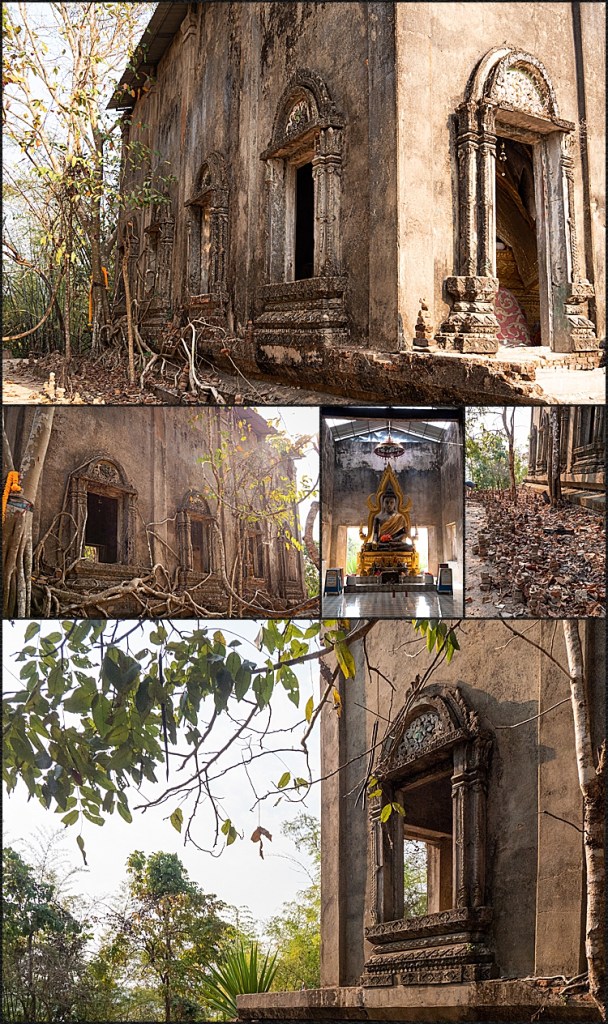
Thai Wat Somdet Temple

Having sailed back along by the Karen’s temple again we ended our hour-long trip with this delightful boatman by floating gently under the Mon bridge and sat for the obligatory picture with the bridge as a backdrop.
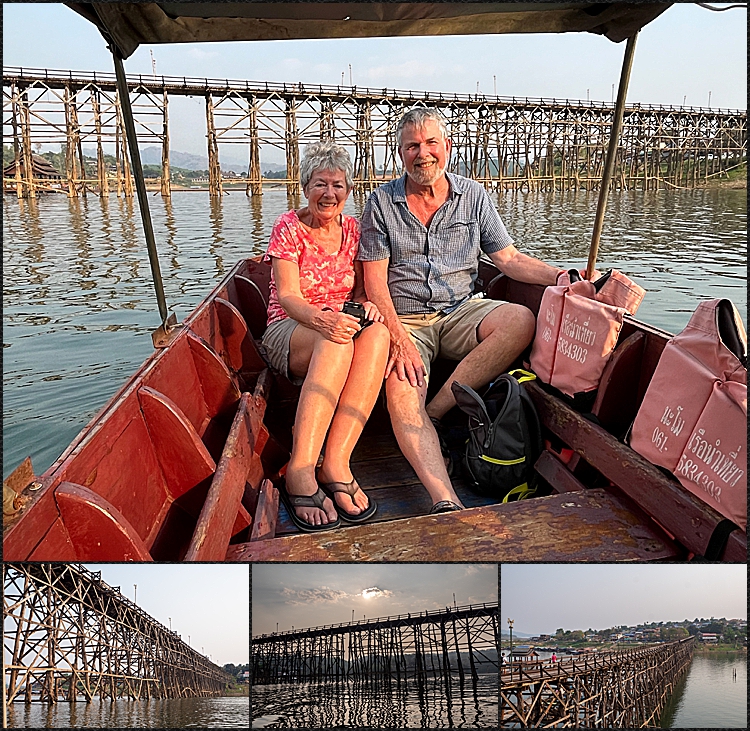
The specatacular Mon bridge and the Booths returning from the three sunken-temple boat tour.

It was time for a beer so we headed for the cafe on the Thai side of the Mon Bridge to watch the sun setting over the Song Kalla river. A final picture of our boat heading back was a fitting close to our two days in Sangkhlaburi. We felt we’d done the place justice on this our return visit. It is an interesting place and I’m sure it won’t be long before the town is firmly on the tourist route.

Farewell to Sangkhlaburi

Our last week in Thailand

We’d just spent a couple of nights in Sangkhlaburi in the north west of Thailand having hired a car in Kanchanaburi for our trip. John had enjoyed driving as the roads had been really quiet and the car was virtually brand new. We felt like seasoned travellers driving around but now it was time to return the car and get a lift back to Oriential Kwai. It was so good to be back. Once we’d checked in, there was just time for a quick dip in the pool before going down to the river to watch the sun setting whilst enjoying a beer.

Bungalow No 11 waiting our return, not to mention the fabulous pool. Who could resist?
One of the most peaceful places in the world with the river gliding by, the birds going home to roost and the sun setting on this idyllic spot.

The next day was Sunday and as we’d done quite a lot the previous two days we thought we’d have a fairly lazy day. John went for a bike ride whilst I took some pictures in the garden and had a swim.

Taken by John out in the country on his bike.
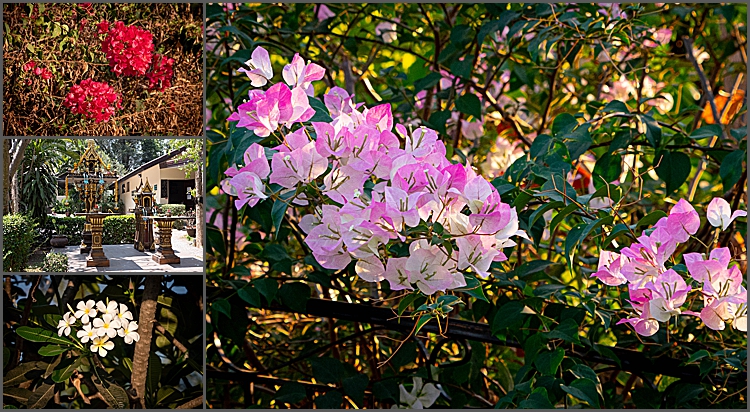
The garden is full of the most wonderful flowers.
Beautifully tended gardens at Oriental Kwai.

It was around mid-afternoon when Evelyn, who co-owns Oriental Kwai with her husband Djo asked if we’d like to go to the local Sunday market. One of the chefs was going to buy vegetables and we could have a lift with him on his tuk-tuk, this was actually a small motor bike with a sidecar. This is a big local market but even so we weren’t ready for how huge it was. Before now we’ve walked into Lat Ya the local village on market day and so we thought this market was in the same place, we were wrong. It was much further, the other side of the main road out of town, quite honestly we would never have found it.

The young chef seemed very pleased to chat to us as he drove along in the searing heat. Our eyes were burning from the dust and hot air even though we were wearing sunglasses, the chef wasn’t though. Dropping us off at the market he quickly disappeared into the crowd obviously heading for his favourite vegetable stalls.

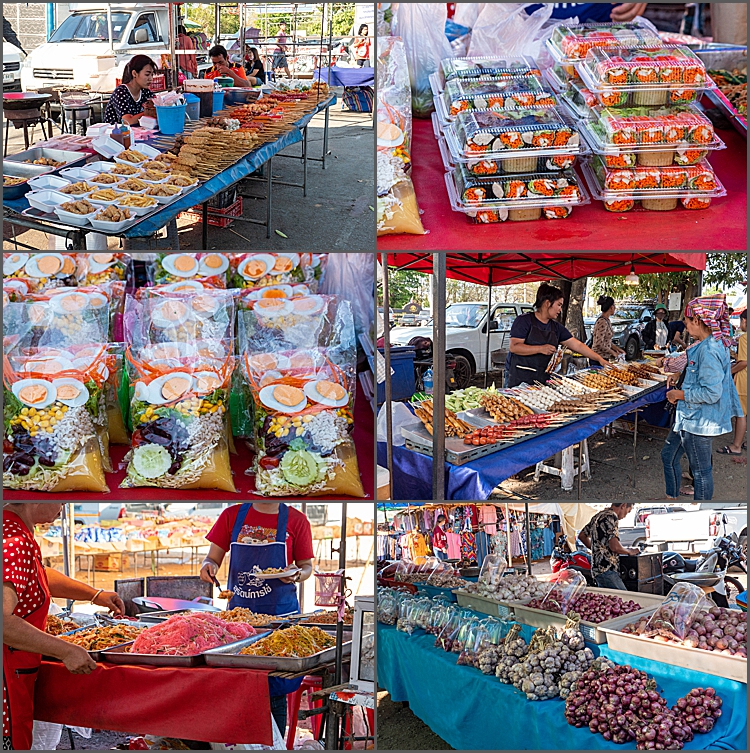
Lots of interesting things to buy.

I wouldn’t say we stuck out as we walked around the stalls but we were definitely the only people there who weren’t local. Fortunately no-one seemed to mind me taking pictures and some stallholders were quite amused to see two European tourists.

Everything looked such good quality, even the jumping toads on the fish stall (bottom left picture). The guy on the right seemed a little out of place with his array of knives and machetes for sale. We weren’t tempted by the knives or the toads!

We eventually found a stall selling bottles of water as our meagre supply had run out. It was just too hot for us so we escaped from the hustle and bustle of this busy market and sat in the park opposite. Only now were we realising we had quite a walk ahead of us to Oriental Kwai. We didn’t want to think how far …! We eventually made it back but not before stopping at a cafe for yet another cold drink. Djo was in reception when we arrived. He took one look at us and couldn’t believe we’d walked all the way from the market. Two very cold beers were quickly put in front of us – we’d earned them!
The next day we got a taxi into Kanchanaburi. There’s a tourist shop not far from the bridge which I like going into. It’s family-run and although most things are covered in layers of dust there are some Thai crafts in there a little more interesting than in the other souvenir shops.

We were so close to the bridge and as it wasn’t crawling with lots of coach parties we walked across. It’s an iconic landmark. I hope that people walking across think for a moment of all those men who lost their lives building the bridge and the infamous Thai – Burma railway.

The Bridge over the River Kwai with a water monitor swimming underneath.

It was time for a spot of lunch so we walked down to the cafe by the river. We had a prime spot overlooking the bridge with free entertainment courtesy of a water monitor. I’m pretty sure that for the rest of the day we lazed around at Oriental Kwai, swimming, reading, enjoying the sunshine, the wonderful food and the peace and quiet of this wonderful place.

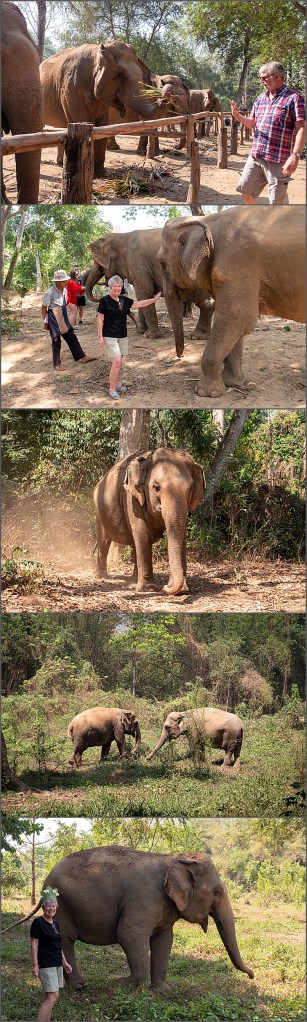
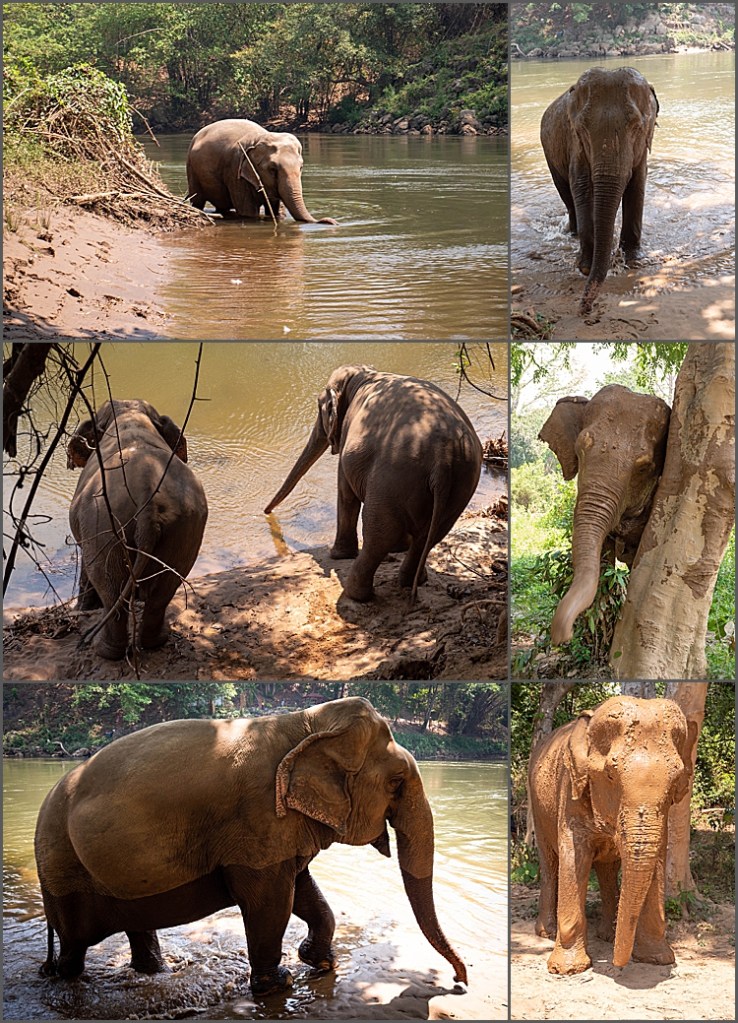
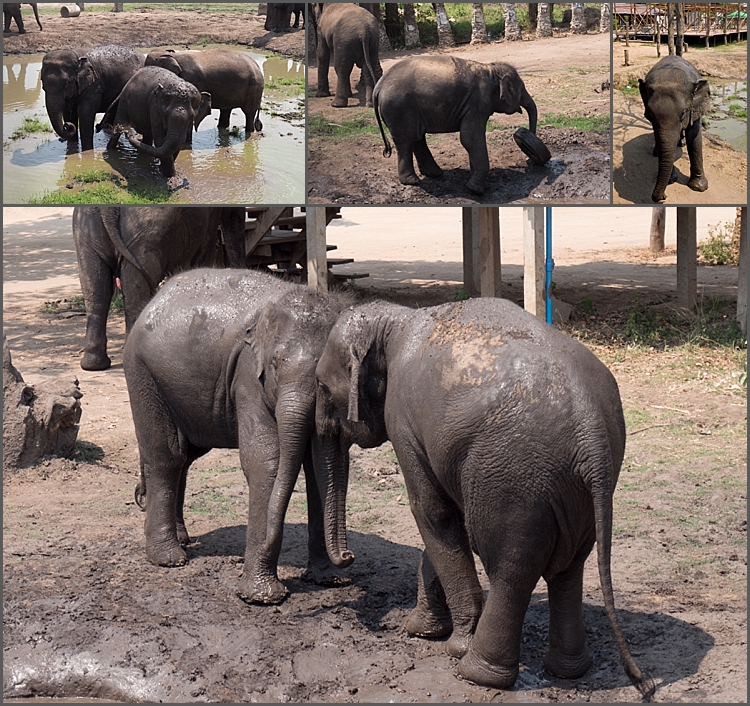
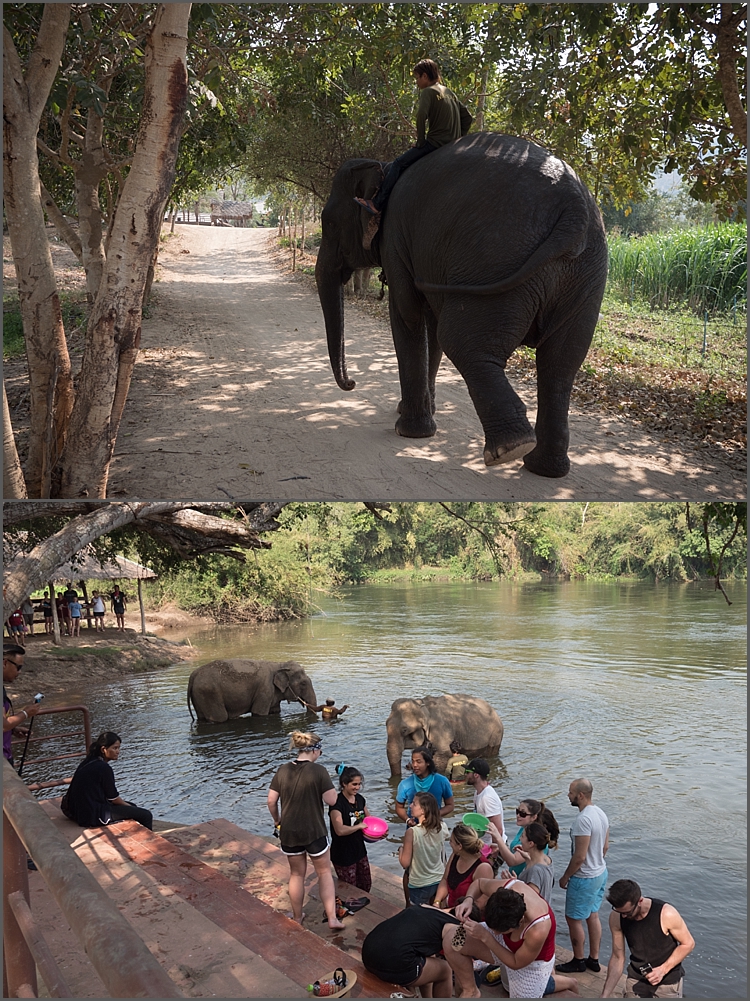
With our holiday almost over we decided to make this day a memorable one and booked to go to Elephant Haven, a sanctuary which opened in 2015 for seven rescued elephants. Elephant Haven is located in Sai Yok, a thirty minute drive out of Kanchanaburi. A mini bus collects you and you join other tourists for the day. We’ve been to several elephant camps before but this one particularly appealed to us as it’s on a small scale. The herd have the freedom to roam, socialise, enjoy a mud bath and cool down in the river Kwai which runs through the sanctuary. In this beautiful setting you can observe the elephants behaviour and learn more about their complex social structure. The emphasis is more about educating the visitors about the needs of the elephants and the work the project is doing to highlight the plight of the Asian elephant.

As you’ll see from these pictures, the elephants are very happy here and not surprisingly we had a fantastic time. It’s the perfect ending to this Blog on our trip to Thailand. We can’t wait to go back and hopefully we will be able to in 2021. Thank you for reading this, the following Blogs will, for a while, be about our trips nearer to home.

Lining up ready to eat as much sugar cane as possible (that’s the elephants).
Getting up close with the elephants.
Cooling off with a swim and a mud bath.
Thank you Eli for letting us share the day with you.

From caves to dragons to elephants in Thailand.

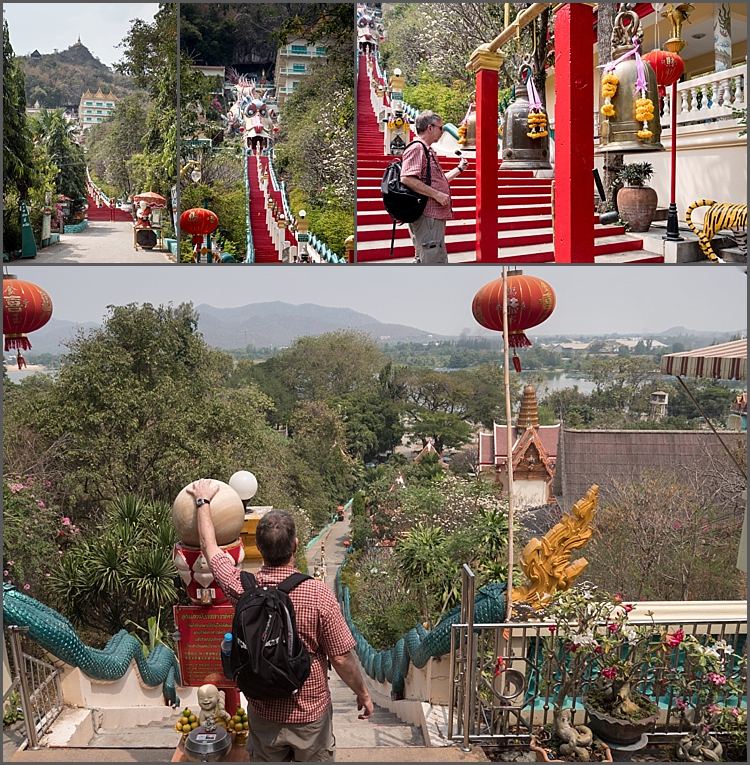
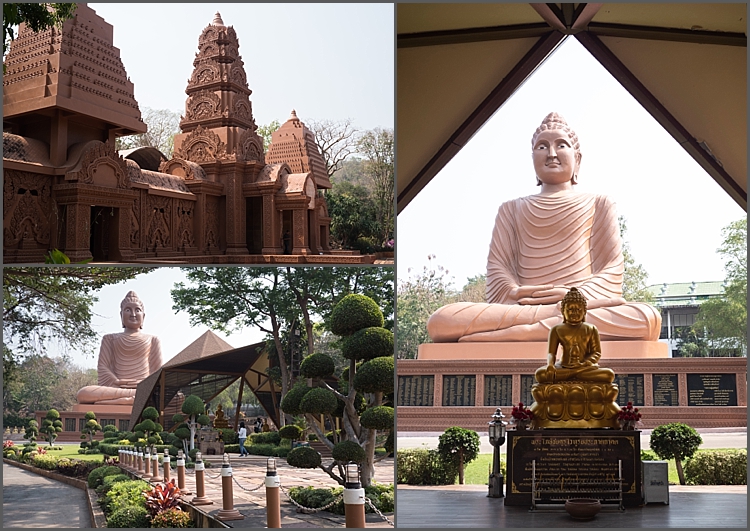
There’s always a danger when you visit a country like Thailand that you end up getting ‘templed-out’! If you’ve visited more than three temples in a day then you’ll know what I mean. This temple though is just a shortish trip out of Kanchanaburi and it’s well worth a visit. It’s called Wat Ban Tham or The Dragonhead Temple because there’s a long staircase that leads up the hill into a dragon’s head and through its body! You then walk into a cave, up a few steep staircases and eventually you arrive at the top. And what a view! We hit the gong just for the hell of it (three times according to Buudhist tradition) as we felt we’d achieved something.  Would you believe there was no one else around although someone had lit some incense sticks earlier.

Wat Ban Tham_0001

Wat Ban Tham_0002

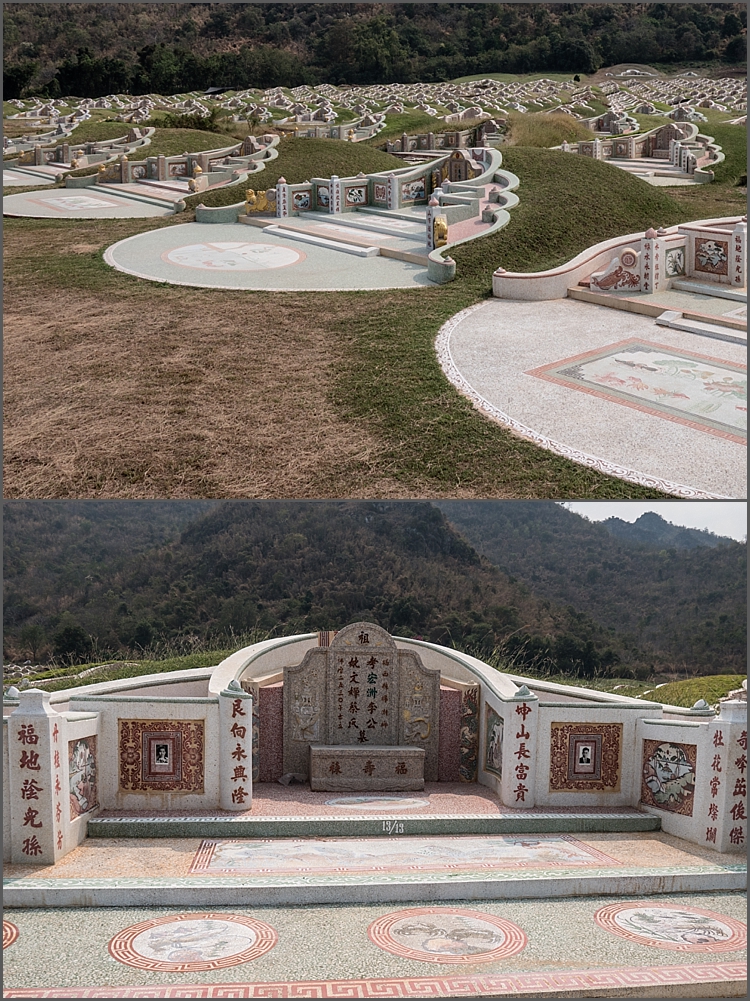
Another interesting thing is that as we drove along the quiet road to the temple we noticed a huge Chinese cemetery. These large marble family graves each built into a grassy mound are like miniature mausoleums often decorated with mosaics and pictures of the deceased.  We stopped and walked around for a while amazed by the opulence of it all. The design of each grave is exactly the same so when there are hundreds in one area with nothing else around it seemed a little strange …

Chinese cemetry near Wat Ban Tham_0001

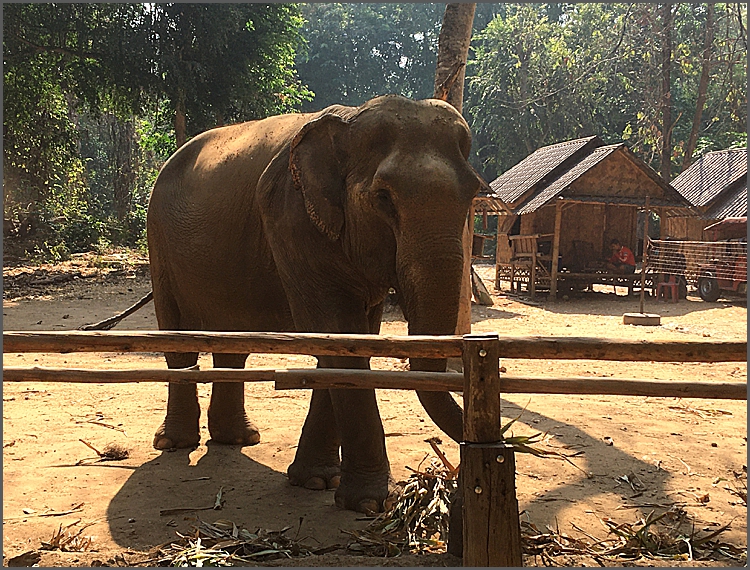
Elephants! Several years ago we spent three wonderful days at an elephant sanctuary in Chang Mai. It was an unforgettable experience as elephants are our favourite animals. Riding on an elephant and I mean sitting on its back, not on a seat and feeling it’s lovely soft ears flapping around your ankles is just a very special experience. Contrary to what you’d think, elephants’ backs are not that strong so whenever I see tourists sat on one of those heavy wooden seats on top of an elephant it makes me shudder. I hate to think of the pain that’s causing the elephant and all for the enjoyment of the tourists.

Since that first camp in Chang Mai we’ve been to the Elephants World  in Kanchanaburi three times. Each time we have had a great time although on our last visit we felt there were too many tourists in each group so it didn’t feel quite so special as before. A relatively new sanctuary has opened up also near Kanchanaburi, Elephants’ Haven and appears to offer a similar experience. The best thing we found was to check with the hotel owners; they are pretty knowledgeable about the organisations and have up to date news on them too.

Elephant's World_0001

After breakfast it’s off to the river to bathe.

Elephant's World_0002

Stand back, he’s on his way to the river.

Elephant's World_0003

Great fun cutting up food and then boiling it. Once it’s cooled you make them into balls and feed them to the older elephants who haven’t got quite as many teeth as they started with.

Elephant's World_0004

Wallowing in the mud is great fun.

Elephant's World_0005

Time to get into the river, grab a brush and a bowl and an elephant and have fun.  They love their back being scratched!

Elephant's World_0006

Time for their final meal of the day before heading off in the jungle for the night.

Wat Tham Phu Wa_0003

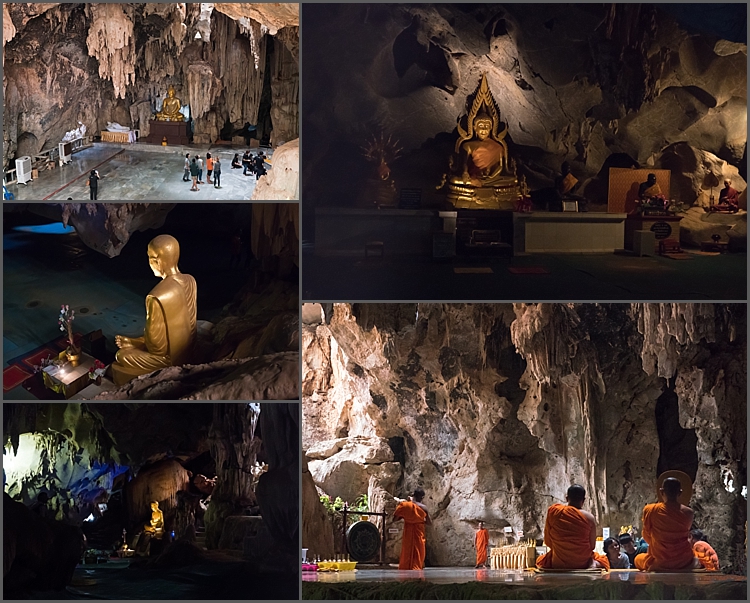
Just before we left Kanchanaburi we visited one more temple. Wat Tham Phu Wa is known not just for being a meditation retreat but for the amazing temple which is actually a cave. The stalactites hanging down are really impressive and round each corner you’d see another statue of Buddha all carefully lit. If they’d lit the statues too much if would have taken away the ethereal feel of the cave. There was no chance here of getting in without leaving an offering (as if we would …) as once you’d taken off your sandals to walk down there were women collecting money. Compared to the Dragonhead Temple this one was much more touristy.

Wat Tham Phu Wa_0007

Now we’re on our way to our next stop in Thailand, Ayutthaya.

The Hellfire Pass Memorial

We took a taxi from Oriental Kwai, where we were staying, to The Hell Fire Pass Memorial.

It’s known locally as the Museum of Chong Khao Kad and is the area where POW’s and labourers during WWII were forced to carve through a mountain of rock to enable a train to pass. The Japanese needed a more secure route to maintain their armies in Burma so a decision was made to construct a railway 415 kilometres long through dense jungle and mountain from BanPong in Thailand to Thanbyuzayat. (This information is taken from the booklet provided by the Australian Government’s Department of Veterans’ Affairs). Of the 60,000 Allied POW’s who worked on the railway 20% died between October 1942 and August 1945 with an estimate of 90,000 civilian labourers having perished during that time also.

Admission is free to both the Memorial museum and the walking trail taking you along part of the the Death Railway. The Museum is excellent but tough viewing with graphic stories, memorabilia, first-hand accounts and pictures of the terrible conditions suffered by the POW’s and labourers. It’s hard to imagine how anyone survived …

Many of the tourists arrive at the Museum by coach and don’t have time to walk the 4km from the Museum to the end of the walking trail. Most people therefore walk as far as the monument at the end of  notorious Hell Fire Pass and walk up to the look-out which gives you a view looking down on the Pass. We carried on through to the end of the trail which is just 4km. All that time we only saw a handful of people and quite a lot of evidence of the tools used and some of the original tracks. Not one sound of a bird singing. All along where once the railway lines ran was eerily quiet.

Our taxi driver was waiting for us when we arrived at the end of the trail and took us to Namtock railway station to catch the train back to Kanchanaburi. It’s an interesting   journey especially going over the wooden viaduct that overlooks the River Kwai. I sat on the outside steps by the door to take a picture of the viaduct, couldn’t do this on GWR!

The visit had been a very emotional one but we were so glad we went.

Hell Fire Pass_0002

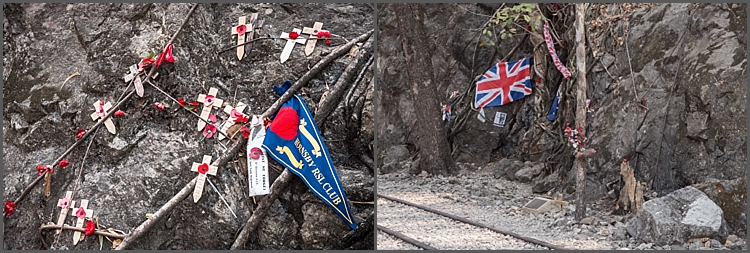
The first part of the walk has several flags and crosses of remembrance lined each side of the cutting.

Hell Fire Pass_0003

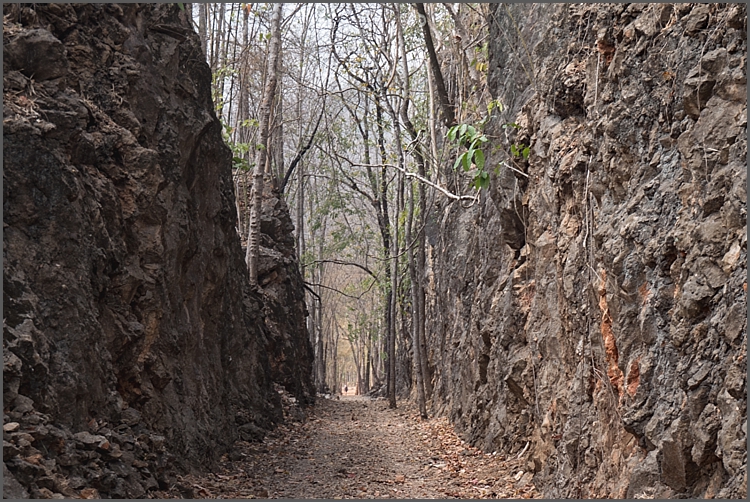
The notorious Hell Fire Pass. The tree has become almost a monument to the thousands who died cutting through the rock.

Hell Fire Pass_0006

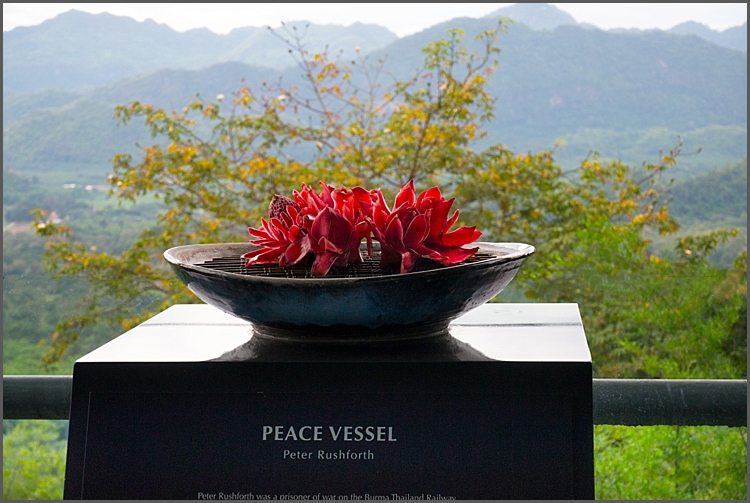
The Memorial to the POW’s and labourers who suffered extreme hardship with thousands losing their lives. The smaller  pictures were taken along the walking trail.

Hell Fire Pass_0004

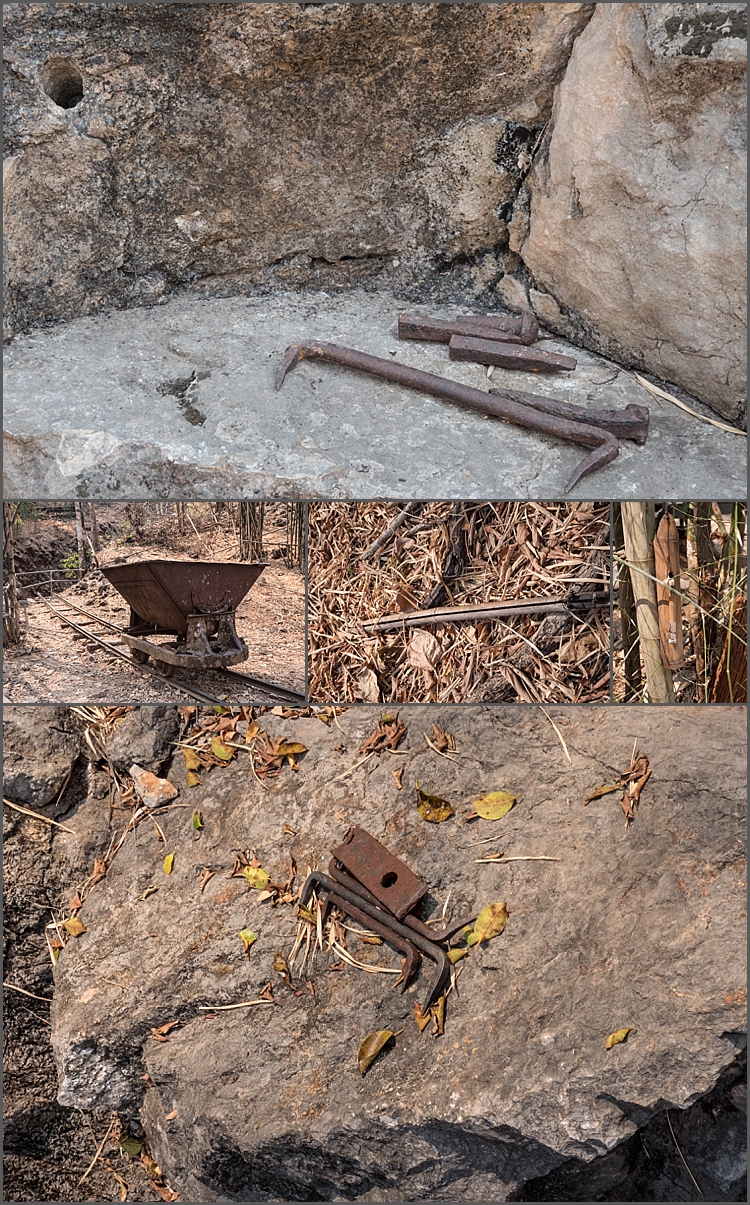
Evidence in the rocks where the explosives were placed also metal taps, sledgehammers and other tools used to break down the earth and rock. Not sure what the bamboo canes were used for in the r.h. middle picture.

Hellfire Pass_0008

Railway sleepers still marking the Burma-Thailand death railway.

Hell Fire Pass_0005

This must have been a tantalising view for the POW’s as they worked. The mountains in the distance are in Burma.

Hellfire Pass_0007

More evidence of the railway line.

Hellfire Pass_0006

Thie is the end of the walking trail just past Compressor Cutting. Our driver is waiting for us, you can just make him out. We were grateful for the bottles of ice-cold water he had ready for us.

Hellfire Pass_0009

On the right is the wooden viaduct we’ve just come over on the train.

Hellfire Pass_0003

The War Cemetery in Kanchanaburi. All the POWs who died were reinterred here by the Commonwealth Graves Commission apart from the American POWs whose remains were returned to the U.S.


Oriental Kwai Resort by the River Kwai.

The train journey from Bangkok to Kanchanaburi takes about three hours and like most train journeys in this part of the world there’s never a dull moment. There’s always someone coming along with hot and cold drinks, fruit, unimaginable things in plastic bags and complete meals in foil containers. The vendors hop on and off the train as it saunters into the station (this is not a fast train) so the variety of food and sellers  changes all the time. You can go by bus which we’ve done a couple of times or hire a taxi but the 7.50 train from  Thonburi station in Bangkok is definitely our first choice. Oriental Kwai is just a short ride away in a Songthaew.

We’ve stayed at Oriental Kwai four times and yes … we love it there! Djo and Evelien are so welcoming and the cottages are superb. There’s only twelve of them and they’re tucked away in a stunning tropical garden, each cottage well-spaced from the next. There’s lot to do in the area including visiting Hellfire Pass which you can get to by train and taxi. I’ll write about this in my next Blog and include some of the pictures I took. It’s a very atmospheric walk with no bird song.

There are two Elephant Sanctuaries close by, Elephants World and Elephants Haven.  Yes there’s another Blog coming up with pictures of our visit with the elephants.

Erawan National park & waterfalls is another great place to visit You can spend hours walking and swimming in the beautiful green jungle with its stepped waterfalls. There are caves and temples to visit, fantastic landscapes, stunning views, walks, cycle rides and of course going into town by boat on the River Kwai is a must. The boat stops just by the (in)famous bridge which is always full of tourists walking across it.

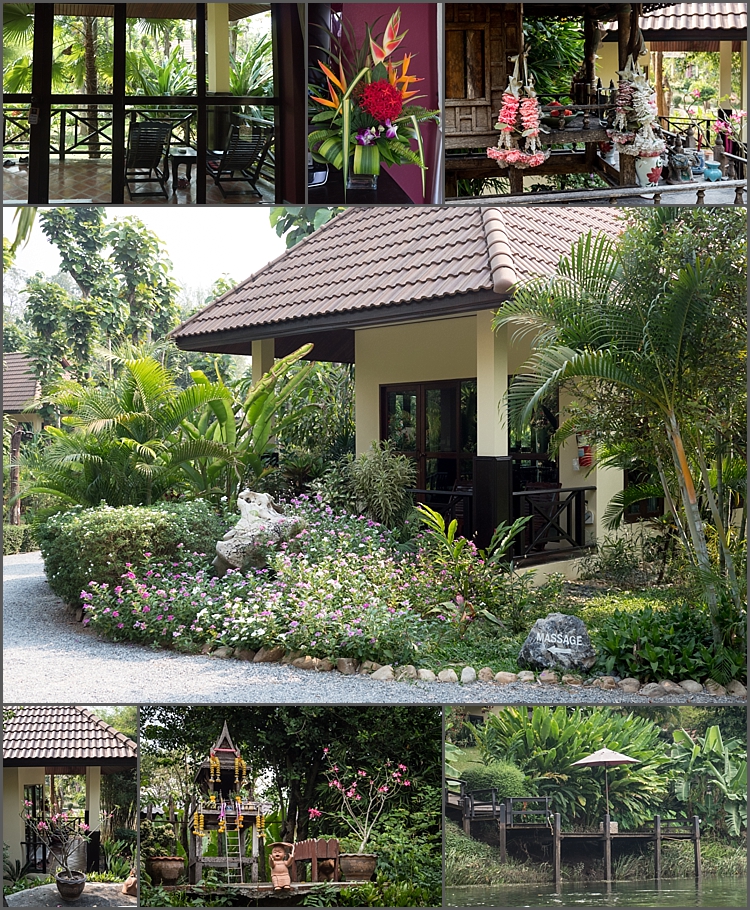
Here is a selection of pictures taken at Oriental Kwai. It really is perfection and so peaceful, we can’t wait to go back!

Oriental Kwai Resort_0001

Oriental Kwai Resort_0007

Oriental Kwai Resort_0006

Oriental Kwai Resort_0002

Oriental Kwai Resort_0004

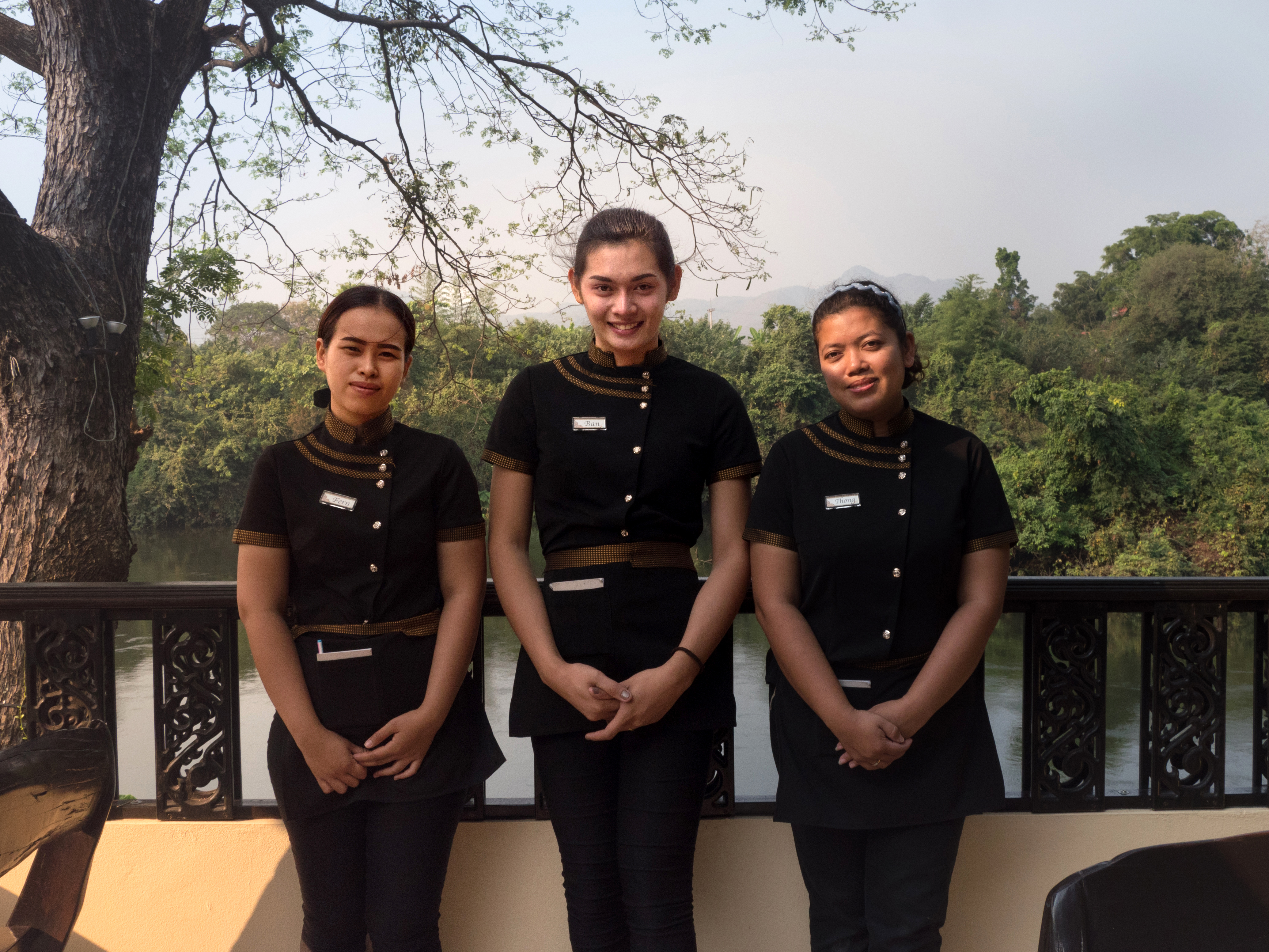
Staff at Oriental Kwai Thailand


Oriental Kwai Resort_0008

Oriental Kwai Resort_0005

A beautiful sunset to round off the day, followed by a few beers and another excellent meal. What more could you ask for?