From Elephants to Oriental Kwai, Kanchanburi.

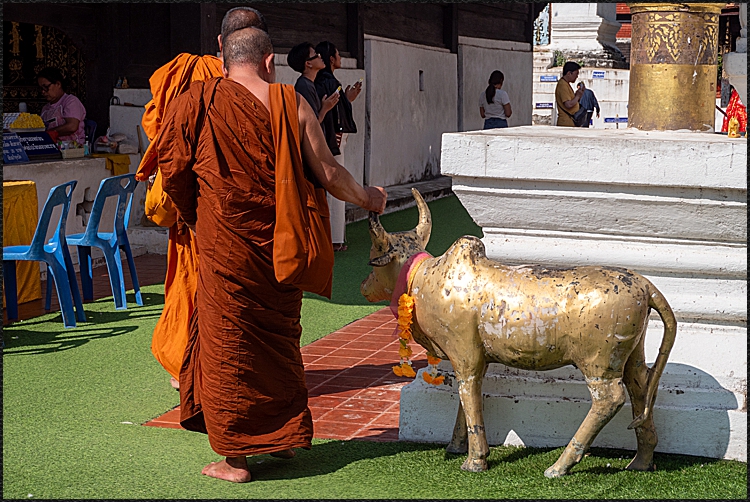
A Buddhist blessing for the ox.

It was hard to say goodbye to ‘our’ elephants but we were looking forward to staying at our favourite place in the whole of Thailand, Oriental Kwai resort. Before then however we were stopping at a couple of places en route, just to break up the journey. The first stop was Lampang which is famous for the horse & carts which years ago were seen everywhere in Thailand as a form of transport. The town is now one of the few places where they’re used but these days they take the tourists on sightseeing trips around the town. Yes, we did do it, but it wasn’t terribly interesting though. If you go to Lampang, the place to eat is Aroy One Baht. Its absolutely manic with young waiters (and they were all young), racing around. The entertainment is free and the rice is just one Baht, which is about 2pence; the place is a magnet for tourists and watch out …the food is fiery, but delicious.

Around Lampang.

Leaving our hotel Auangkham Resort in Lampang we drove a few kilometers out of town to Wat Phrathat Lampang Luang. I loved the prayer lanterns at the entrance to this ancient Buddhist temple which is said to enshrine,(one of the many relics) of the Buddha.

The entrance to Wat Phrathat Lampang Luang.

Driving in this part of Thailand is so easy. The roads are good and pretty quiet. The only time we cursed was going along an area near to a sugar cane factory. There were lorries heading there in all directions, all over-loaded with sugar cane depositing quite a lot on the road. There were also small lorries with huge loads of big round bales, at least twice as wide as the lorry which virtually ground to a halt whenever there was a hill. Getting past these wide loads wasn’t easy but after a pit stop for lunch we arrived at the old town of Kamphaeng Phet. The town is famous for its Archaeological sites and historical Park and was once a massive fortress protecting the west of Thailand.

A few of the ancient ruins in the Park.

This historical Park is large and is a photographer’s dream. It’s located within a forest giving some degree of shade to the extensive monuments and ruins which cover the whole area. If you’re a keen cyclist you can hire bikes to cycle around the sites and explore. There is a road which takes you through the park which we drove along, hopping out along the way whenever we saw an interesting ruin. We then drove to the Visitors Centre where we paid a few Baht to wander around more of the site which has many landmarks, statues and points of interest. The light coming through the ancient monuments was superb that day, very soft which enhanced the setting.

Kamphaeng Phet
Kamphaeng Phet

We finally dragged ourselves away from the park as the heat had got to us so we headed to our hotel for the night. Strange place, very impersonal, even charged us for having a bottle of water out of the fridge but it had a nice pool and as we were the only people staying, we had the pool all to ourselves. I’m not going to name the hotel but I will mention that we had an excellent meal that evening by the river at the Baan Rim Nam River View restaurant. No-one could argue with the name of the restaurant, it’s right by the River Ping and has great views across to the town. This family-run restaurant is reasonably priced, the service was good and the fish, excellent.

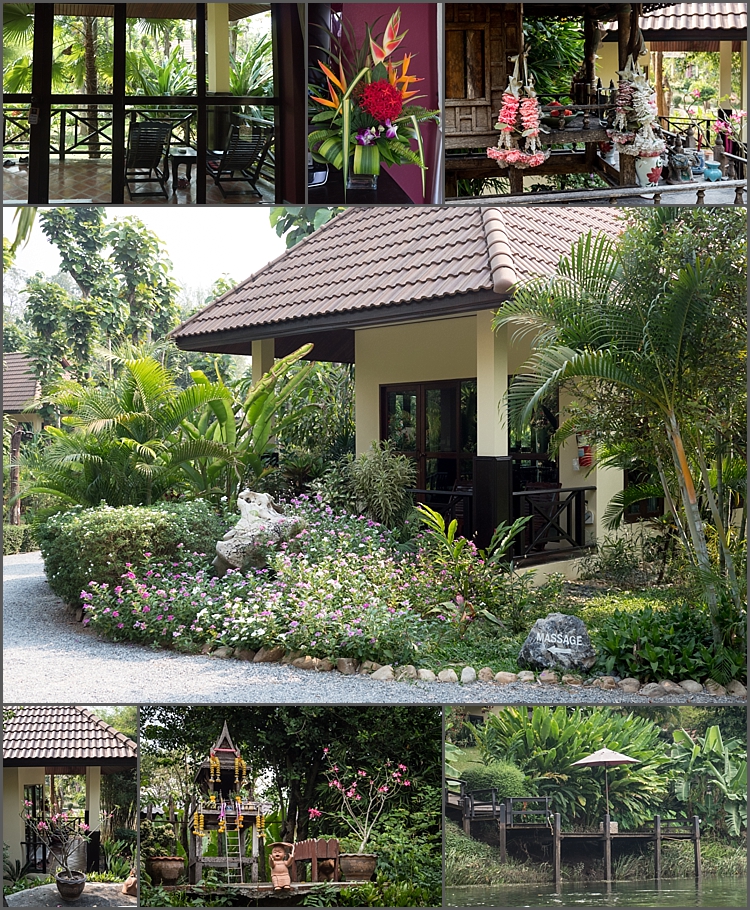
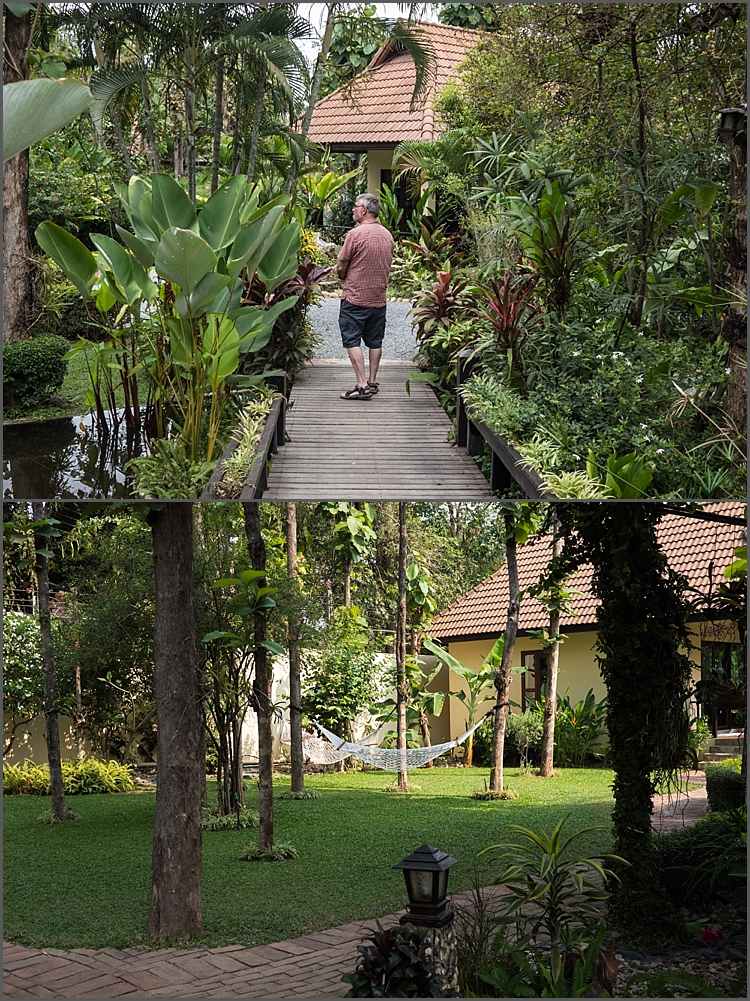
Having paid our dues at the hotel we were on our way to Kanchanaburi and Oriental Kwai and couldn’t wait to get there. Could it really be the seventh time we’ve stayed there? The wonderful thing is …it never changes. How do you improve on perfection? It is without doubt our favourite place to stay and by that I mean anywhere in the world. The owners are lovely; the staff can’t do enough for you; the facilities are excellent; the grounds are idyllic and the food is delicious. It’s hard for us not to go back each year.
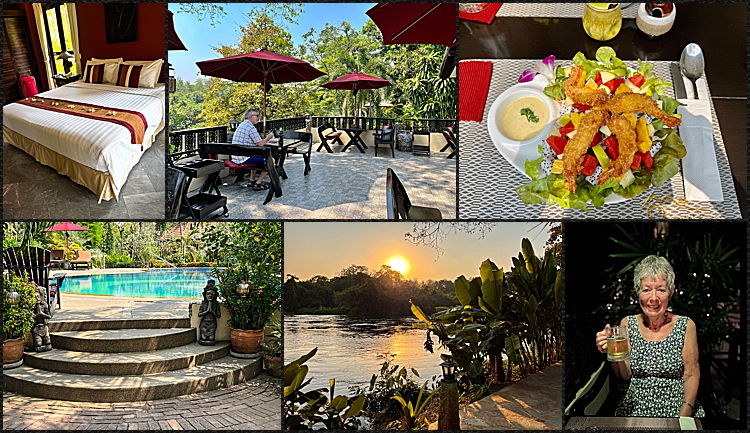
Oriental Kwai.
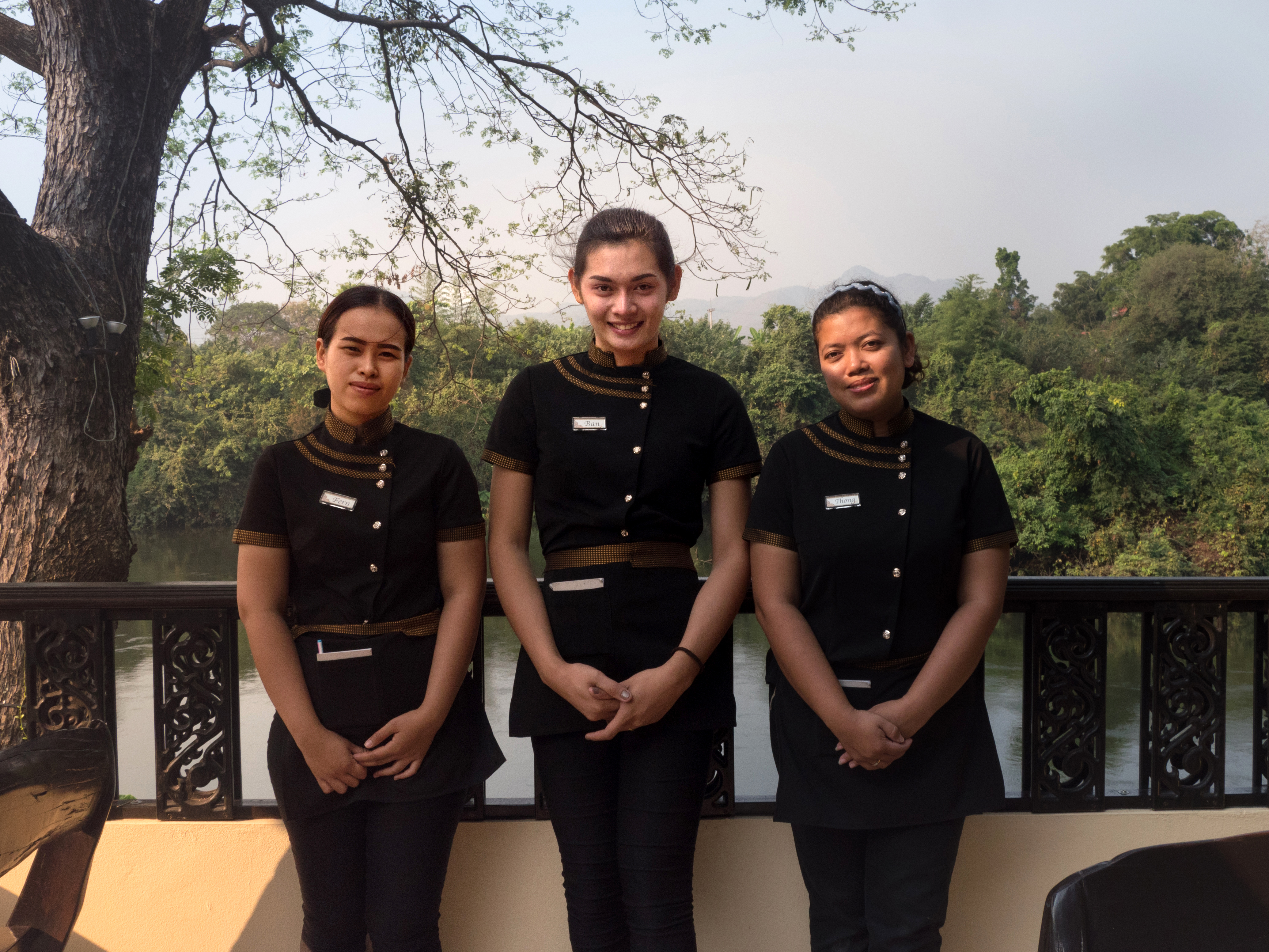
Room service with a smile.

Because I’ve written about this area in my Blog before including the places of interest I have just add a few pictures and a short description of those places we went to this time.
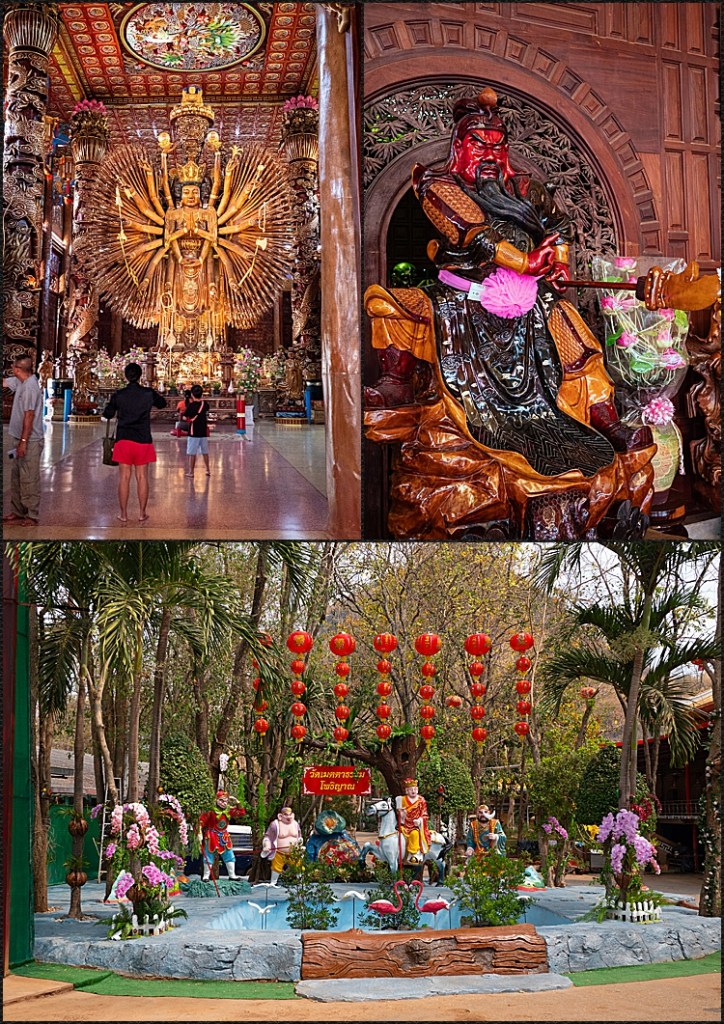
Wat Metta Tham Photiyan Kanachanaburi

Watt Metta Tham Photiyan is the most famous Chinese temple in Kanchanaburi province. There are several huge halls all very fascinating, teak wood is everywhere. One houses a huge statue of a Chinese goddess with eighteen arms. The complex is expanding quickly and already in one of the halls are many statues made of carved wood ready to be erected in place. The temple is 23kilometres out of Kanchanaburi.

Wat Ban Tham

A great temple this one as long as you don’t mind a steep climb. Going up and through the dragon’s body enthralls the children and adults too. Great views of the river from the top, you might find a monk there, sitting by a small tent, who for a few Baht will give you a blessing. You may feel after climbing all those steps that you deserve one! Wat Ban Tham is definitely worth a visit not only for the exhilerating walk to the top and the view but along the way you can divert off to go inside a large cave full of stalactites and stalagmites.

Wat Ban Tham
Wat Ban Tham cave

Another temple worth a visit is Wat Tham Pu Wa which is also full of stalactites and stalagmites and buddhist shrines. Don’t let the entrance fool you, the architecture is influenced apparently by the Khmer Arts and is not the most interesting building on the site. It is however the main entrance to this huge cave which has two floors, lots of statues and winding walkways often behind the huge stalagmites. This Wat is a renowned meditation centre and attracts both Buddhist and Chinese followers who come to worship the statues depicting each of the Chinese astrological signs. This Temple is close to Watt Metta Tham and so it’s possible to visit both on the same morning.
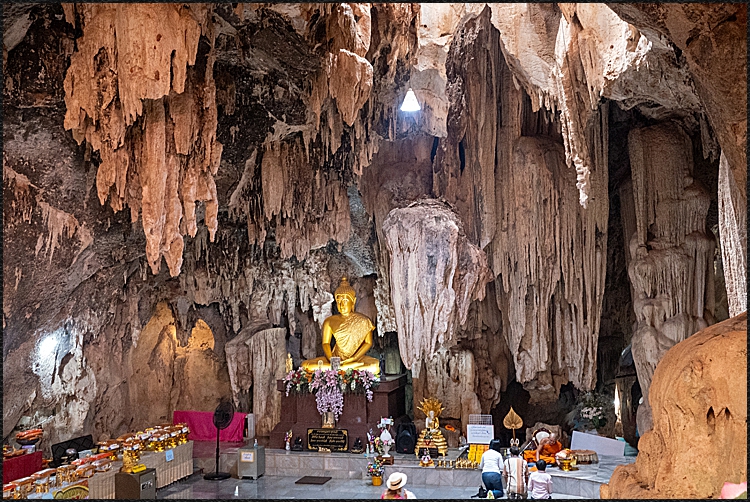
Wat Ban Phu Wa

And finally …

By the river Kwai, Kanchanburi.

The town of Kanchanaburi is definitely worth visiting. Most visitors congregate by the infamous bridge over the River Kwai, built during the Second World War by Asian forced labour and Allied POW’s. It’s easy to walk along but the majority of tourists don’t walk the whole way down the bridge or take the steps down to the Chinese temple, Guan Im Sutham Temple which is worth a visit. There are several stalls in the square by the entrance to the bridge, all selling trinkets or Tshirts for the tourists. The Floating Restaurant by there offers a wide choice of meals and is good value.

Wat Guan Im Sutham Temple.

If you are wondering …we are already booked to go back to Oriental Kwai, we can’t keep away!
Holiday in Kanchanaburi & Sangkhlaburi, Thailand.

As soon as we land at Bangkok we head out, north-west to the town of Kanchanaburi. It takes about three hours by car. We used to stay in Bangkok and catch the early morning train but quite honestly now as soon as we land we just want to get to our favourite place – https://www.orientalkwai.com we love The Oriental Kwai Resort. It’s peaceful, the gardens are beautiful, the pool is great and the food served at the riverside restaurant is excellent. In the evening there is nothing more relaxing than walking down to the riverside to watch the calm, waters of the River Kwai flow by as the sun sets slowly behind the trees.

Cottage no 10 at ‘Oriental Kwai’ – we’ve arrived!
Inside no 10 with welcoming flowers. The shrine is just by our balcony.
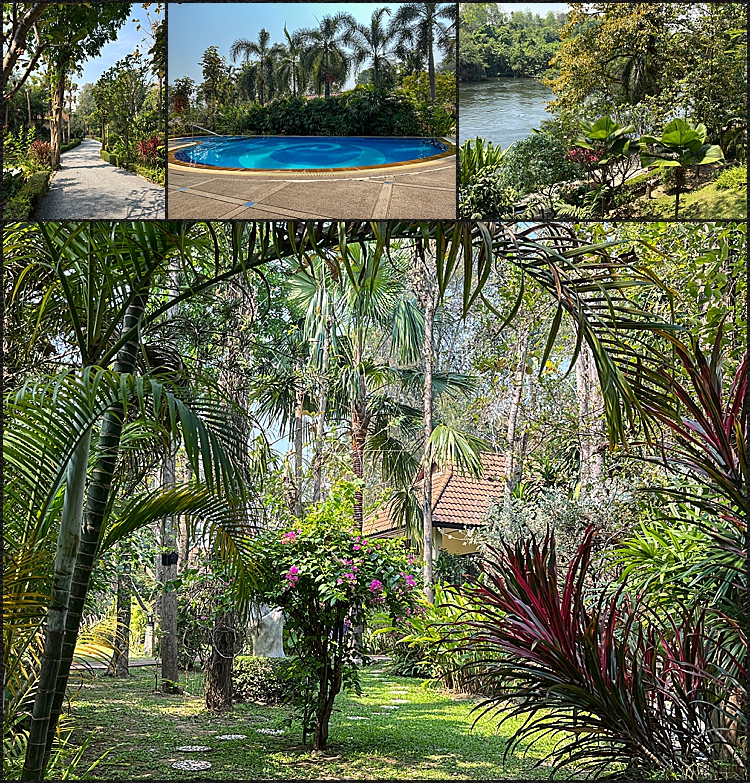
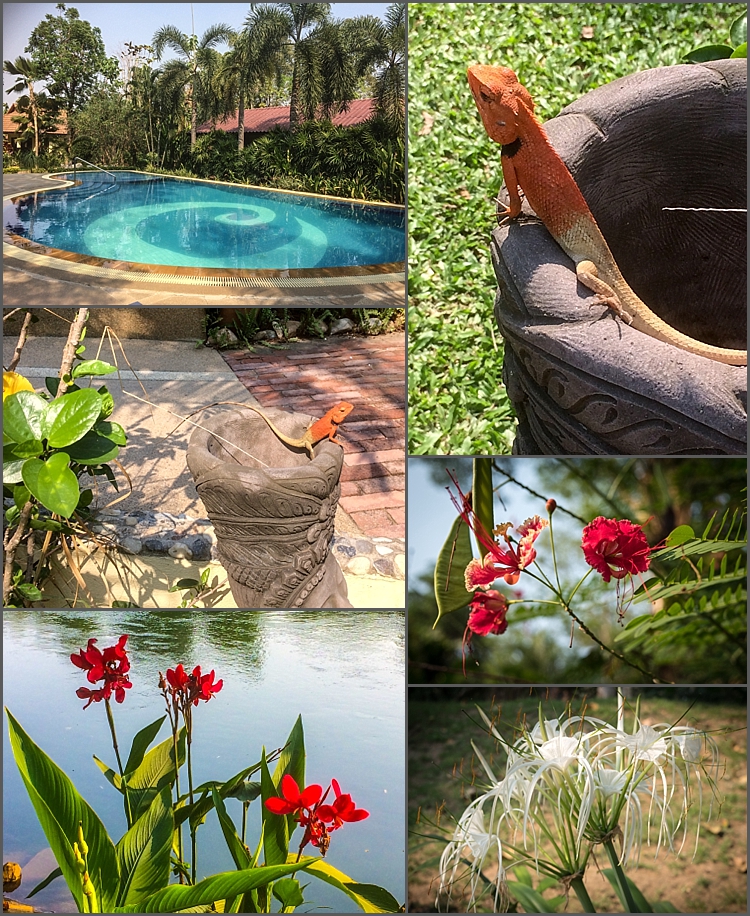
Beautiful, lush tropical gardens. Delightful swimming pool, rhs pic taken from the banks of the River Kwai.

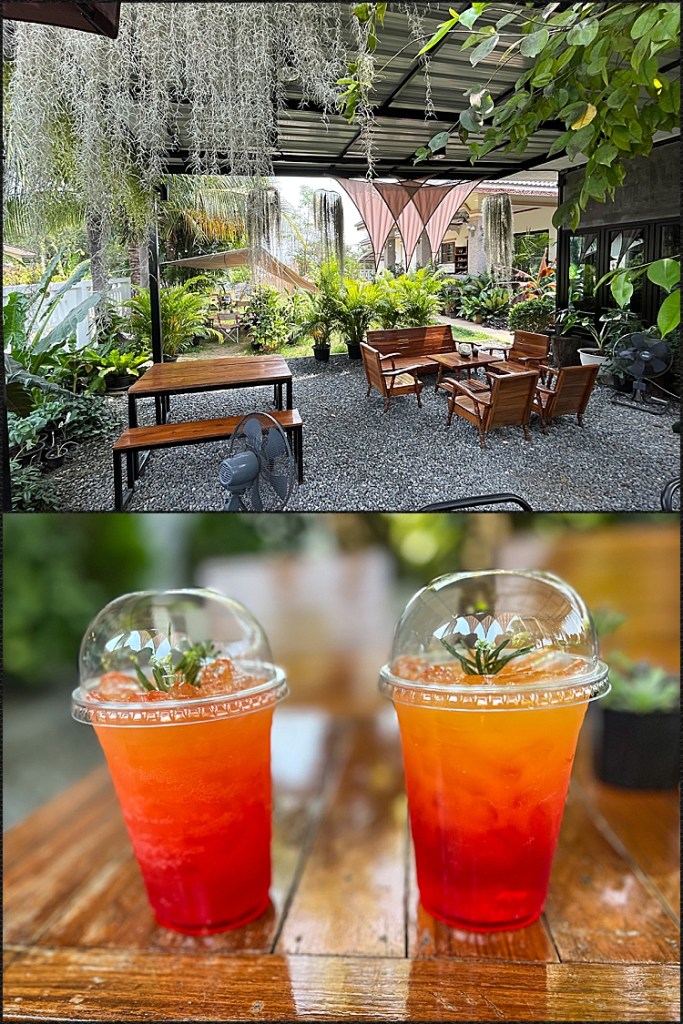
Getting over jet lag didn’t take us long. On our first day I walked into the nearby town of Lat Ya and John cycled. At least my legs didn’t let me down unlike the bike …a flat tyre. Both feeling hot and not yet adjusted to the heat we called into the cafe bar on the way back. We ordered a cold drink, not having a clue what was coming but it was very refreshing.

The shady patio area at the Slow Bar cafe and a very refreshing drink.

The owner very kindly, understanding the bike problem stored it away behind the garden gate. When we got back to Oriental Kwai, John told Evelyn, one of the owners that we’d had to leave the bike at the cafe. “No problem”, she said. “No-one around here would steal it”.

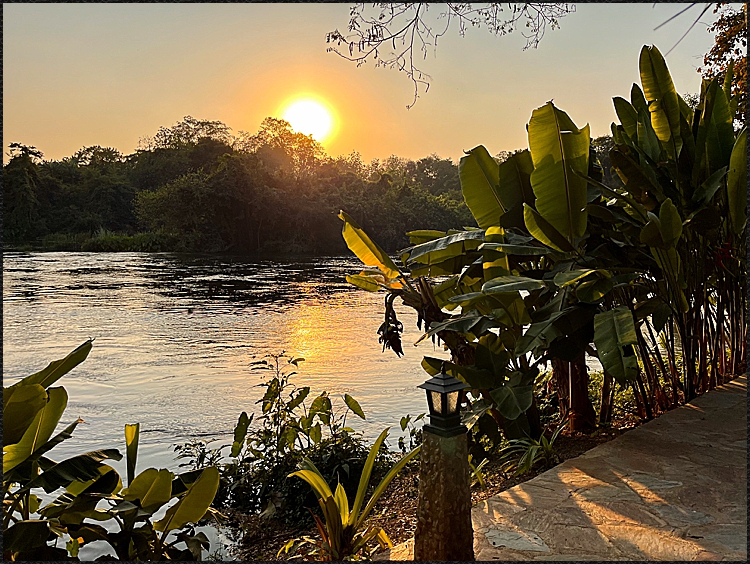
An over-energetic morning had left us rather tired so after a splendid lunch washed down with a Singha beer we spent the afternoo by the pool. A little later, as we always do, we walked down to the river to watch the sun go down.

Sunset over the River Kwai.

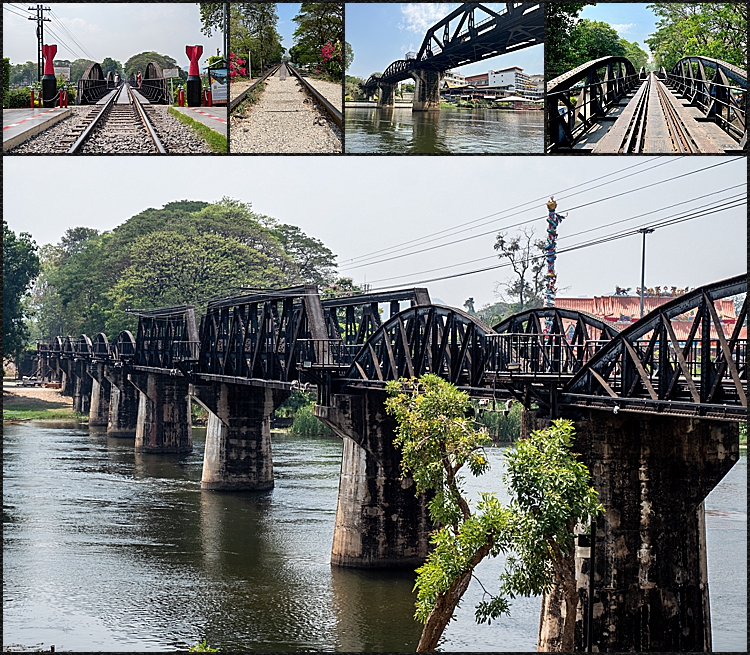
A boat trip down from Oriental Kwai to Kanachanaburi is well worth it espcially if you can share the cost with another couple. You get a great view of the iconic bridge over the river and arrive in the city avoiding the traffic.

A trip down the river Kwai starting from the hotel.
The popular floating restaurant alongside the iconic bridge over the river Kwai.

We’ve been to the bridge many times but never seen the area so quiet. Maybe we’d got there before the tourist buses or perhaps the tourist trade just hasn’t picked up again yet?

Great to take pictures without the bridge swarming with tourists.

The various stalls were really quiet but I made one trader’s day when I bought three of her bracelets. She waved the banknotes around to signify she was delighted to have made a sale.

The next day we picked up a hire car and John drove to Sangkhlaburi. It’s an easy drive until you get about forty kilometres from the town and then it’s hilly with lots of bends until you arrive down into the town. Goods views of the lake but it’s not easy for the driver to look.

Sangkhlaburi is a small town, surounded by mountains and sits at the end of the Khae Laem Lake. It has an interesting mixture of cultures because of its location near the Burmese border. The people are a mix of Thai, many from the Mon ethnic group who have their own language and customs and Burmese people who have left their country and settled in the town. It’s famous for its handmade wooden bridge which although it looks old, it isn’t. Spanning the river this bridge is the longest wooden bridge in Thailand and was built to link the town with the splendid Wat Wang Wiwekaram temple. It spans the Song Kalia river from the town to the Mon village of Wang Kha. A section of the bridge was washed away a few years ago and was quickly rebuilt. The water level of the lake drops dramatically in the dry season which is a good time to take a boat trip to see the three temples which were submerged when a dam was built across the lake and completely covered the village in the valley.

We chose to go to Sangkhlaburi at this time as we knew there was a festival celebrating young boys becoming novice monks. We were a little late getting there so we missed the boys and their families processing across the bamboo bridge but I got some pictures as the crowds went past us.

The Mon Bridge.
Young novices and their families celebrating this special day.

A little later that day we saw the young boys in their colourful robes; their hair closely cut and clearly getting used to their new attire. Traditionally the young novices serve in the temple for a minimum period of three months. These days some monks serve for as little as 15 days or a week. A family earns great respect and merit when a son becomes a monk.

Enjoying the sights of the river before returning to the temple.

Sangkhlaburi is not yet on the tourist’s radar but it won’t be long before it becomes a popular destination. True it’s a small town and there’s not masses to do but the Thai Buddhist temple, Wang Wiwekaram Temple is spectacular and well worth a visit; the boat trip to the sunken temples is a must and the ride through the forest to the new and huge floating Buddha which just a handful of Thai tourists have discovered makes for an interesting itinerary. We chose basic cafes on both nights where not surprisingly not a word of English was spoken (we didn’t expect it) and the menu was of course written in Thai. We managed to order beer and as we’re happy to eat most things, we were content with a rice dish. The second cafe had no pictures of the dishes but one of the diners came to our rescue having got an App on her phone which translated the menu (very handy). During our two-day stay we found the people very friendly and helpful.

On our second day we drove to a Mon-Karen village near the Myanmar border. It’s wise not to go right to the border and anyway there isn’t much to see. The road turns into a dust track before you get there which was enough to signal we should turn back.

I’ve mentioned the ‘floating’ Buddha which is a new statue built on one of the hillsides just outside of town but there is another important temple Chedi Phutthakhaya which we didn’t visit this time. It’s style is very different to that of the Wang Wiwekaram Temple and to be honest it wouldn’t look out of place on a Disney set. Lots of stalls selling tourist rubbish run alongside the car park. If you are tight for time definitely drive or walk up through the tree-lined path up to the new Buddha. The site is unfinished but even with Buddha covered in scaffolding, ‘he’ is magnificiant and can be seen ‘floating’ above the ground from miles around. It appears the temple has yet to be named. I can imagine when the temple is officially opened the celebration will go on for days. We really liked this area. It’s very peaceful and the way the route has been designed to wind through the trees is lovely. The views from the top are stunning and I particuarly liked the way you could glimpse the golden rooftops of Wat Wang Wiwekaram through the trees. The Wat was our next stop.

Fabulous views from the top.
Walking up to the new Buddha.
The beautiful Wat Wang Wiwekaram temple.
Many of the monks are from the Mon ethnic group.

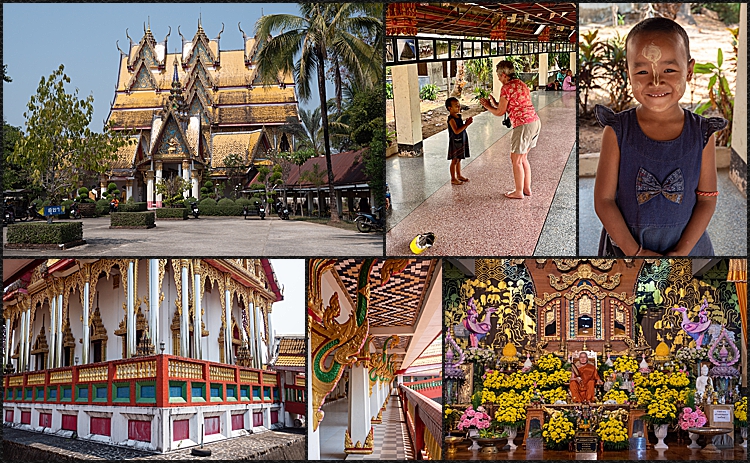
The temple is open from 1.30am until 12.30pm and I should imagine whatever time you visit there will be groups of people sat everywhere along the marble corridors. When we visited there was an exhibiton of photographs hung all along the vast corridors. Brilliant pictures by various local photographers showing the lives of the local people, great portaits and group shots and Festivals. This little girl has her face decorated in traditional Burmese style with yellow ochre. (I’ve lifted this from Google) …”Traditionally, the women grind the bark of the thanakha tree on a flat circular stone with a bit of water. This creates a milky yellow liquid that dries quickly when applied to the skin. This mixture creates a powdery protective ideal not only for faces but also for the arms.” This little girl was very sweet and loved learning ‘Pat-a-cake’, no language barrier with this game.

The temple is a sacred place for all nationalities living in Sangkhlaburi,
especially for Mon people.

All this walking round made us very thirsty so we headed down to the Mon village where I bought a T-shirt from one of the many shops lining the main route then we sat and had a cold drink followed by free bananas and tea.

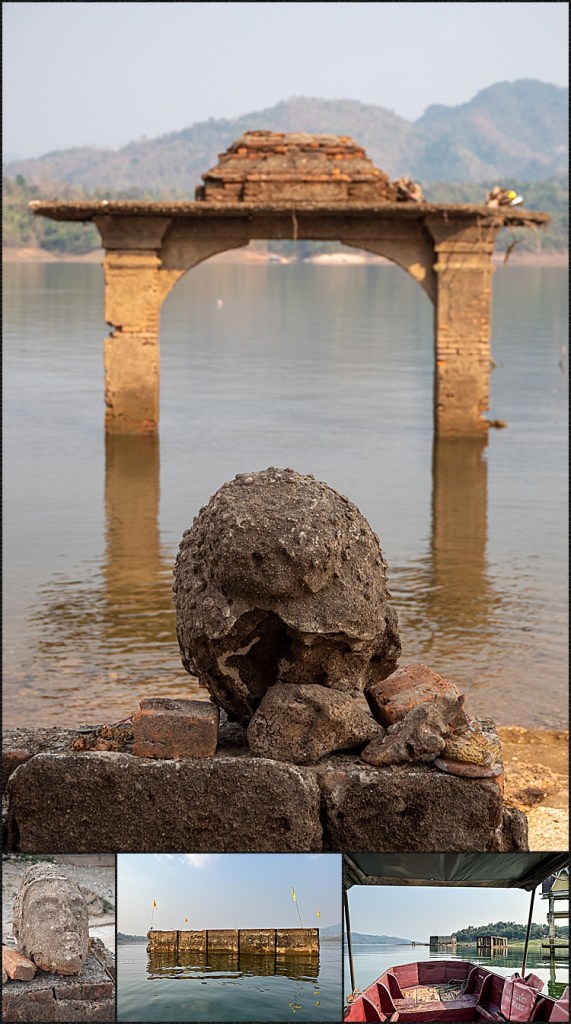
Ready to face the afternoon heat once more we walked to the Thai side by the Mon bridge and came across a local boatman who for 500 baht took us on the lake to see the three sunken temples: the Karen’s Srisuwan Temple, the Mon’s Wat Wang Wiwekaram temple and the Thai Wat Somdet temple.

The only structure from the submerged town that remains today is the Waat Sam Prasob shrine, also known as the Sunken Temple. Built by the Mon and Karen tribes, it was once the heart of the old town before the dam flooded the area in 1984.

Srisuwan Karen’s Temple

As we were there in the dry season we were able to walk around and take a closer look at the inside. I was in my element taking pictures and would have stayed longer but our boatman had two more temples to show us.

The middle picture is of the second temple -Srisuwan Karen’s temple, which we saw from all sides. (Not terribly interesting).

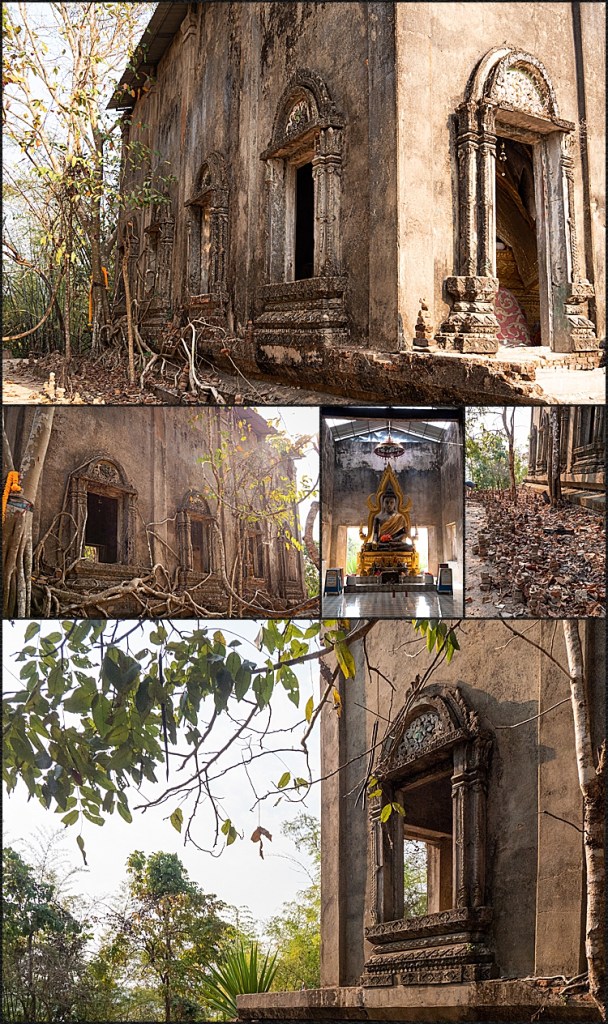
He then took us across the lake to the old Wat Somdet Temple. We moored and then walked up past a small village to this ancient abandoned Thai temple. It reminded us of Angkor Wat with all the tree roots entwined amongst the stonework.

Thai Wat Somdet Temple

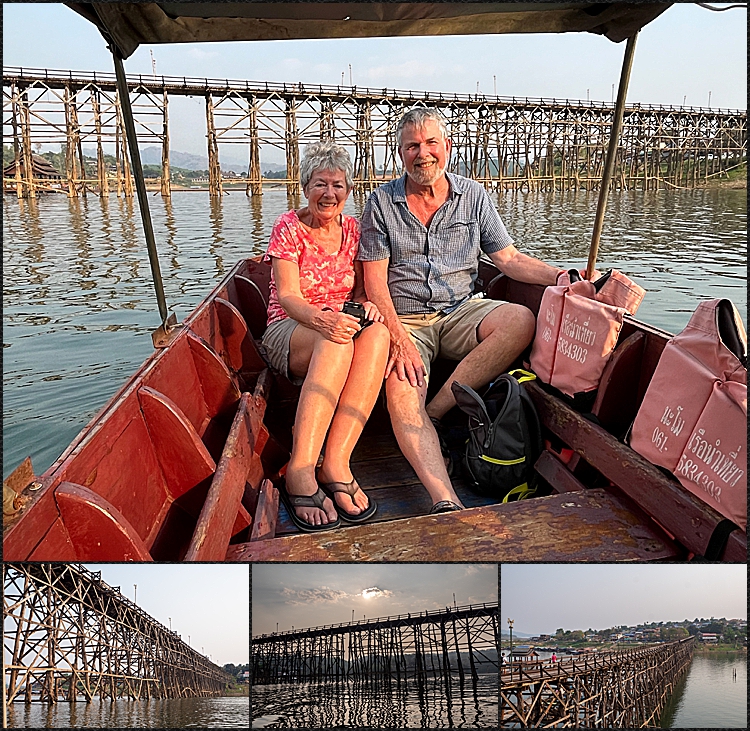
Having sailed back along by the Karen’s temple again we ended our hour-long trip with this delightful boatman by floating gently under the Mon bridge and sat for the obligatory picture with the bridge as a backdrop.

The specatacular Mon bridge and the Booths returning from the three sunken-temple boat tour.

It was time for a beer so we headed for the cafe on the Thai side of the Mon Bridge to watch the sun setting over the Song Kalla river. A final picture of our boat heading back was a fitting close to our two days in Sangkhlaburi. We felt we’d done the place justice on this our return visit. It is an interesting place and I’m sure it won’t be long before the town is firmly on the tourist route.

Farewell to Sangkhlaburi

Oriental Kwai Resort by the River Kwai.

The train journey from Bangkok to Kanchanaburi takes about three hours and like most train journeys in this part of the world there’s never a dull moment. There’s always someone coming along with hot and cold drinks, fruit, unimaginable things in plastic bags and complete meals in foil containers. The vendors hop on and off the train as it saunters into the station (this is not a fast train) so the variety of food and sellers  changes all the time. You can go by bus which we’ve done a couple of times or hire a taxi but the 7.50 train from  Thonburi station in Bangkok is definitely our first choice. Oriental Kwai is just a short ride away in a Songthaew.

We’ve stayed at Oriental Kwai four times and yes … we love it there! Djo and Evelien are so welcoming and the cottages are superb. There’s only twelve of them and they’re tucked away in a stunning tropical garden, each cottage well-spaced from the next. There’s lot to do in the area including visiting Hellfire Pass which you can get to by train and taxi. I’ll write about this in my next Blog and include some of the pictures I took. It’s a very atmospheric walk with no bird song.

There are two Elephant Sanctuaries close by, Elephants World and Elephants Haven.  Yes there’s another Blog coming up with pictures of our visit with the elephants.

Erawan National park & waterfalls is another great place to visit You can spend hours walking and swimming in the beautiful green jungle with its stepped waterfalls. There are caves and temples to visit, fantastic landscapes, stunning views, walks, cycle rides and of course going into town by boat on the River Kwai is a must. The boat stops just by the (in)famous bridge which is always full of tourists walking across it.

Here is a selection of pictures taken at Oriental Kwai. It really is perfection and so peaceful, we can’t wait to go back!

Oriental Kwai Resort_0001

Oriental Kwai Resort_0007

Oriental Kwai Resort_0006

Oriental Kwai Resort_0002

Oriental Kwai Resort_0004

Staff at Oriental Kwai Thailand


Oriental Kwai Resort_0008

Oriental Kwai Resort_0005

A beautiful sunset to round off the day, followed by a few beers and another excellent meal. What more could you ask for?