Holiday in Kanchanaburi & Sangkhlaburi, Thailand.

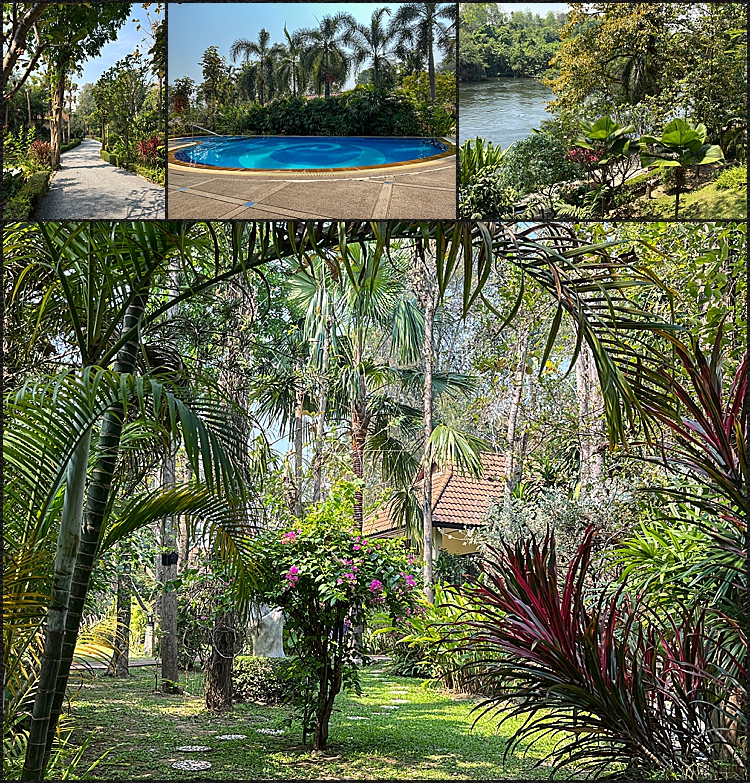
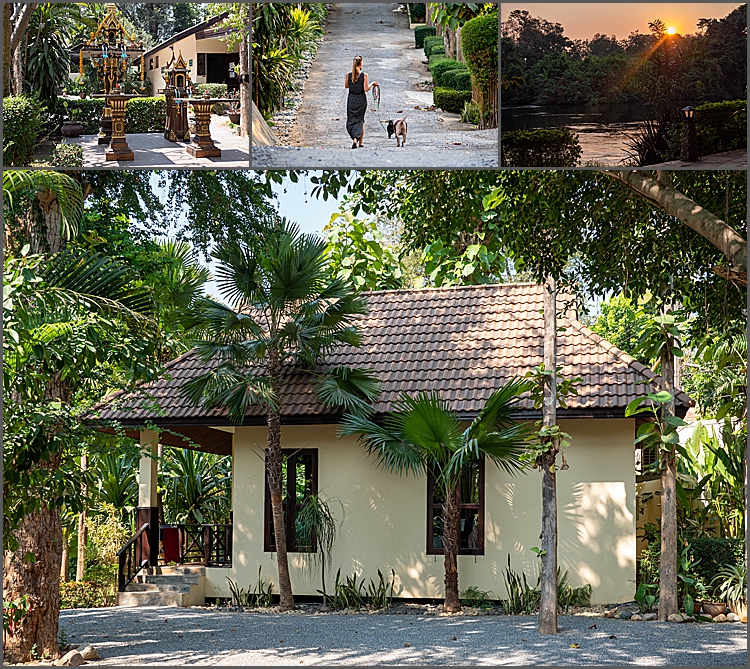
As soon as we land at Bangkok we head out, north-west to the town of Kanchanaburi. It takes about three hours by car. We used to stay in Bangkok and catch the early morning train but quite honestly now as soon as we land we just want to get to our favourite place – https://www.orientalkwai.com we love The Oriental Kwai Resort. It’s peaceful, the gardens are beautiful, the pool is great and the food served at the riverside restaurant is excellent. In the evening there is nothing more relaxing than walking down to the riverside to watch the calm, waters of the River Kwai flow by as the sun sets slowly behind the trees.

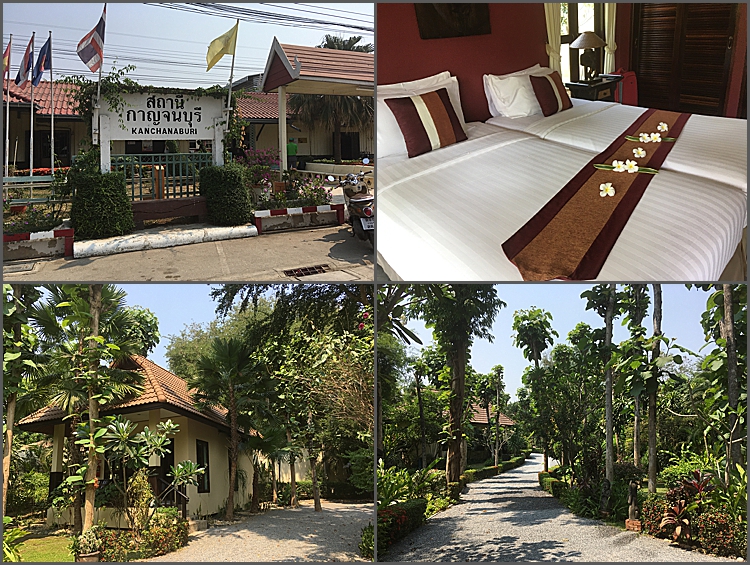
Cottage no 10 at ‘Oriental Kwai’ – we’ve arrived!
Inside no 10 with welcoming flowers. The shrine is just by our balcony.
Beautiful, lush tropical gardens. Delightful swimming pool, rhs pic taken from the banks of the River Kwai.

Getting over jet lag didn’t take us long. On our first day I walked into the nearby town of Lat Ya and John cycled. At least my legs didn’t let me down unlike the bike …a flat tyre. Both feeling hot and not yet adjusted to the heat we called into the cafe bar on the way back. We ordered a cold drink, not having a clue what was coming but it was very refreshing.
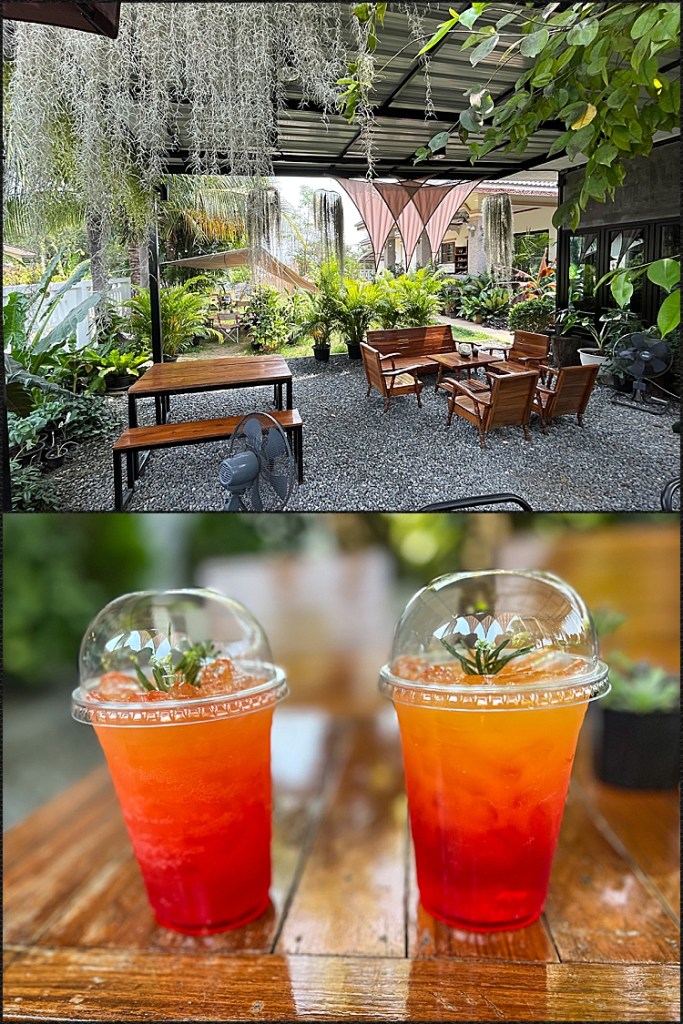
The shady patio area at the Slow Bar cafe and a very refreshing drink.

The owner very kindly, understanding the bike problem stored it away behind the garden gate. When we got back to Oriental Kwai, John told Evelyn, one of the owners that we’d had to leave the bike at the cafe. “No problem”, she said. “No-one around here would steal it”.

An over-energetic morning had left us rather tired so after a splendid lunch washed down with a Singha beer we spent the afternoo by the pool. A little later, as we always do, we walked down to the river to watch the sun go down.
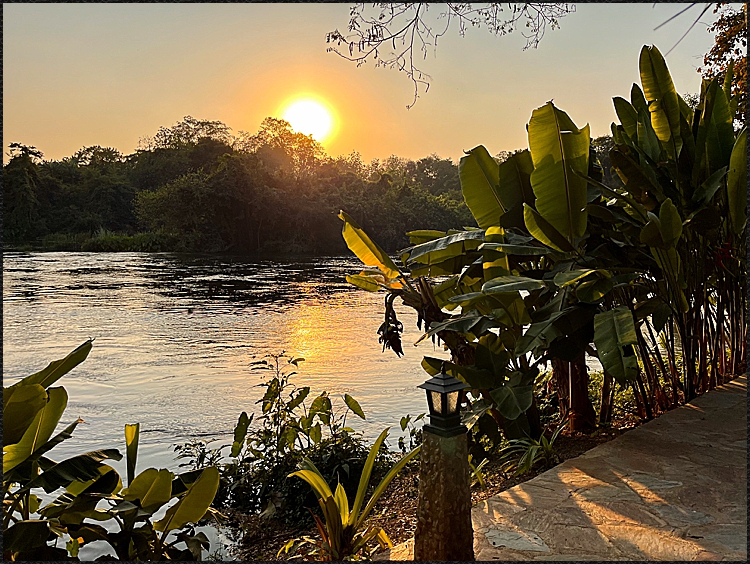
Sunset over the River Kwai.

A boat trip down from Oriental Kwai to Kanachanaburi is well worth it espcially if you can share the cost with another couple. You get a great view of the iconic bridge over the river and arrive in the city avoiding the traffic.

A trip down the river Kwai starting from the hotel.
The popular floating restaurant alongside the iconic bridge over the river Kwai.

We’ve been to the bridge many times but never seen the area so quiet. Maybe we’d got there before the tourist buses or perhaps the tourist trade just hasn’t picked up again yet?
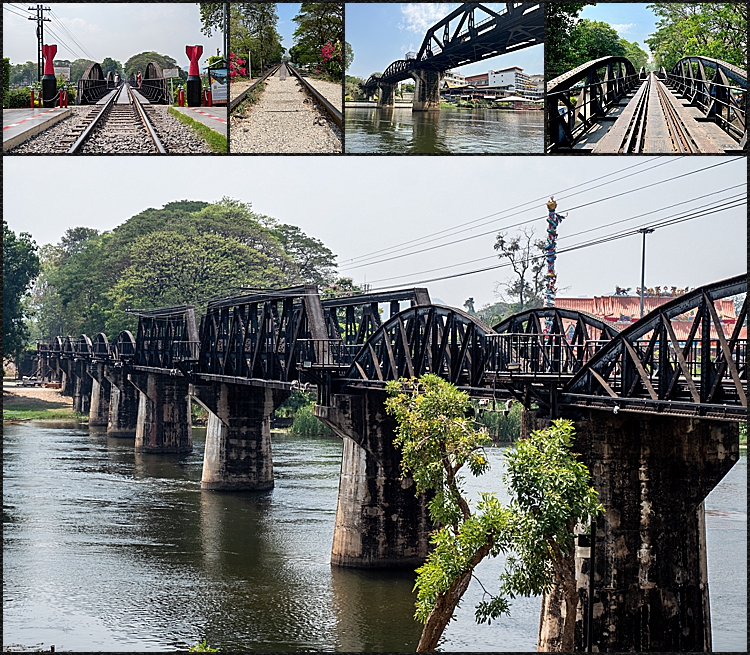
Great to take pictures without the bridge swarming with tourists.

The various stalls were really quiet but I made one trader’s day when I bought three of her bracelets. She waved the banknotes around to signify she was delighted to have made a sale.

The next day we picked up a hire car and John drove to Sangkhlaburi. It’s an easy drive until you get about forty kilometres from the town and then it’s hilly with lots of bends until you arrive down into the town. Goods views of the lake but it’s not easy for the driver to look.

Sangkhlaburi is a small town, surounded by mountains and sits at the end of the Khae Laem Lake. It has an interesting mixture of cultures because of its location near the Burmese border. The people are a mix of Thai, many from the Mon ethnic group who have their own language and customs and Burmese people who have left their country and settled in the town. It’s famous for its handmade wooden bridge which although it looks old, it isn’t. Spanning the river this bridge is the longest wooden bridge in Thailand and was built to link the town with the splendid Wat Wang Wiwekaram temple. It spans the Song Kalia river from the town to the Mon village of Wang Kha. A section of the bridge was washed away a few years ago and was quickly rebuilt. The water level of the lake drops dramatically in the dry season which is a good time to take a boat trip to see the three temples which were submerged when a dam was built across the lake and completely covered the village in the valley.

We chose to go to Sangkhlaburi at this time as we knew there was a festival celebrating young boys becoming novice monks. We were a little late getting there so we missed the boys and their families processing across the bamboo bridge but I got some pictures as the crowds went past us.

The Mon Bridge.
Young novices and their families celebrating this special day.

A little later that day we saw the young boys in their colourful robes; their hair closely cut and clearly getting used to their new attire. Traditionally the young novices serve in the temple for a minimum period of three months. These days some monks serve for as little as 15 days or a week. A family earns great respect and merit when a son becomes a monk.

Enjoying the sights of the river before returning to the temple.

Sangkhlaburi is not yet on the tourist’s radar but it won’t be long before it becomes a popular destination. True it’s a small town and there’s not masses to do but the Thai Buddhist temple, Wang Wiwekaram Temple is spectacular and well worth a visit; the boat trip to the sunken temples is a must and the ride through the forest to the new and huge floating Buddha which just a handful of Thai tourists have discovered makes for an interesting itinerary. We chose basic cafes on both nights where not surprisingly not a word of English was spoken (we didn’t expect it) and the menu was of course written in Thai. We managed to order beer and as we’re happy to eat most things, we were content with a rice dish. The second cafe had no pictures of the dishes but one of the diners came to our rescue having got an App on her phone which translated the menu (very handy). During our two-day stay we found the people very friendly and helpful.

On our second day we drove to a Mon-Karen village near the Myanmar border. It’s wise not to go right to the border and anyway there isn’t much to see. The road turns into a dust track before you get there which was enough to signal we should turn back.

I’ve mentioned the ‘floating’ Buddha which is a new statue built on one of the hillsides just outside of town but there is another important temple Chedi Phutthakhaya which we didn’t visit this time. It’s style is very different to that of the Wang Wiwekaram Temple and to be honest it wouldn’t look out of place on a Disney set. Lots of stalls selling tourist rubbish run alongside the car park. If you are tight for time definitely drive or walk up through the tree-lined path up to the new Buddha. The site is unfinished but even with Buddha covered in scaffolding, ‘he’ is magnificiant and can be seen ‘floating’ above the ground from miles around. It appears the temple has yet to be named. I can imagine when the temple is officially opened the celebration will go on for days. We really liked this area. It’s very peaceful and the way the route has been designed to wind through the trees is lovely. The views from the top are stunning and I particuarly liked the way you could glimpse the golden rooftops of Wat Wang Wiwekaram through the trees. The Wat was our next stop.

Fabulous views from the top.
Walking up to the new Buddha.
The beautiful Wat Wang Wiwekaram temple.
Many of the monks are from the Mon ethnic group.

The temple is open from 1.30am until 12.30pm and I should imagine whatever time you visit there will be groups of people sat everywhere along the marble corridors. When we visited there was an exhibiton of photographs hung all along the vast corridors. Brilliant pictures by various local photographers showing the lives of the local people, great portaits and group shots and Festivals. This little girl has her face decorated in traditional Burmese style with yellow ochre. (I’ve lifted this from Google) …”Traditionally, the women grind the bark of the thanakha tree on a flat circular stone with a bit of water. This creates a milky yellow liquid that dries quickly when applied to the skin. This mixture creates a powdery protective ideal not only for faces but also for the arms.” This little girl was very sweet and loved learning ‘Pat-a-cake’, no language barrier with this game.
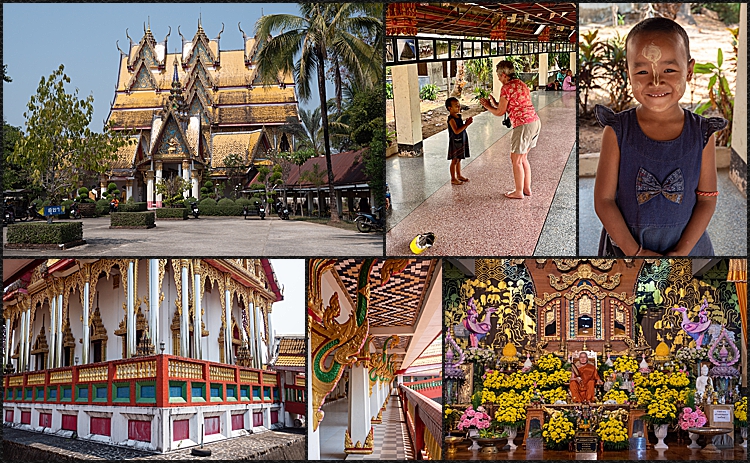
The temple is a sacred place for all nationalities living in Sangkhlaburi,
especially for Mon people.

All this walking round made us very thirsty so we headed down to the Mon village where I bought a T-shirt from one of the many shops lining the main route then we sat and had a cold drink followed by free bananas and tea.

Ready to face the afternoon heat once more we walked to the Thai side by the Mon bridge and came across a local boatman who for 500 baht took us on the lake to see the three sunken temples: the Karen’s Srisuwan Temple, the Mon’s Wat Wang Wiwekaram temple and the Thai Wat Somdet temple.

The only structure from the submerged town that remains today is the Waat Sam Prasob shrine, also known as the Sunken Temple. Built by the Mon and Karen tribes, it was once the heart of the old town before the dam flooded the area in 1984.

Srisuwan Karen’s Temple

As we were there in the dry season we were able to walk around and take a closer look at the inside. I was in my element taking pictures and would have stayed longer but our boatman had two more temples to show us.
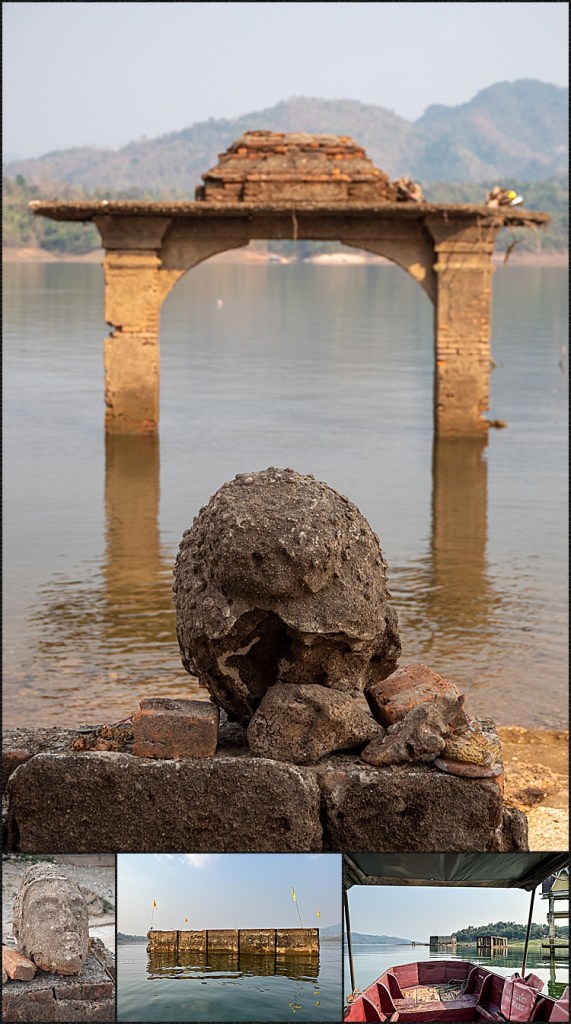
The middle picture is of the second temple -Srisuwan Karen’s temple, which we saw from all sides. (Not terribly interesting).

He then took us across the lake to the old Wat Somdet Temple. We moored and then walked up past a small village to this ancient abandoned Thai temple. It reminded us of Angkor Wat with all the tree roots entwined amongst the stonework.
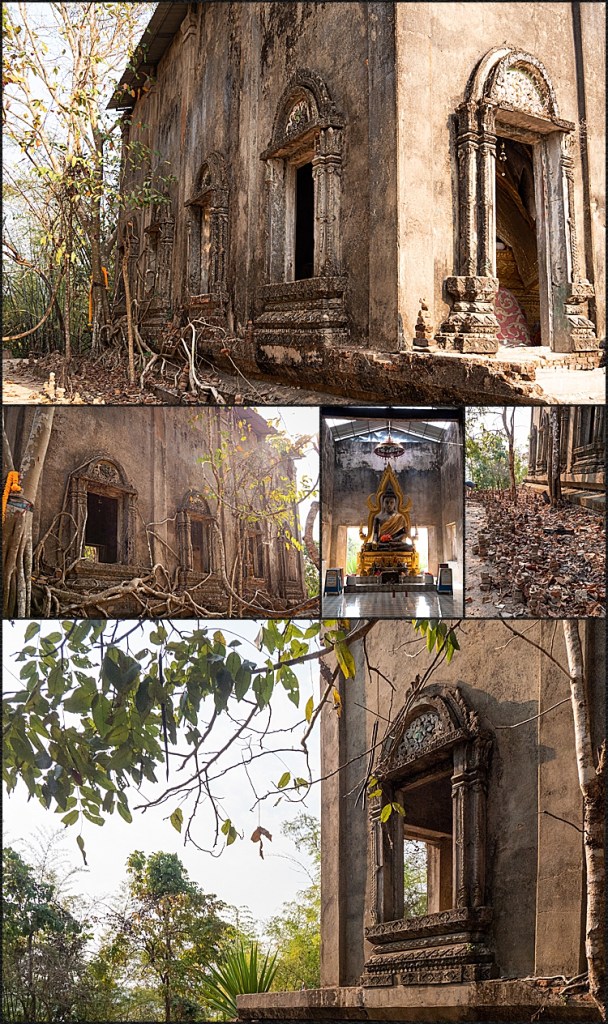
Thai Wat Somdet Temple

Having sailed back along by the Karen’s temple again we ended our hour-long trip with this delightful boatman by floating gently under the Mon bridge and sat for the obligatory picture with the bridge as a backdrop.
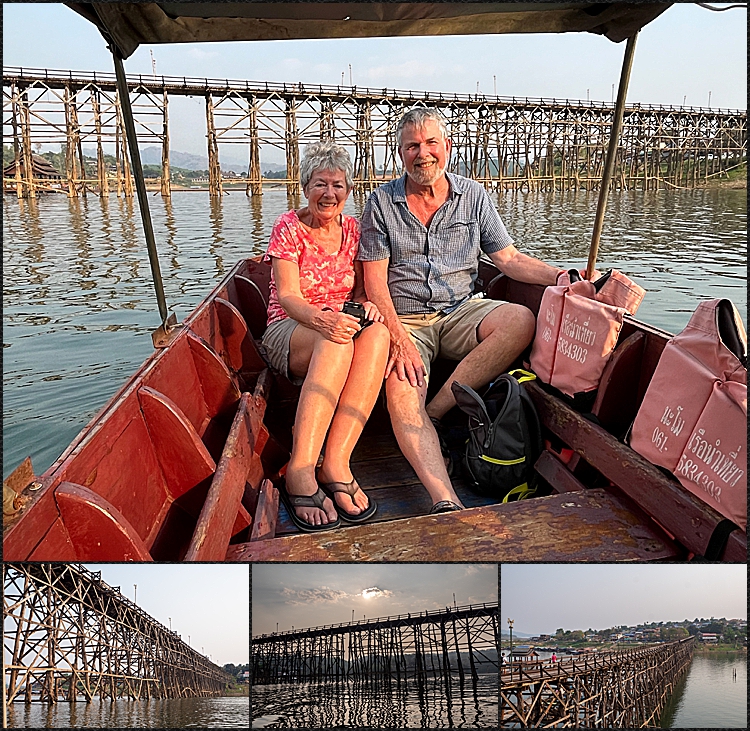
The specatacular Mon bridge and the Booths returning from the three sunken-temple boat tour.

It was time for a beer so we headed for the cafe on the Thai side of the Mon Bridge to watch the sun setting over the Song Kalla river. A final picture of our boat heading back was a fitting close to our two days in Sangkhlaburi. We felt we’d done the place justice on this our return visit. It is an interesting place and I’m sure it won’t be long before the town is firmly on the tourist route.

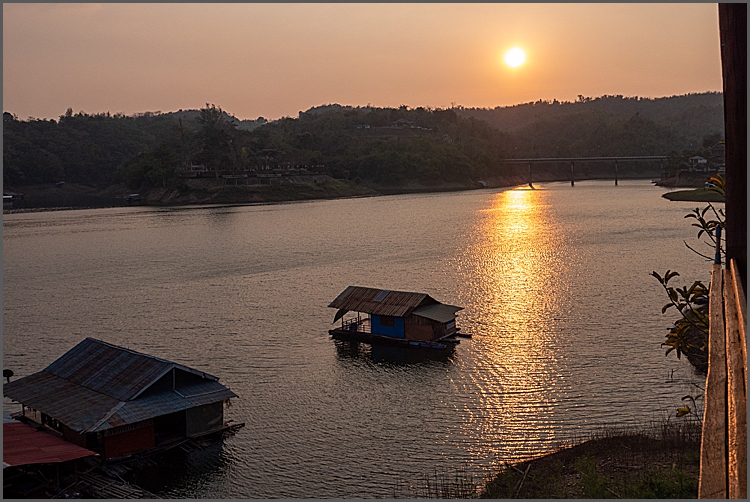
Farewell to Sangkhlaburi

Ten days in Thailand

Yes we were lucky to go on holiday before Lockdown. Having flown in from Paxi in Laos to Bangkok we got a taxi straightaway after getting off the Airport Rail Link. Before now we’ve had to wait quite a while. Thankfully this driver didn’t keep falling asleep every time we stopped at traffic lights! A bit scary as the traffic in the city is quite manic.

We have stayed in Baan Manusarn, which is a small guest house a couple of times before. As Bangkok goes it’s a fairly quiet area. The pier for the ferry is at the end of the road and there’s quite a few good restaurants nearby. Once we’d dumped our bags we had an afternoon to spare so we headed for the iconic temple of Wat Arun. Last time we were there we had horrendous jet lag and just about managed to drag ourselves around. This time we didn’t pay to go into the main temple as there’s plenty of other buildings you could go in for free. I’m saying ‘could’ as now you have to pay to go into the temple complex. Can’t imagine there’s many tourists visiting there currently or anywhere else for that matter – Thailand isn’t letting tourists in at the moment. Seems to be working as since the pandemic hit the country they’ve recorded just one death. That’s the official figure …

Wat Arun by the Chao Phraya River

It was a fairly early start the next day as the train to Kanchanaburi leaves Thonburi station at around 8.00. There are just two services each day. You have to allow plenty of time to get to the station as Bangkok wakes up at 4.30am every day and the roads are busy. The huge market by the station teems with life and is where the taxi drops you off. You have to have your wits about you wheeling you case through to the station. The train journey takes about three hours and is an interesting trip but the exciting part for us is arriving! A quick call to our resort and a taxi is organised and we’re on our way heading out of town.

Just a quick journey from Kanchanaburi station to Oriental Kwai Resort – heaven!

This for us is the most perfect place to stay. We love it here at Oriental Kwai. No wonder it’s Kanchanaburi’s number one hotel on Trip Adviser. It’s a 15 minute ride from the town and as soon as the taxi turns off the quiet lane into the drive, we feel at home, well our home in Asia. There are just twelve cottages and we like to stay in number 11. We enjoy the walk through the beautiful gardens, across the little bridge, past the immaculate swimming pool to the main reception area and restaurant. Late afternoon we like to sit by the river, have a drink and stay there until the sun goes down over the River Kwai.

Djo and Evelien who own and manage Oriental Kwai are lovely people and make you feel so welcome. They opened the hotel in 2007 after clearing quite literally a jungle! Together with help from their families they achieved their dream and their success story continues today. As I write this in the year of a pandemic my man and I are just hoping it won’t be long before we can go back again.

“Our’ cottage and the grounds at Orienal Kwai with the river running by.
It’s all there at Oriental Kwai

Although we know this area well we still like to do some sightseeing and lots of walking and John did a cycle ride whilst I stayed to take some pictures in the superb gardens. We’d also decided to hire a car this time and drive up to the lake town of Sangkhlaburi in the west of the province.

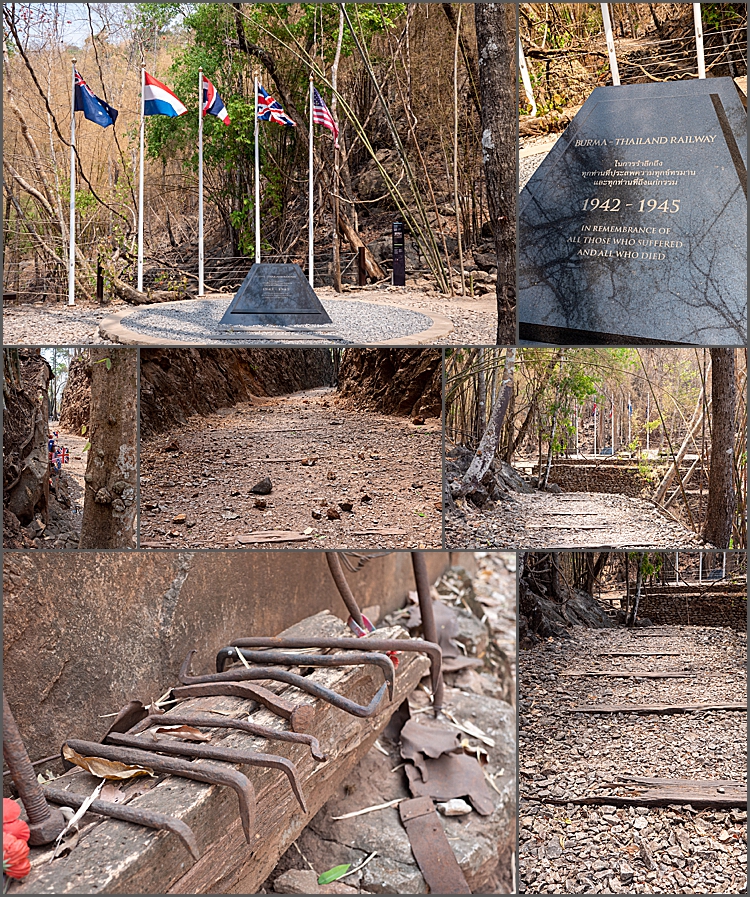
Picking up the hire car in the town was very straightforward, we’d booked it before we left home. Once you get out of the town the roads are very quiet although this route continues up to Three Pagodas Pass and the Burmese border. It also takes you past the entrance to the Visitor Centre and starting point for visiting The Hell Fire Pass, the name of the infamous railway cutting on the former Burma Railway. Although we have been before we wanted to see the changes they’d made to the exhibition centre.

The Visitors Centre and the Museum had been re-vamped however we both felt that the new layout of the exhibits didn’t have the impact we remembered from our last visit. It’s quite a steep walk down to the railway cutting itself but the impact of this area never changes. It is an emotional experience and the Memorial Walking Trail following the route of the ‘Death Railway’ is a sobering hike albeit with magnificent views over towards Burma. Don’t expect to hear any birds singing as you walk along – there are none. On this visit the walk was closed which was disappointing but we have walked it a couple of times before.

Back in the car and still heading North West we started looking for somewhere to eat. After an hour or so we were beginning to wonder if we’d have lunch at all when I spotted a cafe by the side of the road. No one spoke English – well why would they (?!) and the locals having lunch pretended we weren’t there. We hadn’t a clue what was going to be served up but the main thing was it was all going to be freshly cooked. I believe we had chicken, veg and rice but I honestly can’t remember, we enjoyed it with no ill affects so that was the main thing.

Floating raft houses on the Vajiralongkorn Lake.

The journey after our pit stop became more interesting as we drove up through the forest and then down to Vajiralongkorn Lake. It’s actually a reservoir that was created when a dam was built in 1982. It’s a huge expanse of water and very impressive. The other thing you notice about this area of Thailand is the diversity of the people. Sangkhlanburi is a small town, traditionally the Karen people lived there. Now there are Burmese people, many refugees having left Burma for the safety of Thailand and people from the Mon tribe and other minorities. Apparently they live together in perfect harmony although there are defined districts with some living in the hills or on floating raft houses and the Mon people who live across the other side of the lake which is spanned by a huge wooden bridge.

As usual once we’d arrived in Sangkhlanburi and found our hotel, Kingfisher House, we chilled out for a while over a well-earned beer – ‘Chang’ as it happens. Time then to walk down to the lake and check out this famous wooden bridge which is Thailand’s longest. It is quite a landmark and was built in 1986 although it looks much older. Unfortunately the bridge known as the Mon Bridge partially collapsed after bad weather in 2013. As the bridge links the main town of Sangkhlaburi with the Mon area of the town, the locals quickly got together and within weeks rebuilt it. How’s that for teamwork? Although it wasn’t late the bridge was deserted as you can see from this picture. This is a very sleepy non-touristy place.

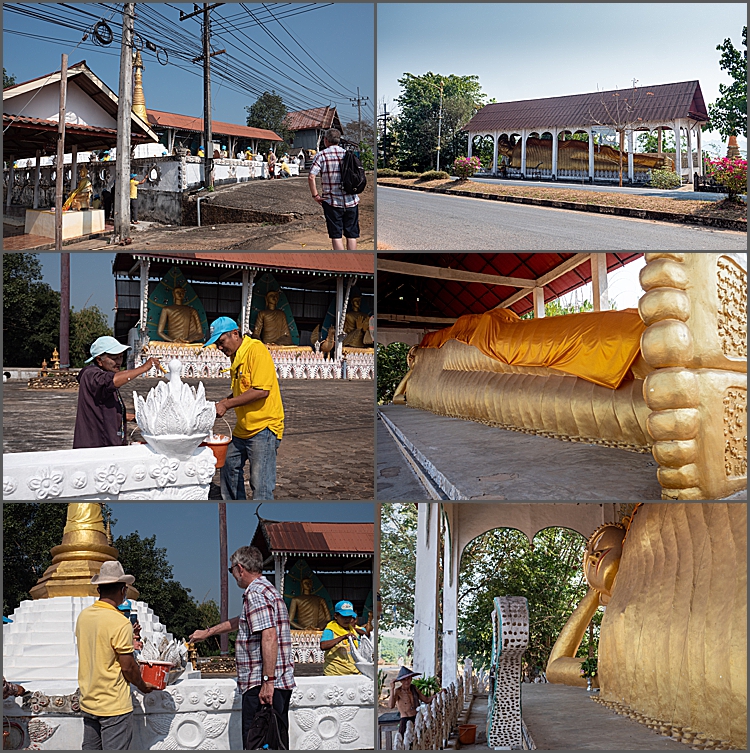
The next day we started off by exploring the town and headed up to see the reclining Buddha. Buddhists try to do a good turn every day, especially on Friday, to gain merit and that’s what a group of locals were doing outside a temple. There was a lot of painting and chattering going on and when they saw us we were invited to do some painting too!

Gaining Merit as in performing a good deed, act or thought is a fundamental concept in Buddhism.

There wasn’t much to see in the town itself and the market was pretty unexciting so we headed down to the bridge again. By now the temperature was in the high 30’s, very hot for walking across the bridge to the Mon village. Most of the shops were just closing but fortunately we found a cafe and I discovered the refreshing merits of Lipton’s iced tea! I managed to find one souvenir shop that was still open thinking there would be lovely Mon crafts to buy, sadly that wasn’t the case but I did manage to buy one or two little things.

Walking back over the bridge the heat was unbearable hence the rather natty headgear (bottom left picture). The little girl with the decorated face is Burmese. The yellow paste is called Thanaka made from ground bark . Its a traditional cosmetic often worn by Burmese people to protect the skin from the sun. The picture top right is of two local women laying out the freshly caught fish to dry.

Very few people in Sangkhlanburi speak any English so going into a cafe or anywhere is quite an experience. Once again we had no idea what we were going to get for lunch at this family-run cafe overlooking the bridge but the omelette and chicken was delicious. The cold drink which took quite a while to make was a real sugar rush job but we drank it of course. They were so kind to us, as though we were the first tourists they’d had there for a while.

After our lunch we drove up to see this rather splendid temple with the equally splendid name of Wat Wang Wiwekaram. The picture below is my favourite from our stay in Sangkhlanburi. It was a beautiful temple and although there would have been lots of monks we didn’t see any until we drove away. There was a group down the road sweeping the street …gaining that all important merit with Buddha.

Wat Wang Wiwekaram
A few more people on the bridge to watch the sun setting including two monks.

When we went back to the bridge in the evening to watch the sunset the family from the cafe where we’d had lunch came out onto the balcony to wave to us. We felt very honoured.

We enjoyed our couple of days in Sangkhlanburi but felt that was long enough although we would visit again. We’d seen most of the sights and enjoyed the peace of the place and marvelled at the Mon bridge and the beautiful lake but it was time to get back to Oriental Kwai!

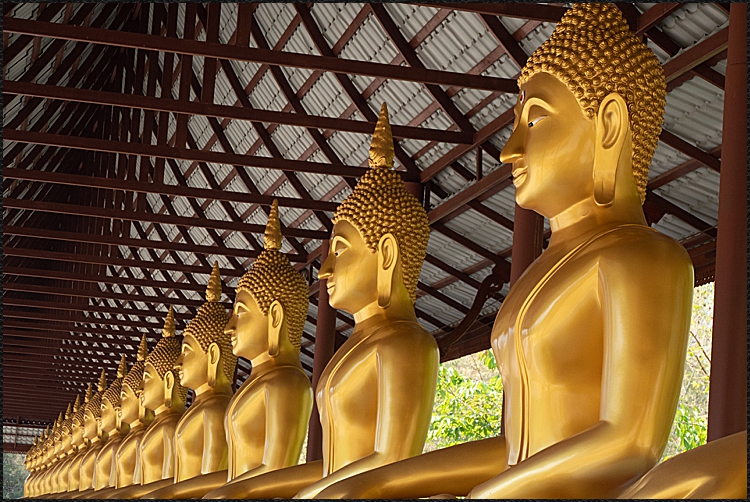
On our journey to Kanchanaburi we stopped at this interesting temple which was clearly a mix of Buddhist temples and Hindu. Quite unusual I think. Amazing statues and once again, no-one around.

The last part of this Blog on Thailand will include pictures from the market we went to which was fascinating and there will also be some pictures of elephants (irresistible), as we spent a day at an Elephant Sanctuary. I thought I’d do this as a separate account otherwise the Blog becomes a bit too long. I suspect this one might be so if you’ve read this to the end – thank you!