
This was the first time we’d been to this part of Italy which is known in the UK and maybe elsewhere as ‘The Heel’.
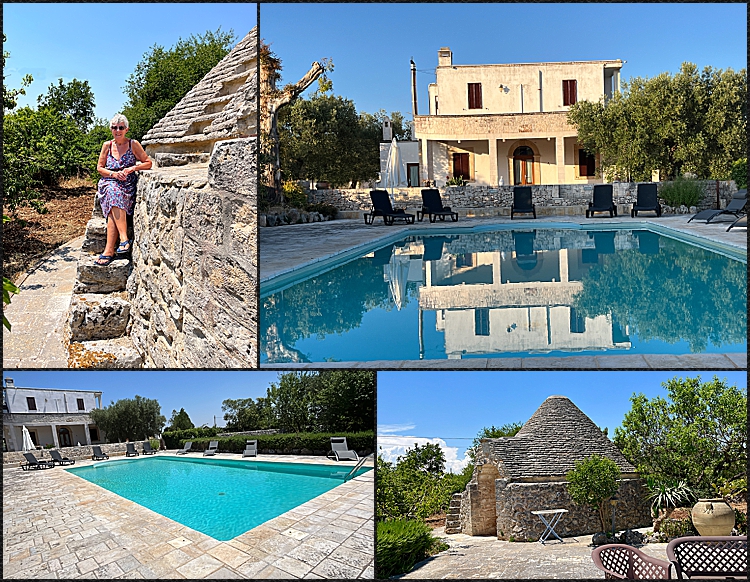
We eventually found our ‘contrada’ after several wrong turns in the Puglian countryside, in the dark. Despite feeling tired we weren’t disappointed with our Trulli which would be our accommodation for the week. These conical traditional buildings are a feature of this part of Puglia and were built by hand using local limestone without any mortar. There’s a whole village full of Trulli which we did visit, but more on that later.
As well as our delightful accommodation which is much roomier than it looks, we had a splendid swimming pool all to ourselves. With the daytime temperature in the high 30’s we made good use of the pool and took time-out for a daily siesta …like the locals do.
The nearest town was Noci which was just a short drive away. Not sure why I didn’t take any pictures as it’s a nice town, quite compact and we really liked it there. The place has a great atmosphere with families strolling around the narrow streets and the main square. The restaurants were full of life and lots of good food so we didn’t feel the need to search out anywhere bigger.
One evening we had a wander around the olive grove which was still maintained by the host family. We saw the owner’s father from time to time who would wave to us but our lack of Italian was somewhat of a barrier, however we could contact Nunzia, the owner of our Trulli, if we needed to. We also wanted to explore a little as we’d read there was another Trulli nearby.
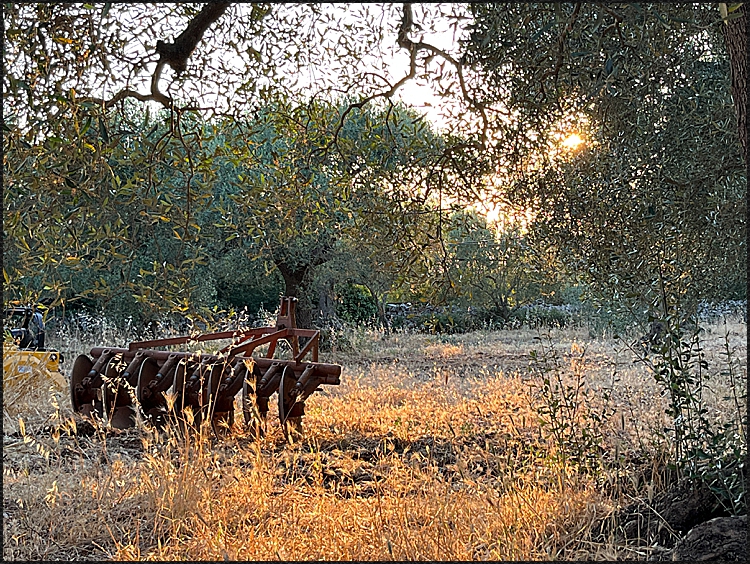
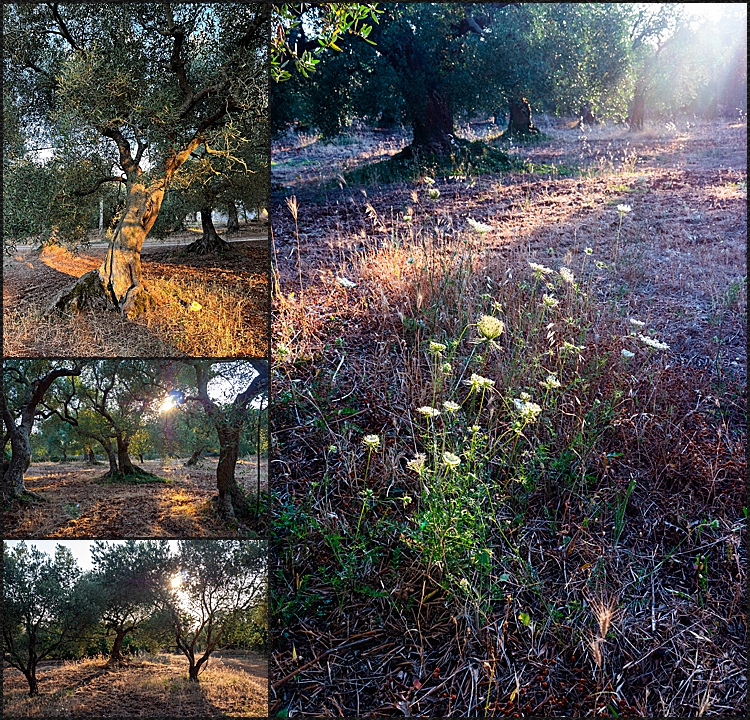
As you can see the light was stunning that night and yes, I did take several pictures. Not only did we come across the second Trulli, which looked as though it hadn’t been used for a while but along the track we came across a small pig sty with, a rather sweet little pig. We had a feeling that it wasn’t kept as a pet …
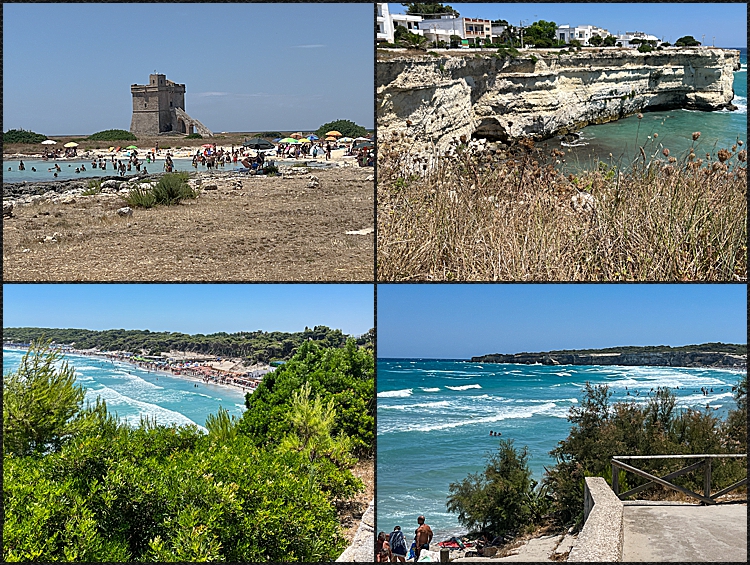
The land mass at this point of Italy is very narrow and is bordered by the Adriatic Sea to the east and the Ionian Sea to the south and west. The coastline of the Adriatic is known for its dramatic limestone cliffs, clean waters and historic port cities. Principal towns are Monopoli, Brindisi and Lecce although there are lots of towns dotted along the coast . Some have sandy beaches, some are pebbly and some are very rocky. We’re not really beach people although we did visit both coastlines. and tested the temperature of the water at one beach used by the locals.
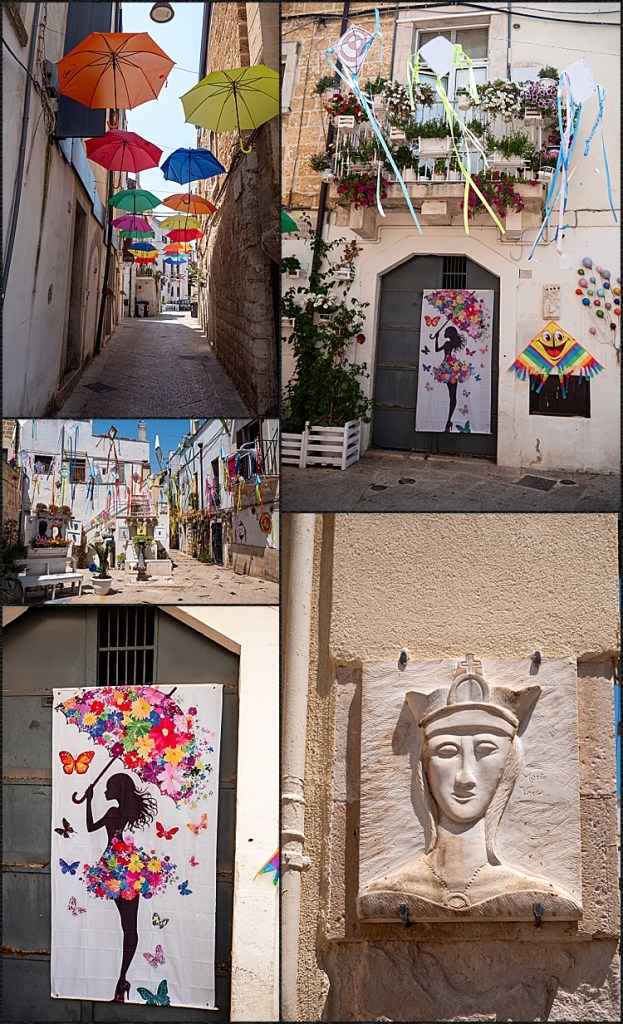
I almost forgot to mention this pretty village which we visited in our first week. Gioia del Colle is famous for its castle, its historic centre and medieval quarter and producing fresh mozzarella. The dairy shops open from early morning so villagers can buy the cheese warm. Maybe it has more taste that way …? There are many local wineries offering guided tours and tastings but we settled for a glass with our meal after walking around the pretty decorated streets with lots of murals, interesting artwork and sculptures.. Would definitely recommend visiting Gioia del Colle
Inland is the hill top town of Locorotonda, a name which rolls of the tongue. It is pretty with great views but also very touristy as you would expect. I can imagine that in the ‘High Season’ the narrow, white alleys of the old town are rammed with tourists.
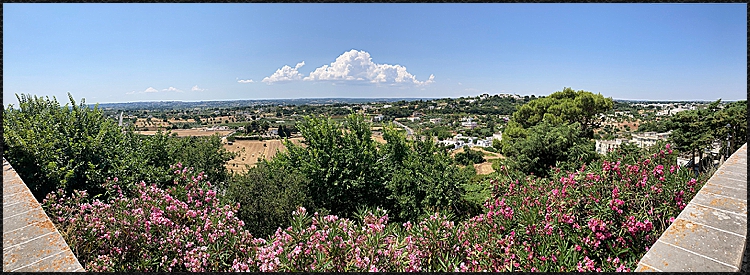
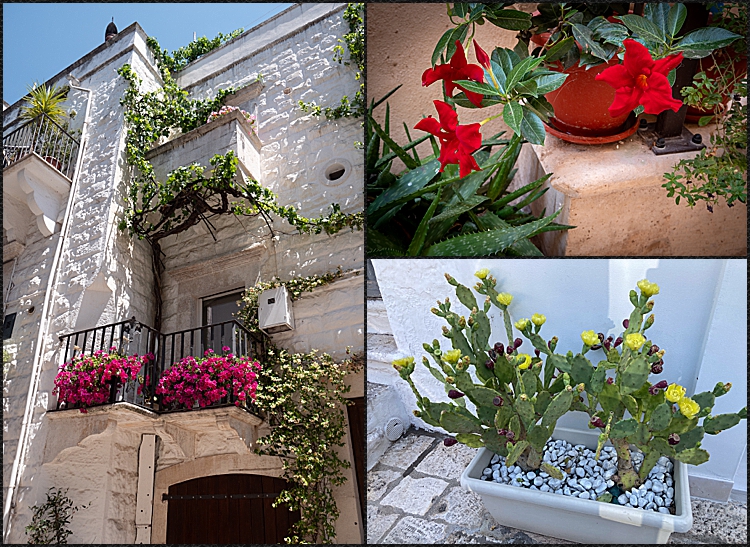
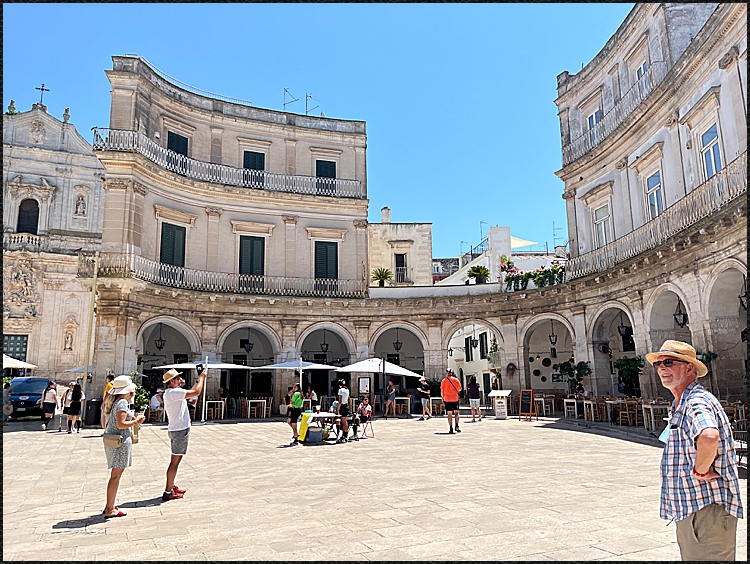
We also visited Martina Franca, another hilltop town which we liked very much, particularly its wonderful Baroque architecture and cathedral. It seemed more spacious than some of the hilltop towns. The large Piazza Plebiscito is a great place to sit, to have a cool glass of wine and watch locals and tourists walk by. The narrow streets of the historic centre are charming too. Apparently there are at least 15 churches in the town and although we did pop into a few, we certainly didn’t do them all. The Basilica di San Martin is however well worth a visit and is free to go inside.
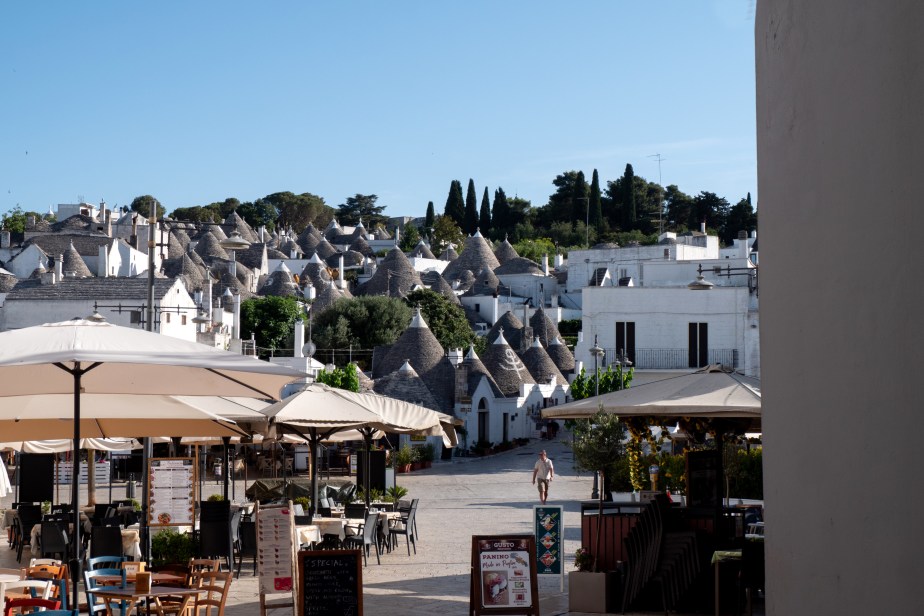
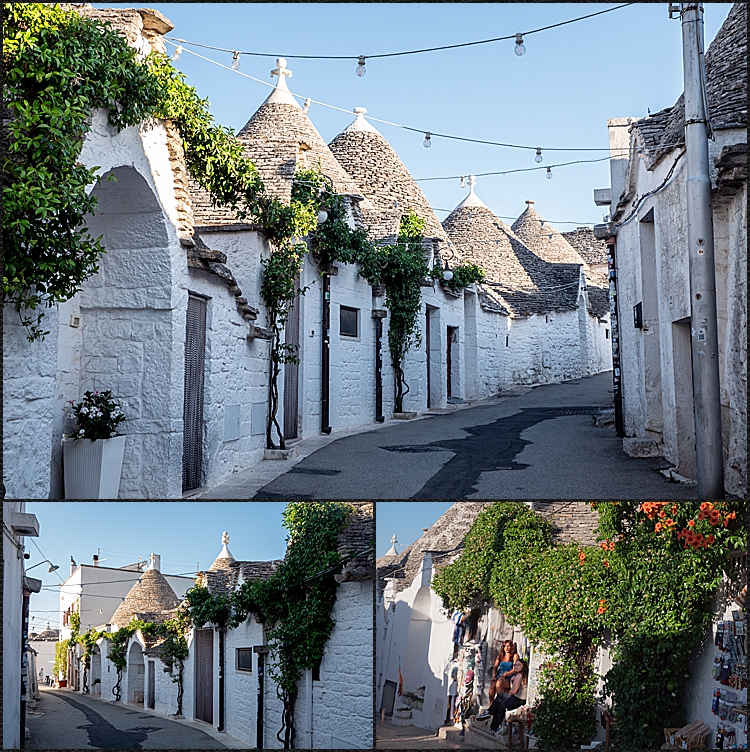
No-one should visit Puglia without going to this UNESCO World Heritage site – it’s a town full of Trulli, those distinctive dry-stone conical pyramids. They have been counted of course and although there may be some dispute about this, the town of Alberobello has over 1500 of them! It’s quite a sight as you arrive in the town. We parked a little way from the centre and walked in along the narrow streets with Trulli on either side. It felt like we were the only tourists around until we arrived in the main part which was very busy.
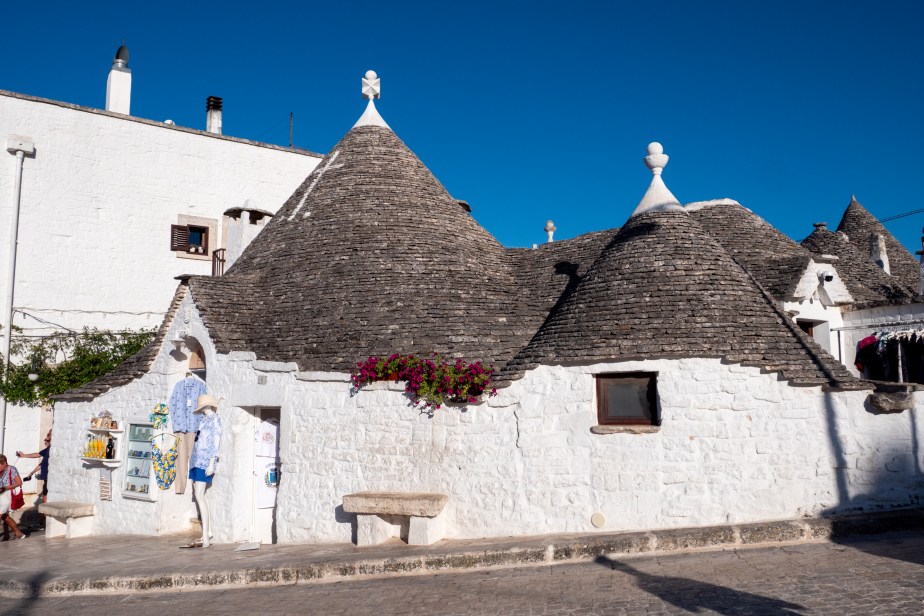
It is a mannequin leant outside not a tourist overcome by the heat!
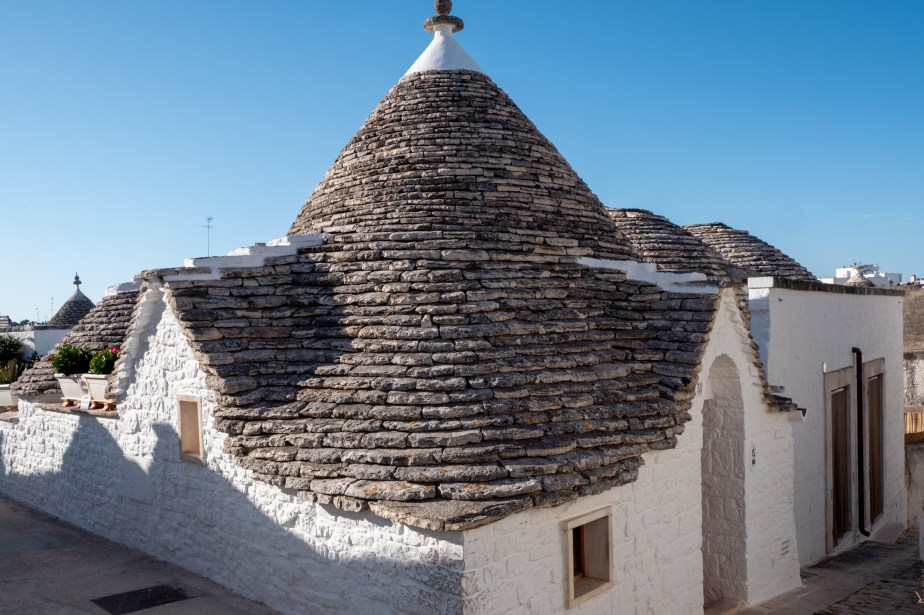
If you would like to know more, here is a link to a Blog by ‘The Thinking Traveller’ which is a full account of the fascinating history of Trulli Houses and their construction. We visited in the afternoon and thoroughly enjoyed wandering around but the best time to be there (apparently) is just before the sun is setting to get that golden glow on the Trullis and then you wait until the narrow streets are slowly lit by street lights to experience a unique fairytale setting.
At the end of our first week we drove south-east to the province of Lecce in the region of Apulia and onto the town of Lequile. The Airbnb was down a narrow, dusty track about 1km from the town. Pressing the bell at the side of an impressive pair of gates, we didn’t quite know what to expect, certainly not a mini-arboretum; the palazzio, swimming pool and grounds were fabulous. Our hosts Veronique & Mark were very welcoming and so was the wine offered to us once we’d settled into our accommodation which adjoined the main building.
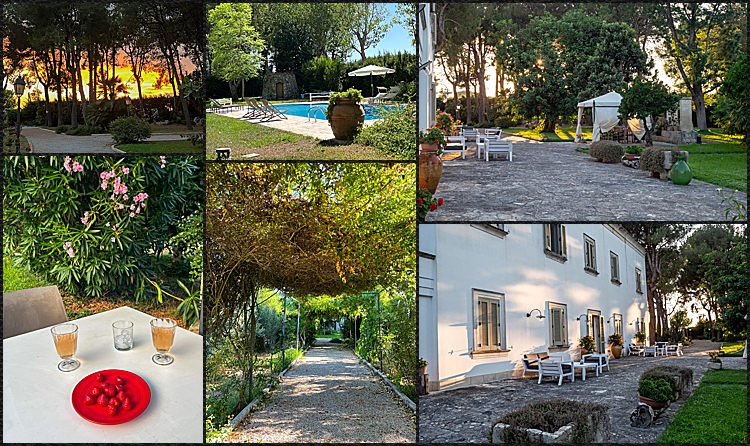
It’s always helpful to chat to the owners who can suggest places to visit, not necessarily places where all the tourists go and also suggestions for local restaurants. Veronique did use the swimming pool but not in the afternoons when we were very happy to dive in after a dusty day’s sightseeing. The fruit in the garden was ours to pick, all grown organically and if we’d had the energy there was a tennis court we could use too. After the previous week on our own we were pleased the owners were nearby and spoke very good English.
There’s a lot to do in this area so we drove to Lecce first of all which is the main city. It’s described as the Florence of the south and is steeped in history with wonderful Baroque architecture. We parked outside the historical centre and walked through one of the gates, (apparently there are four). We did this walk a few times marvelling at the intricate facades of the buildings. Heading straight to the heart of the city we came directly to The Roman Theatre. It was built, as the name suggests, by the Romans during the 2nd century. It was buried for centuries and re-discovered by accident in 1901 by workers building a bank. You can see the horse-shoe shaped arena which could hold 15,000 spectators, but currently you can’t go beyond the perimeter fence. Perhaps it’s open for festivals?
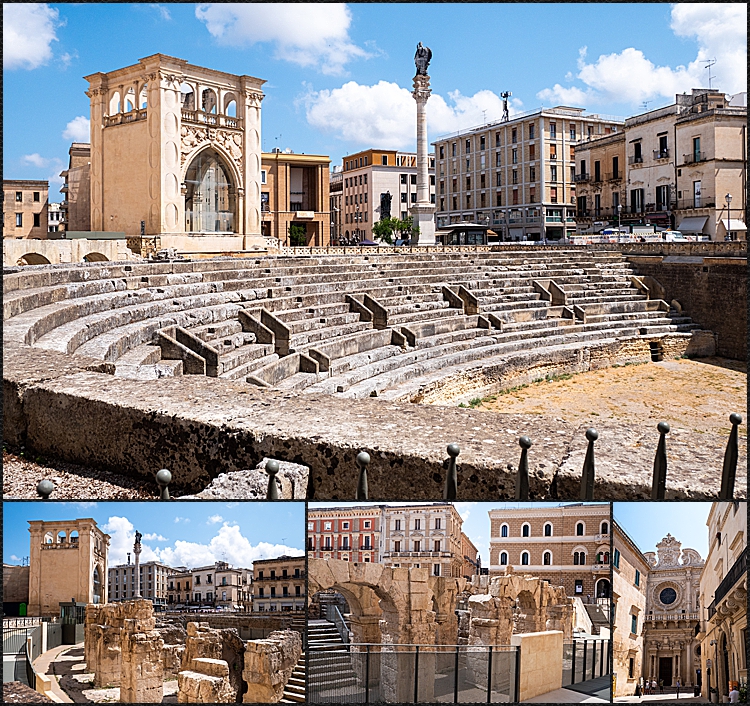
As well as taking in the ornate architecture of the city buildings we enjoyed wandering around the narrow streets which predictably has lots of shops full of souvenirs interspersed with cafes and fine-dining restaurants. We did come across an excellent wine bar and thoroughly enjoyed a glass of wine in a quiet area in one of the side streets. Feeling refreshed we headed for the Cathedral.
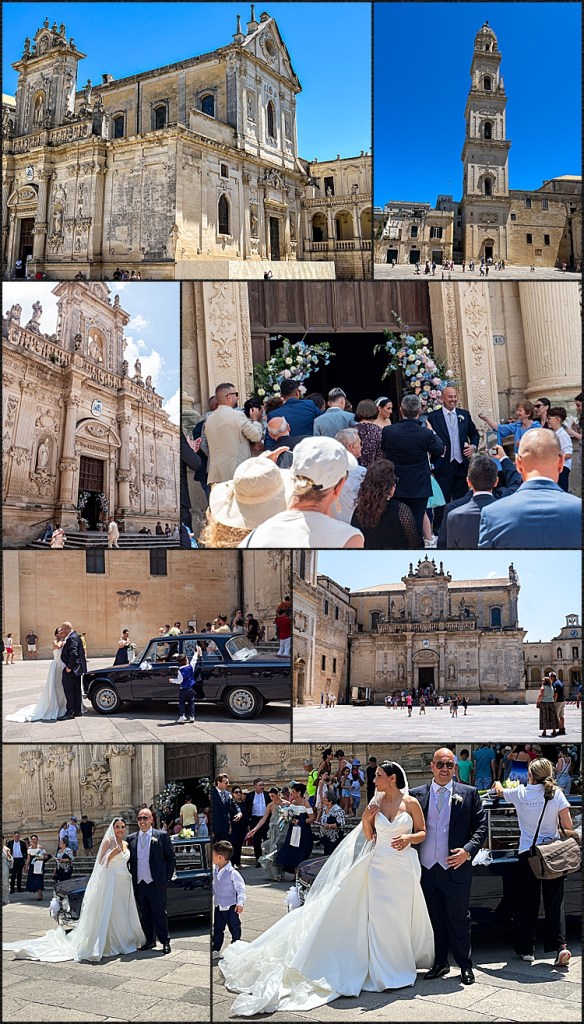
It was no surprise that a wedding was taking place. I used to be a wedding photographer before I retired and ironically on almost every one of our holidays we’ll come across a wedding. I own up, that along with several other tourists, I did take a few pictures as the party came out. I smiled when the official photographer turned round and asked if ‘The Paparazzi’ would get out of her way …people taking ‘snaps’ are a real nuisance!
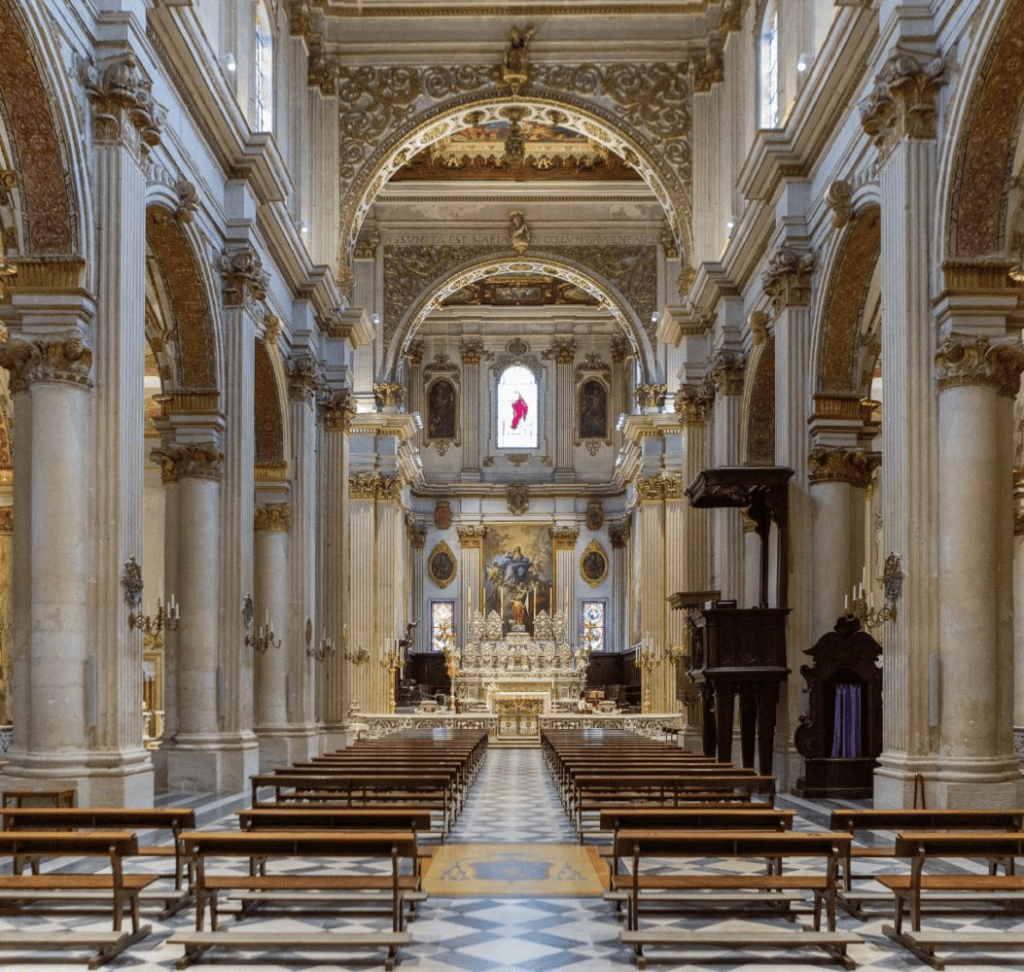
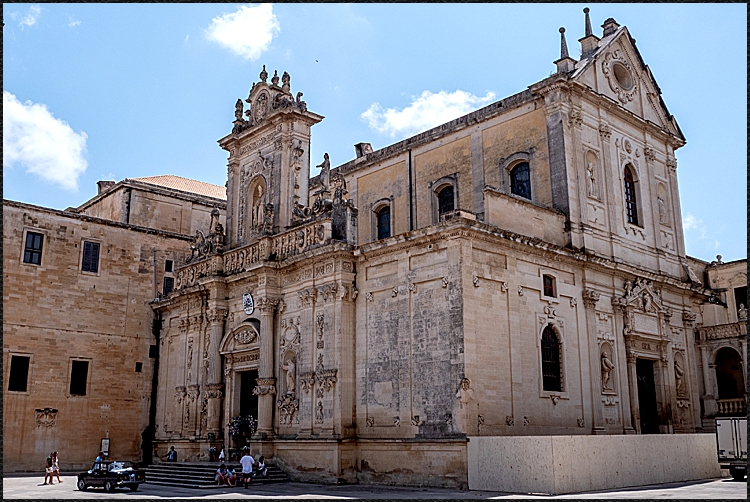
The Cathedral is a fine example of the Baroque style with its (heavy) decorations in Lecce stone, majestic columns and ornate sculptures. What a beautiful place in which to get married!
We went back to Lecce a couple of times as there was so much to see. .. churches, historic buildings and interesting alleyways are everywhere within the city walls. Parking can be difficult so we drove to a large car park outside the walls and walked in. Veronique suggested we go to Lecce in the evening when the Roman ruins are lit but we didn’t get round to that.
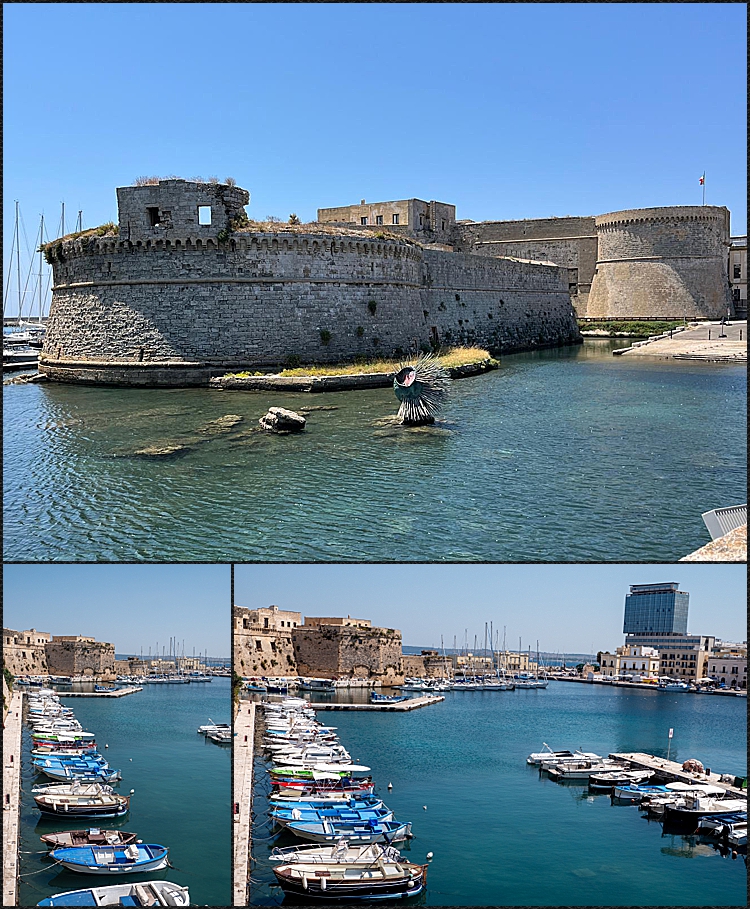
On one day in our second week we drove to the port of Gallipoli which is located on Puglia’s Ionian coast. (There is also a place in Turkey called Gallipoli which was the site of a major World War 1 offensive known as The Gallipoli Campaign).
Gallipoli’s old town is perched on a limestone island. The first thing that hits you as you walk into the town is the castle. Described accurately as a fortress it was built in the 13th-centrury to protect the harbour from invaders, it is open to visitors. For us we enjoyed walking along the maze of narrow alley ways and along the harbour side. Yes there were of course lots of touristy shops but there were some more interesting ones too. Gallipoli is a busy place in the summer, not just for its character and its history but for the beaches with long stretches of white sand and crystal-clear water. As in all Italian towns in this area there were numerous Baroque churches, we did go inside a few but after a while we were happy sitting in one of the Piazzas enjoying an excellent lunch whilst watching the world go by.
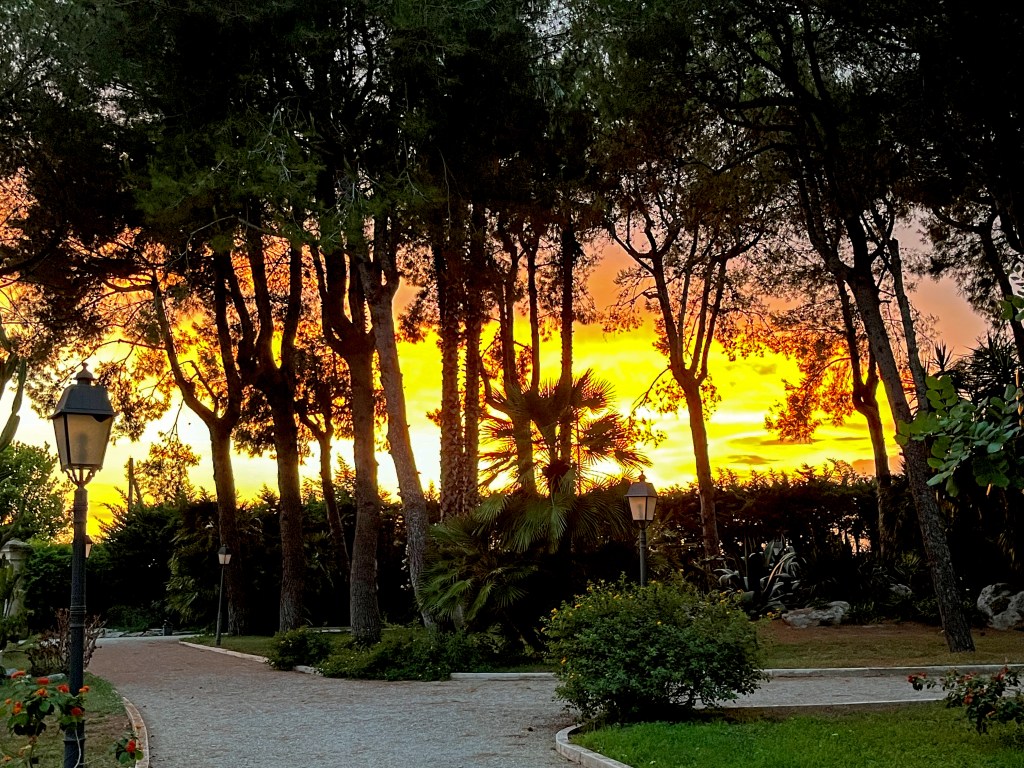
Our last evening in Via Capograsso. We shared a couple of drinks with our hosts before heading off to ‘La Tana Del Lupo Giuseppe’ where we had eaten earlier in the week. Veronique & Mark had recommended it to us and we enjoyed it so much we decided this was where we wanted to eat on the last night of our holiday. It was the right choice.
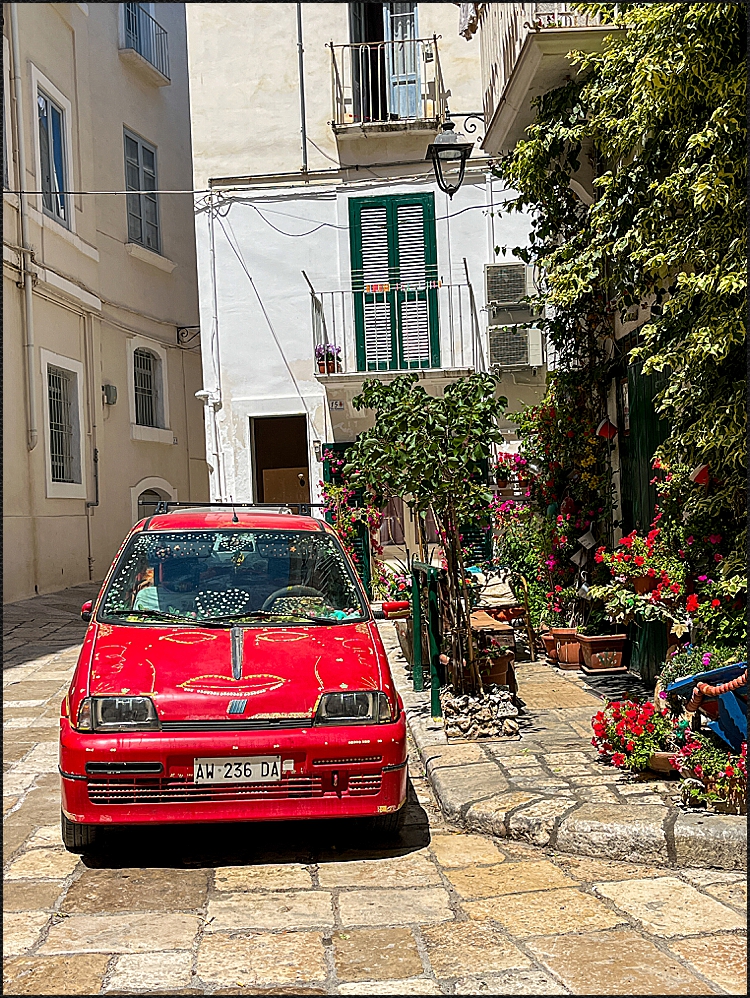
Fortunately we didn’t have too far the next day to drive to Bari International airport and as our flight was late afternoon we stopped off at a couple of places en route.
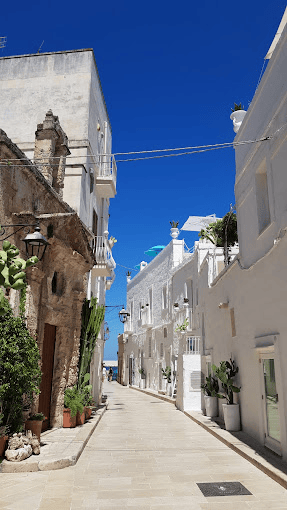
Monopoli is a popular tourist destination. The old town has narrow winding alleys which we enjoyed wandering along. Most houses are whitewashed and have green shutters which is typical of the region. Despite not being the height of the summer season, the main square was packed; hate to think what it would be like in August. We were happier avoiding the centre and enjoyed wandering around the Baroque Cathedral which was lovely and cool and afterwards found a cafe off the main thoroughfare where we enjoyed a sandwich and a beer.
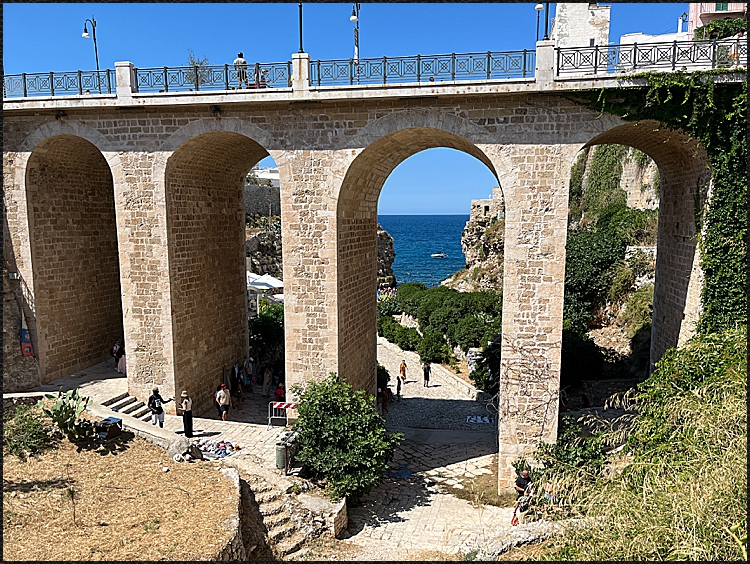
Our last stop before the airport was Polignano a Mare. This is another Puglian town perched on top of a high limestone cliff. As we knew parking might be difficult we parked a little outside of the town and walked in. As you can see, the viaduct is impressive and glimpsing the sea through one of its arches made, I think, this picture. ‘Blue Flag Beach’ is a popular spot with locals and tourists alike who apart from swimming in the crystal clear waters love to dive from the cliffs into the Adriatic Sea. Taking a boat trip is also on the tourist itinerary as from here there are trips to Monopoli and Capitolo, neither of which is far.
As for us we walked along the waterfront stopping at one of the panoramic terraces where you get a fabulous view of the sea and the coastline. The town was even busier than Monopoli so after grabbing a cold drink we walked back up the hill to our car and headed to nearby Bari to drop off the hire car and head for the Terminal.
We had enjoyed our two weeks in Puglia. The town of Alberobello with it’s funny little houses (Trulli); Lecce for its Baroque architecture and Roman ruins, the food, the wine, the coastline, the splendid pools at both Airbnb’s but the place we liked the most was Noci. A great little town where the locals know how to enjoy themselves. Every time we drove in for our evening meal there were families everywhere having a good time. It’s a friendly place with a great atmosphere and loads of places to eat. It’s not particularly touristy and maybe we liked it because of that or maybe it was just seeing all these Italian families and people of all ages just having a real good time.
I hope you enjoy reading about our two weeks in this part of Italy.

